
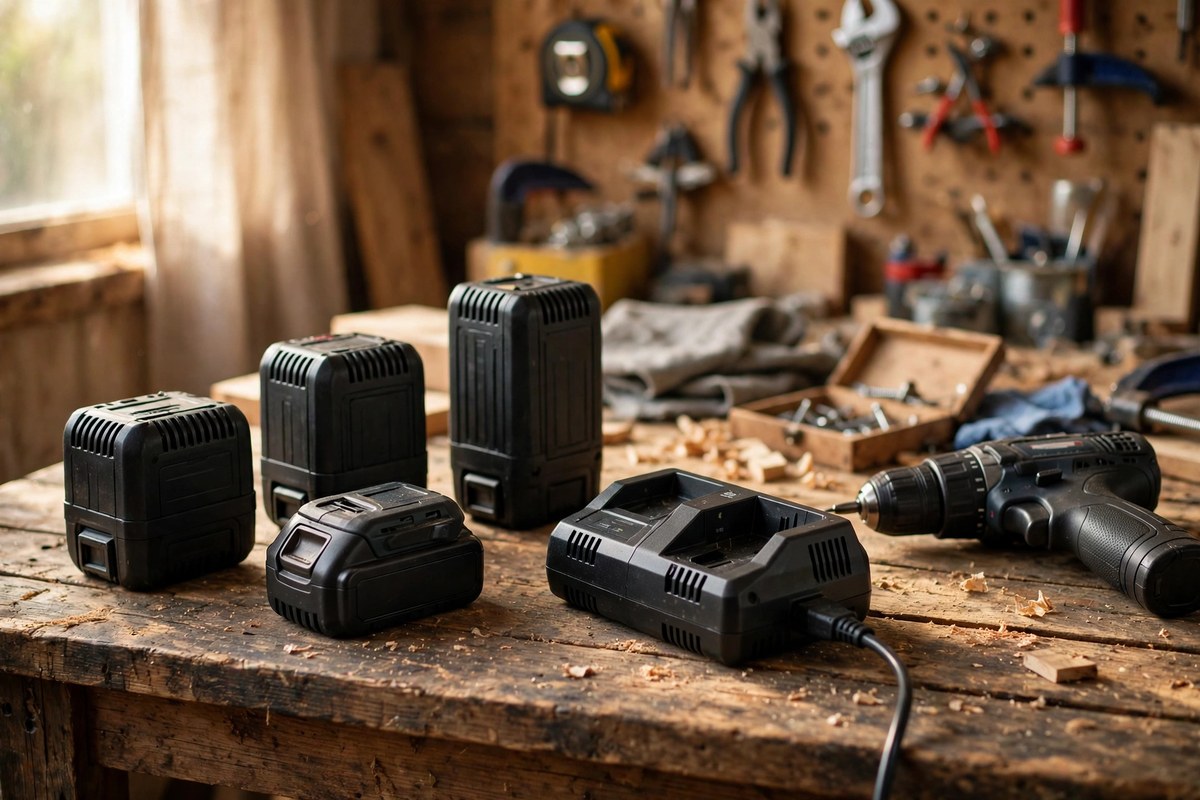
How to Make Your Power Tool Batteries Last Twice as Long
A cordless drill is only as good as its battery. The drill itself can last a decade, but the battery is the part that wears out — and a replacement often costs $40–$100, sometimes more than a whole budget tool. Most batteries die early for avoidable reasons: cooked in a hot garage, left on the charger for weeks, or run flat and forgotten in a drawer. Lithium-ion batteries follow a few simple rules, and following them can genuinely double the useful life of the batteries you already own. No special equipment, no extra spending — just habits.
What Actually Wears a Battery Out
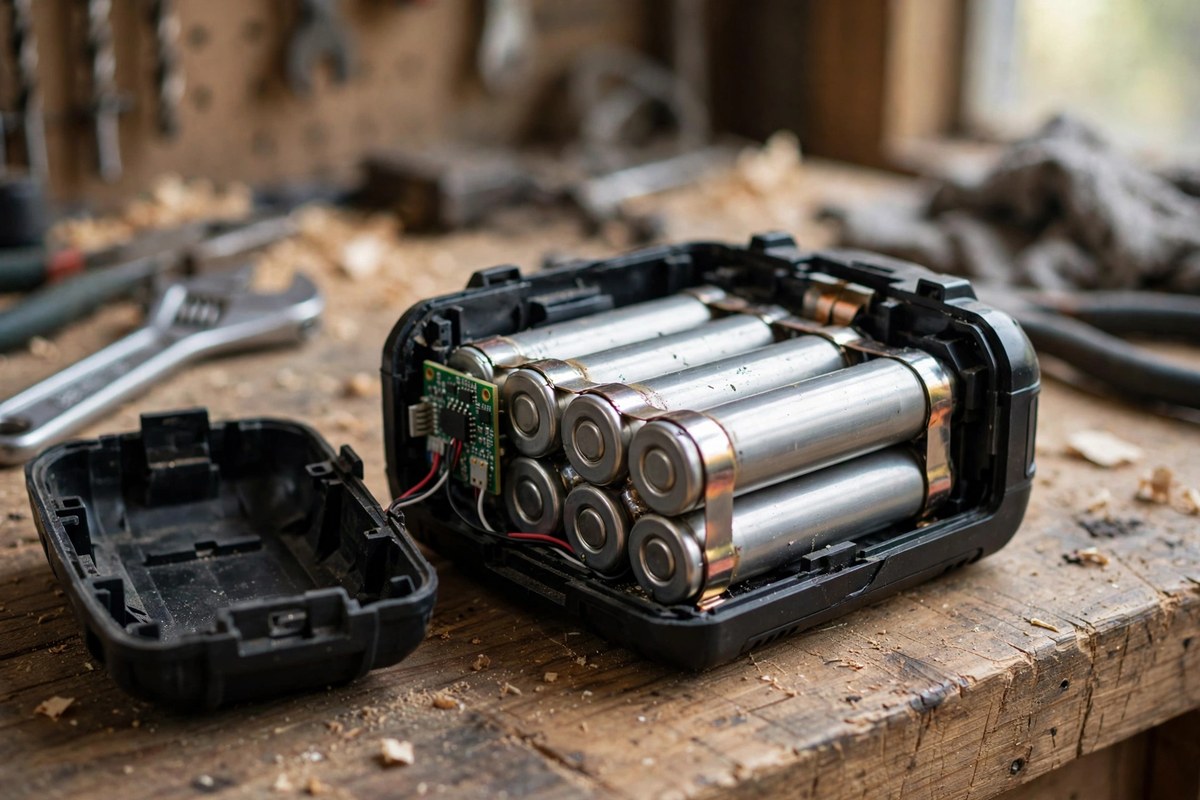
Almost every modern cordless tool runs on lithium-ion cells. Inside the plastic pack are a handful of cylindrical cells, and every charge and discharge cycle wears them a little. A battery’s life is measured in cycles: most tool batteries are rated for roughly 300–500 full cycles before capacity drops noticeably, and a full cycle means a complete drain and recharge — two half-discharges add up to one cycle. Two things speed up that wear more than anything else: heat and time spent at the extremes of charge.
Charge Between 20% and 80% Most of the Time
The single most effective habit is also the simplest: avoid the extremes. Lithium-ion cells are most stressed when completely full or completely empty, so a battery that lives between roughly 20% and 80% charge lasts far longer than one always topped up to 100% or run until the tool stops. In practice that means pulling the battery off the charger when it is mostly charged, and swapping in a fresh battery when the tool starts to slow down rather than squeezing out the last few screws. A full charge is fine when you are about to use the battery; it is sitting at 100% for weeks that does the damage.
Don’t Leave Batteries on the Charger
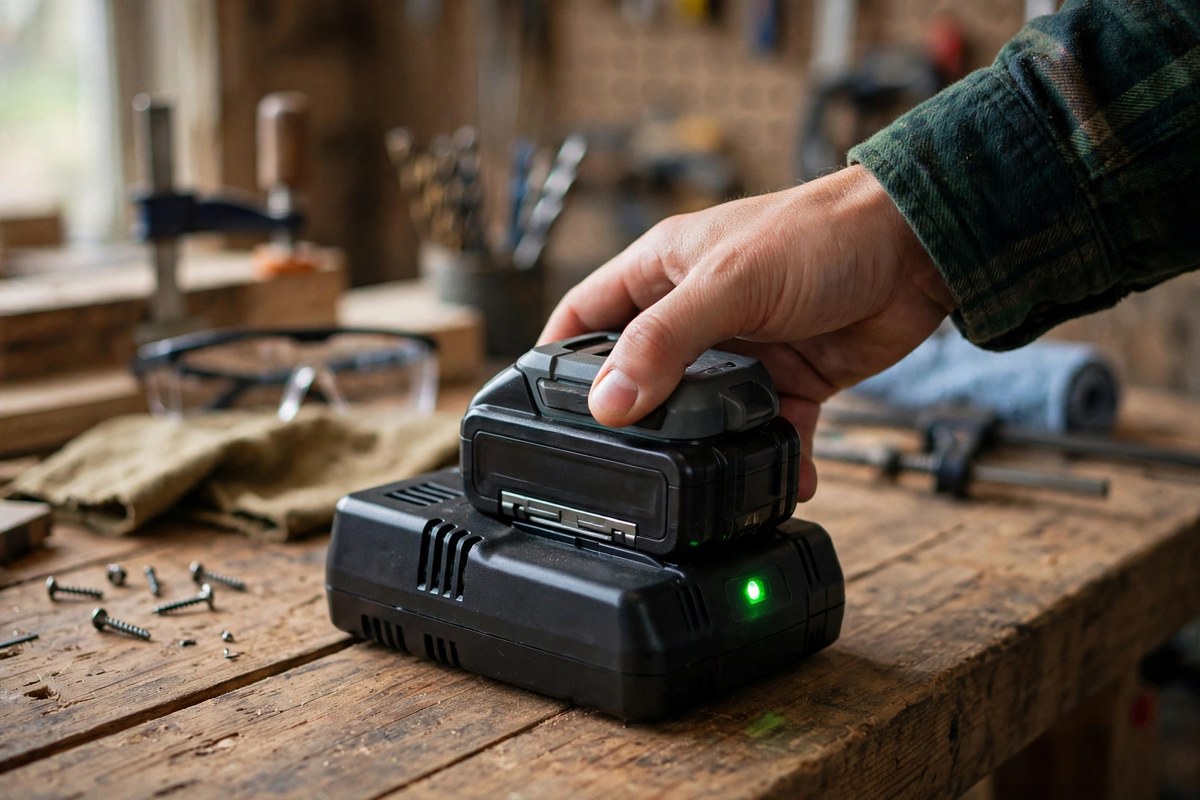
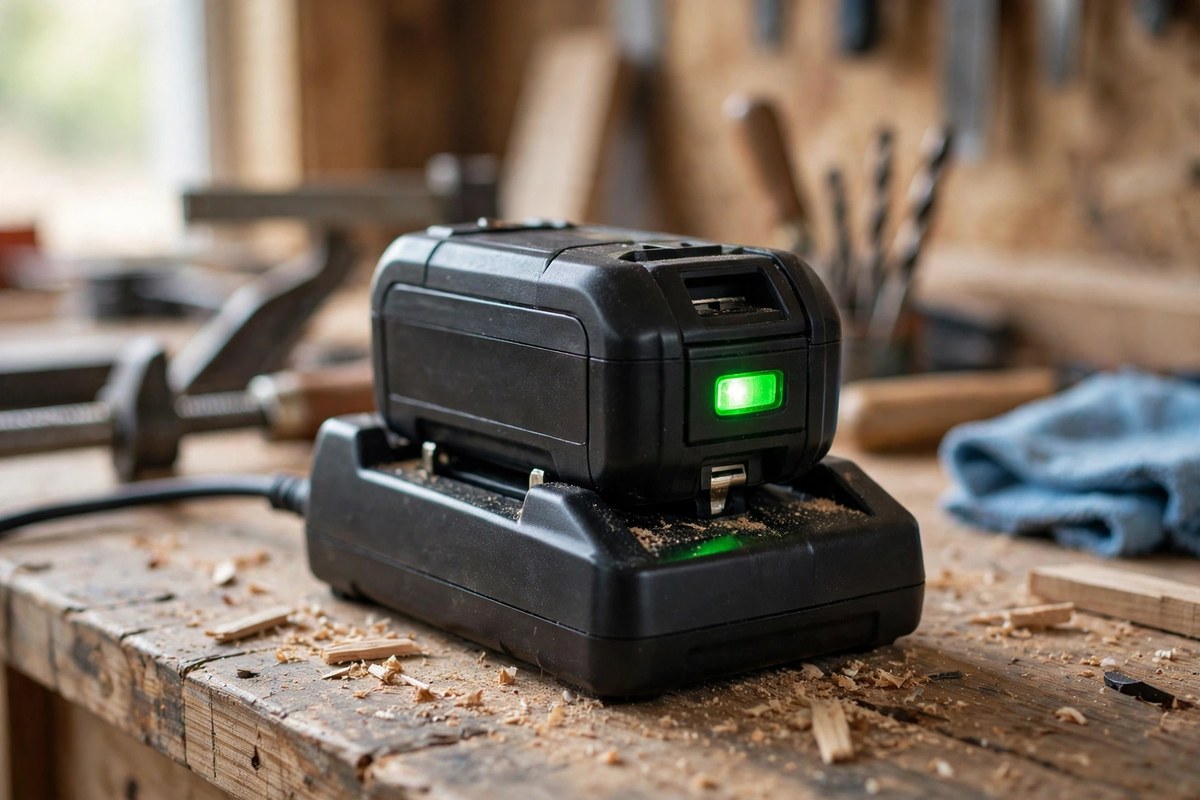
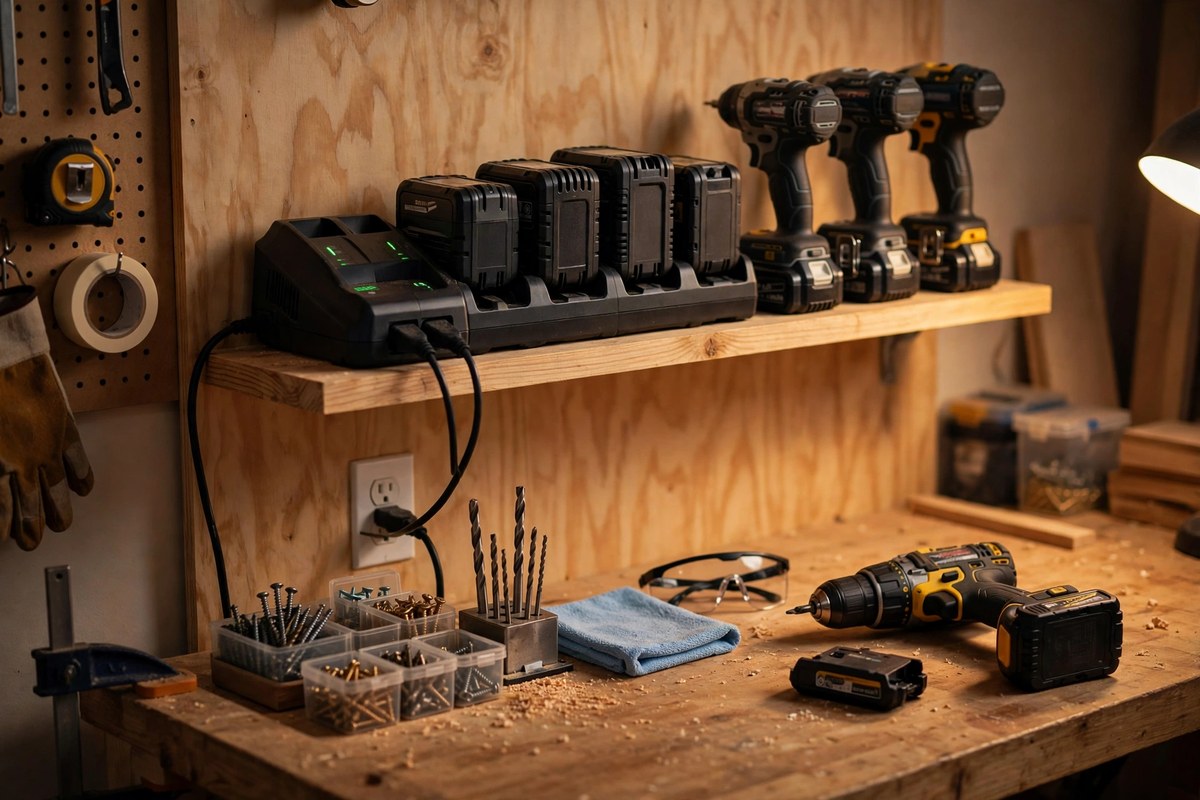
Modern chargers stop charging when the battery is full, which makes it tempting to leave a battery clicked in indefinitely. The charger will not overcharge it, but the battery still sits at 100% — the most stressful state for the cells — and stays warm from the charger’s standby heat. A day on the charger is harmless; a month is not. The fix costs nothing: when the green light comes on, take the battery off and put it on the shelf. If you charge overnight, pull it off in the morning. Worth it if your charger lives in the workshop and batteries tend to sit there.
Heat Is the Real Killer
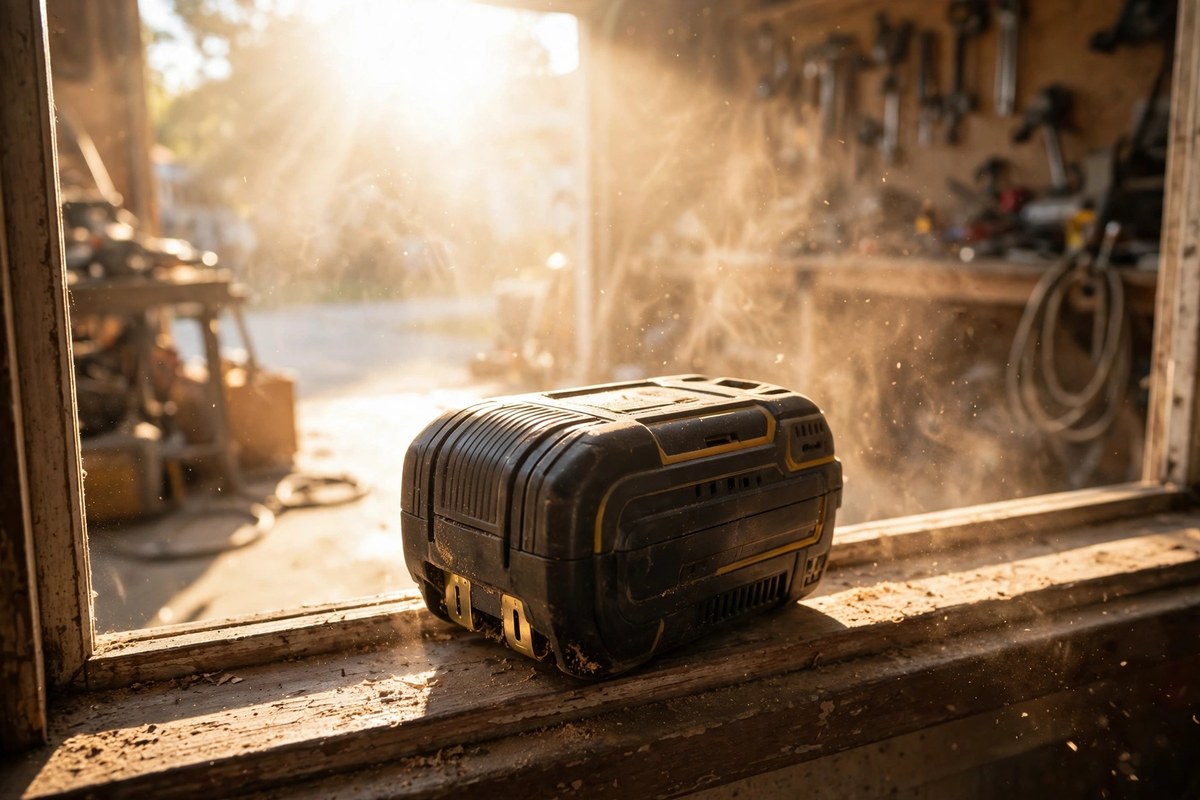
Heat does more damage to a lithium-ion battery than any other single factor, and it is the one most workshops ignore. A battery left in a car on a summer day, on a sunny windowsill, or next to a heater ages dramatically faster. The rule is simple: if the place is uncomfortable for you, it is bad for the battery. Keep batteries in the shade, off concrete floors that bake in the sun, and never charge a battery that is hot to the touch — let it cool to room temperature first. A battery that is warm after heavy use is normal; wait 15–20 minutes before putting it on the charger.
Cold Weather Rules
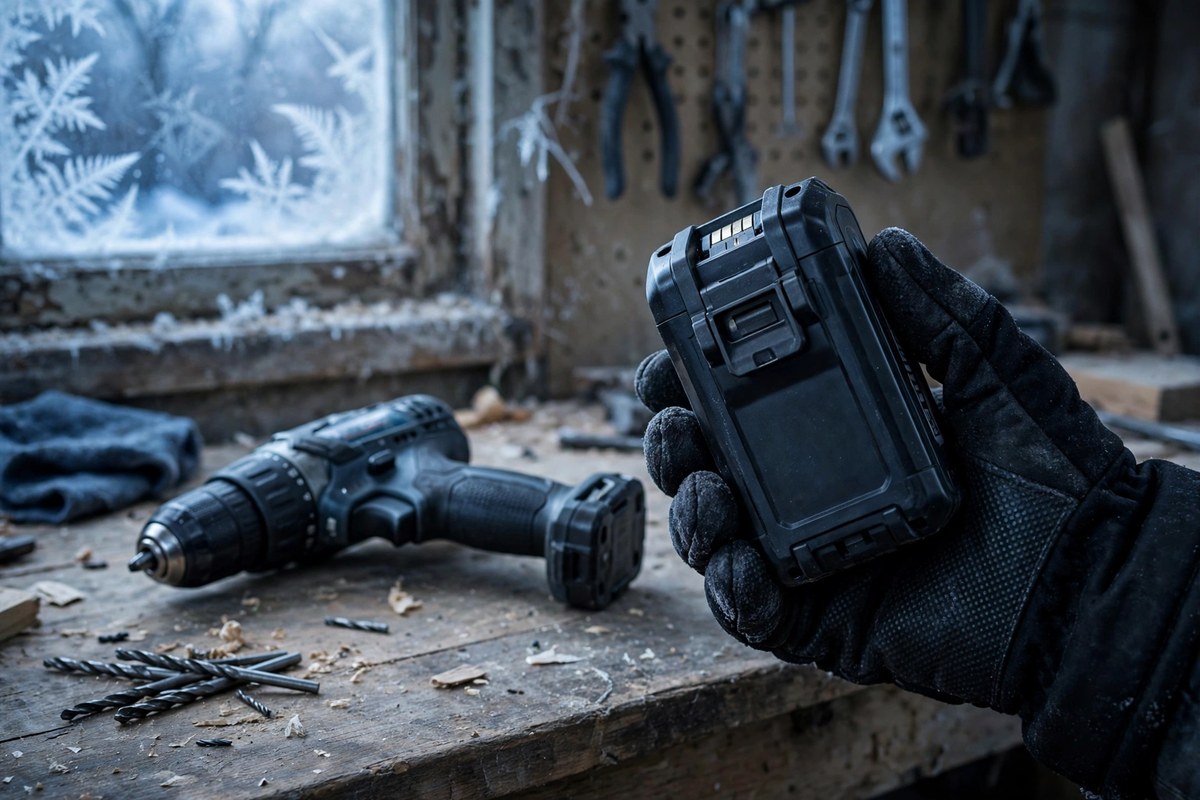
Cold does not damage a battery the way heat does, but it changes how it behaves. A cold battery delivers noticeably less power, which is why a drill that ran fine in September feels weak in January. The fix is to warm the battery before use: bring it indoors for an hour, or keep it in a pocket on the way to the job. Never charge a battery that is below freezing — charging a frozen cell can damage it permanently. Let it reach room temperature first, then charge normally.
Store Batteries Right
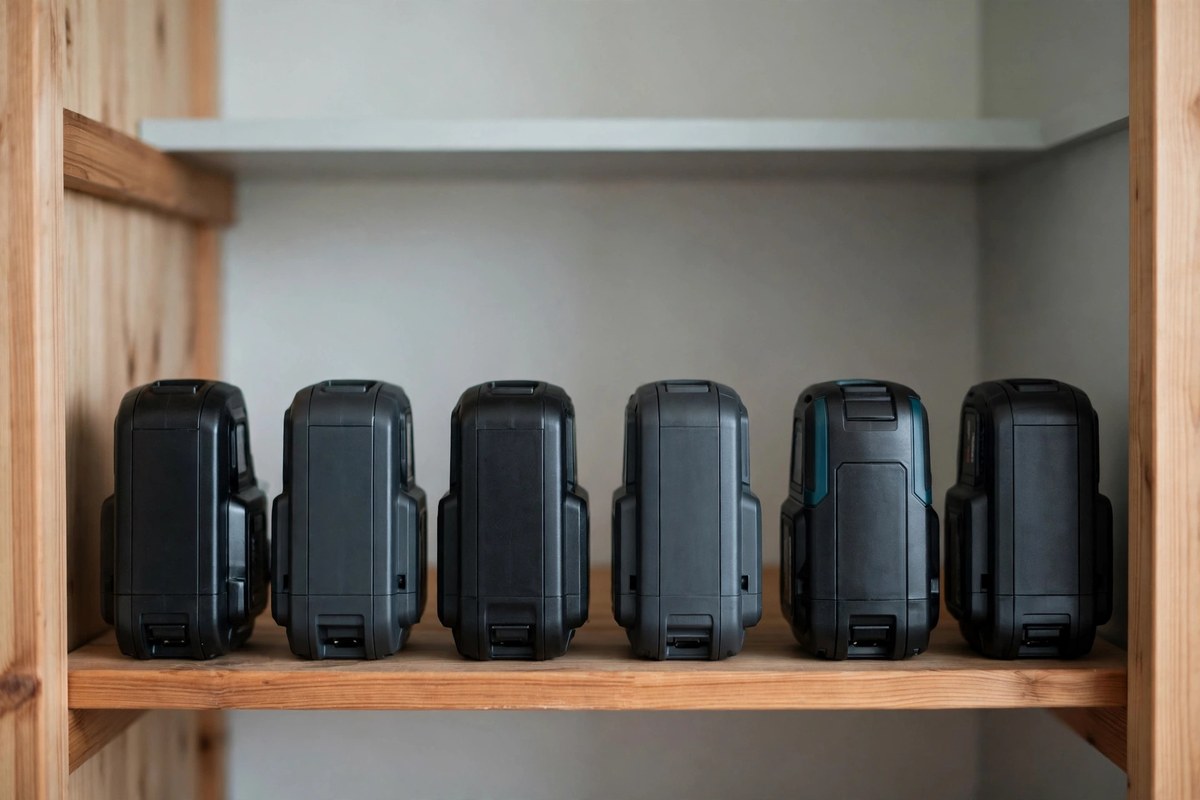
How you store a battery matters as much as how you use it. The best storage state is a partial charge — around 40–60% — in a cool, dry place. If you are putting a battery away for a month or more, charge or discharge it to about half before shelving it; a battery stored full loses capacity faster, and a battery stored empty can drop so low it will not take a charge at all. Store batteries off the tool, in a dry spot, and out of direct sun — a shelf in a closet beats a damp garage floor. Check stored batteries every couple of months and top them back to half if they have drifted down.
Use the Right Charger
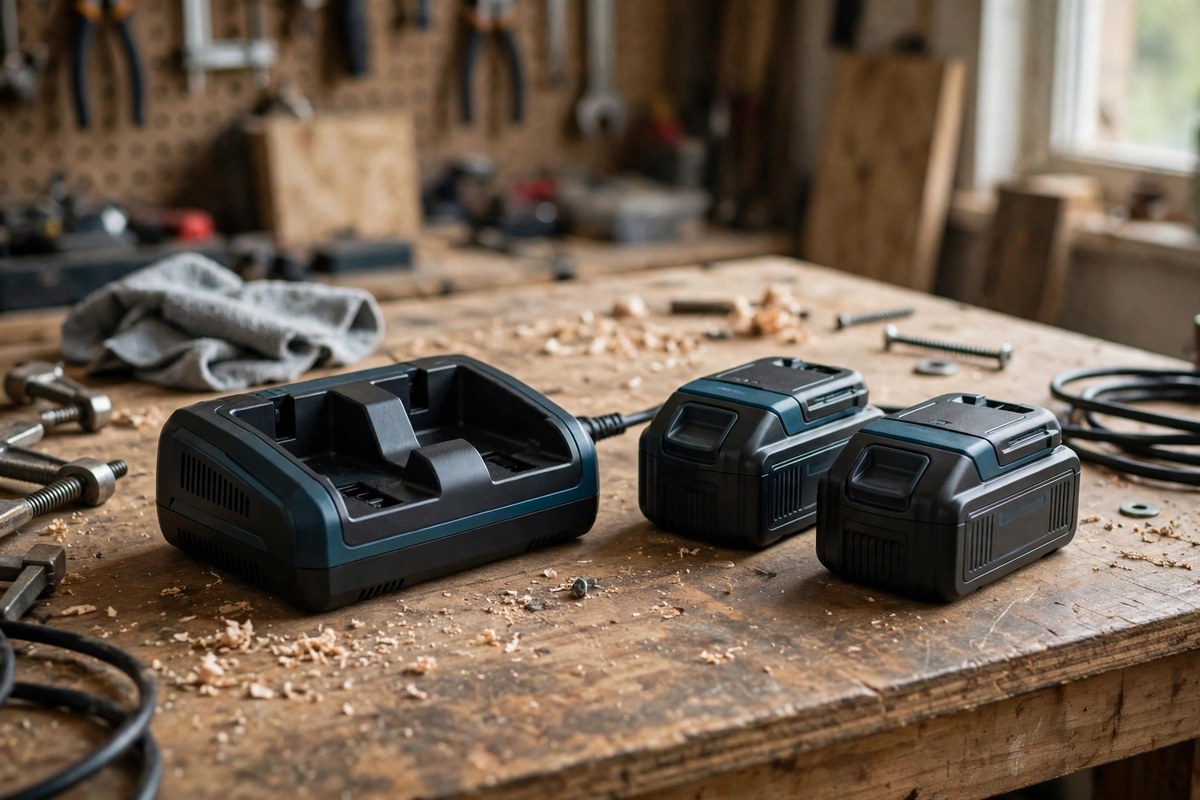
Not all chargers are equal, and the wrong one can shorten a battery’s life. Use the charger made for your battery platform — a DeWalt charger for DeWalt batteries, a Ryobi charger for Ryobi batteries — because the charger and the battery’s electronics are designed to talk to each other. A cheap off-brand charger may charge faster or skip the balancing step that keeps the cells even, and unbalanced cells wear out unevenly. A rapid charger is fine for occasional use, but a standard charger is gentler for everyday charging: fast charging makes more heat, and heat is the enemy.
Rotate Your Batteries
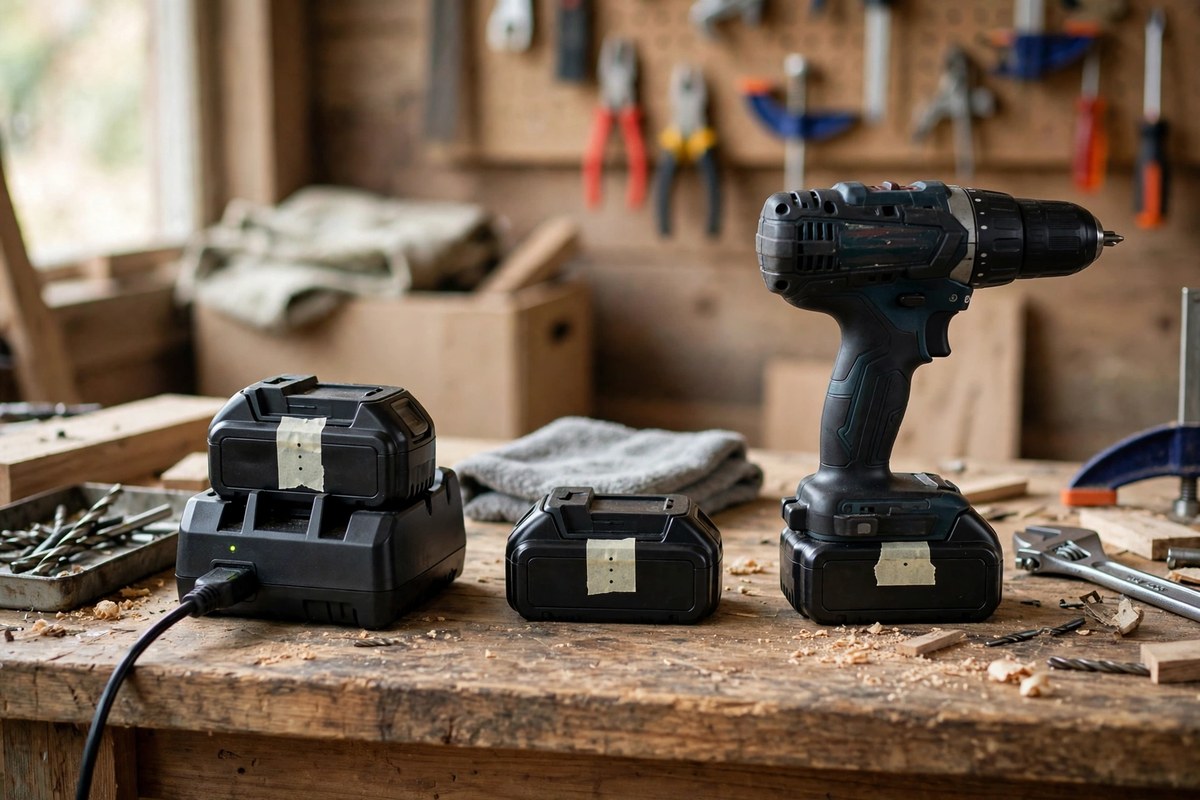
If you own three batteries and always grab the same one, that battery does all the work while the others sit and age. Rotating them spreads the cycles evenly, so all three last longer instead of one dying early and the others going stale. The easiest system is a simple order: number the batteries with a marker or a strip of tape, and always take the next one in line. If you are still building your first tool kit, our guide to the best cordless tool combo kits under $200 covers the drill and saw that pair with a shared battery platform, which makes rotation easy because every battery fits every tool. Worth it if you own two or more batteries on one platform. Skip it if you own a single battery — there is nothing to rotate.
Know When a Battery Is Done
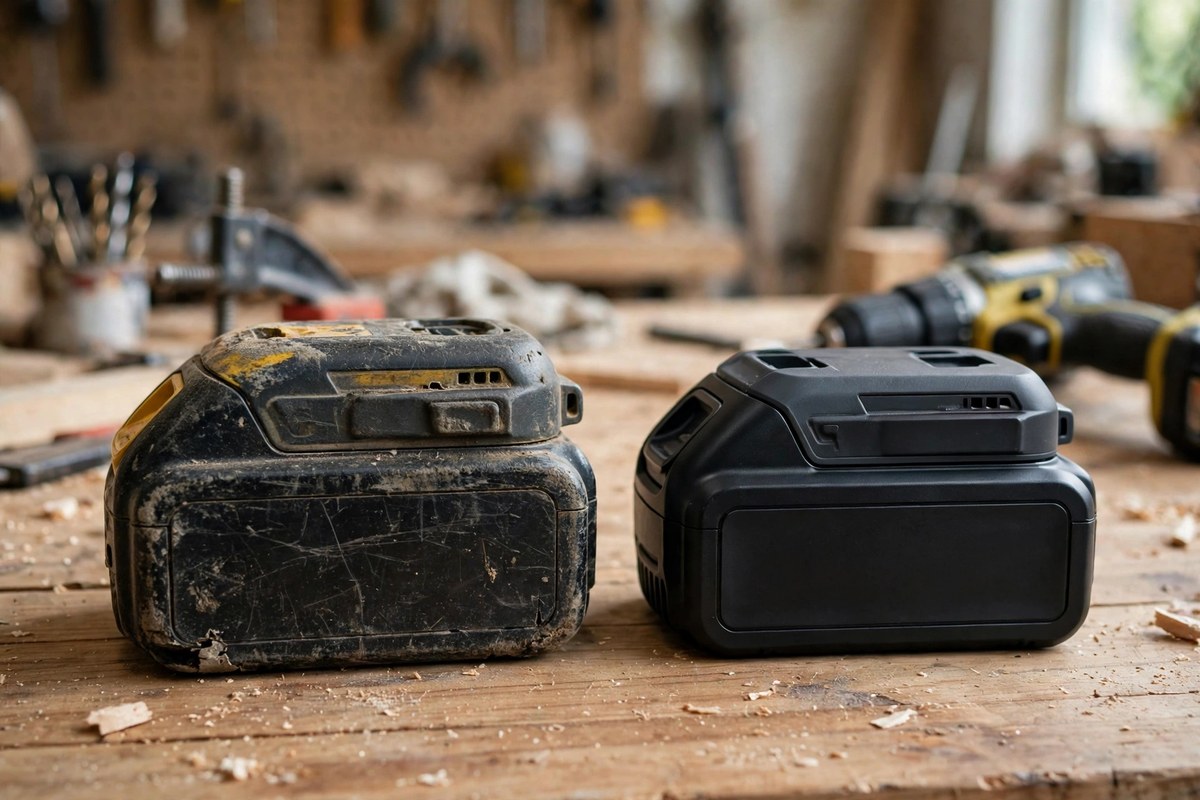
Even with perfect care, batteries wear out. The signs are consistent: runtime drops to half or less of what it was, the battery gets unusually hot during charging, the tool cuts out under a load it used to handle, or the battery takes much longer to charge than it used to. A battery that swells, smells sweet or chemical, or gets hot enough to be uncomfortable to hold is done — stop using it and recycle it at a hardware store or battery drop-off point. Do not throw lithium-ion batteries in the trash: they are a fire risk in garbage trucks and landfills. Worth it if a battery still holds 70% of its runtime — keep using it for light jobs. Skip it if the case is cracked or swollen — recycle it and buy a replacement.
The Twice-as-Long Routine
None of these habits is hard on its own; the payoff comes from doing them together, every time. Charge between 20% and 80% when you can, and charge fully only before a big job. Pull batteries off the charger when the light turns green. Keep batteries cool — out of hot cars, off sunny shelves, and never charged while hot. Warm cold batteries to room temperature before charging. Store spares at about half charge in a cool, dry place, and check them every couple of months. Use the charger that came with the platform, standard speed for everyday charging. Rotate your batteries so the cycles spread evenly. And recycle a battery the day it swells or its runtime collapses. Follow that list and the batteries you own now will still be running jobs years from now, instead of sitting in a drawer waiting for a $60 replacement.
Frequently Asked Questions
Should I fully discharge a battery before charging it? No — that rule belonged to old nickel-cadmium batteries. Lithium-ion batteries prefer partial charges and are happiest between 20% and 80%.
Can I leave a battery in the tool? For a day or two, yes. For weeks of storage, take it out — the tool draws a tiny standby current and the battery is better off on a shelf at half charge.
Does a bigger Ah battery last longer? A 5.0Ah battery runs about twice as long per charge as a 2.0Ah battery on the same platform, and it usually survives more total cycles because each cycle is shallower. Worth it if you run a saw or grinder all day; skip it if the tool is a drill you use for ten minutes at a time.