Best Budget Angle Grinders Under $60
An angle grinder is the most versatile $50 tool in a home workshop. It cuts metal, grinds welds smooth, strips rust, sharpens mower blades, and slices tile. It is also the tool most beginners buy wrong: they either pay for pro power they will never use, or grab the cheapest grinder on the shelf and wonder why it stalls halfway through a cut.
The good news is that $60 buys a genuinely good 4-1/2-inch grinder in 2026. Every pick in this guide costs less than $60 at typical street prices and handles the jobs a homeowner actually does. Here is what your money buys, the five specs that matter, and our pick at every budget. If you are still building your first tool kit, see our 5 power tools every beginner DIYer needs first.
What $60 Actually Buys (and What It Doesn’t)
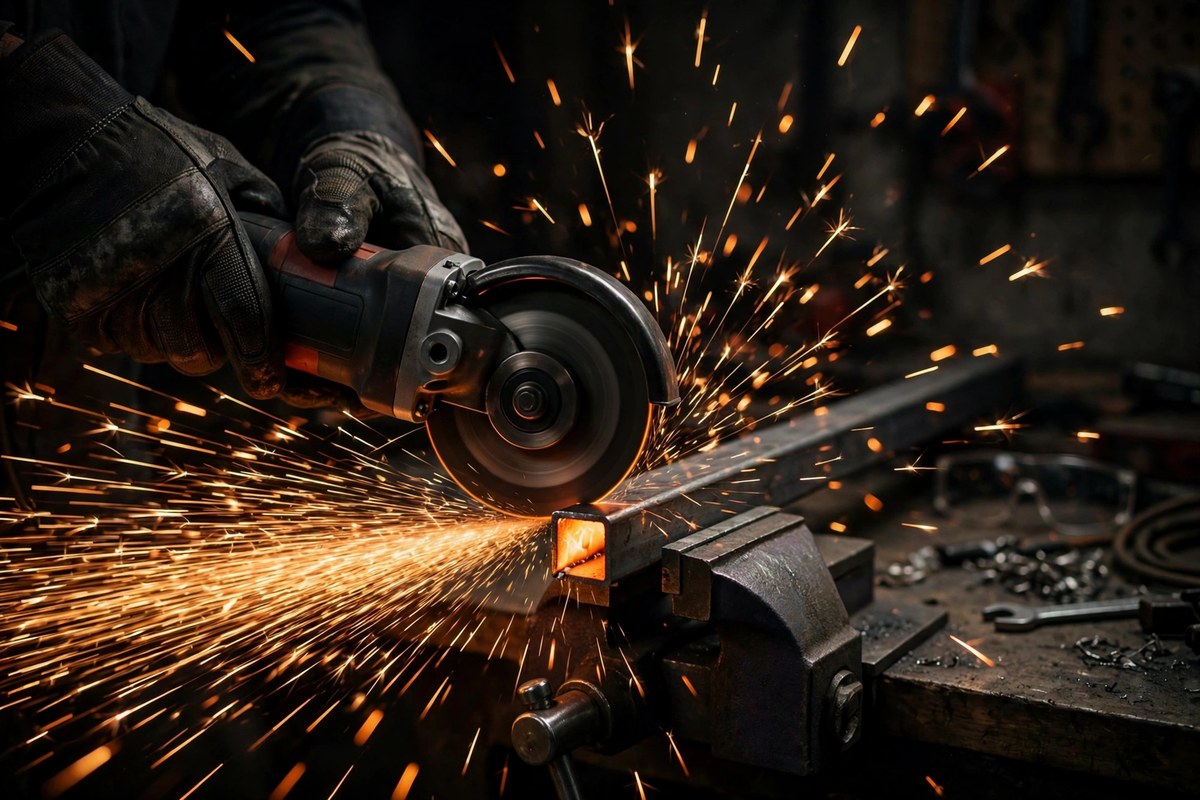
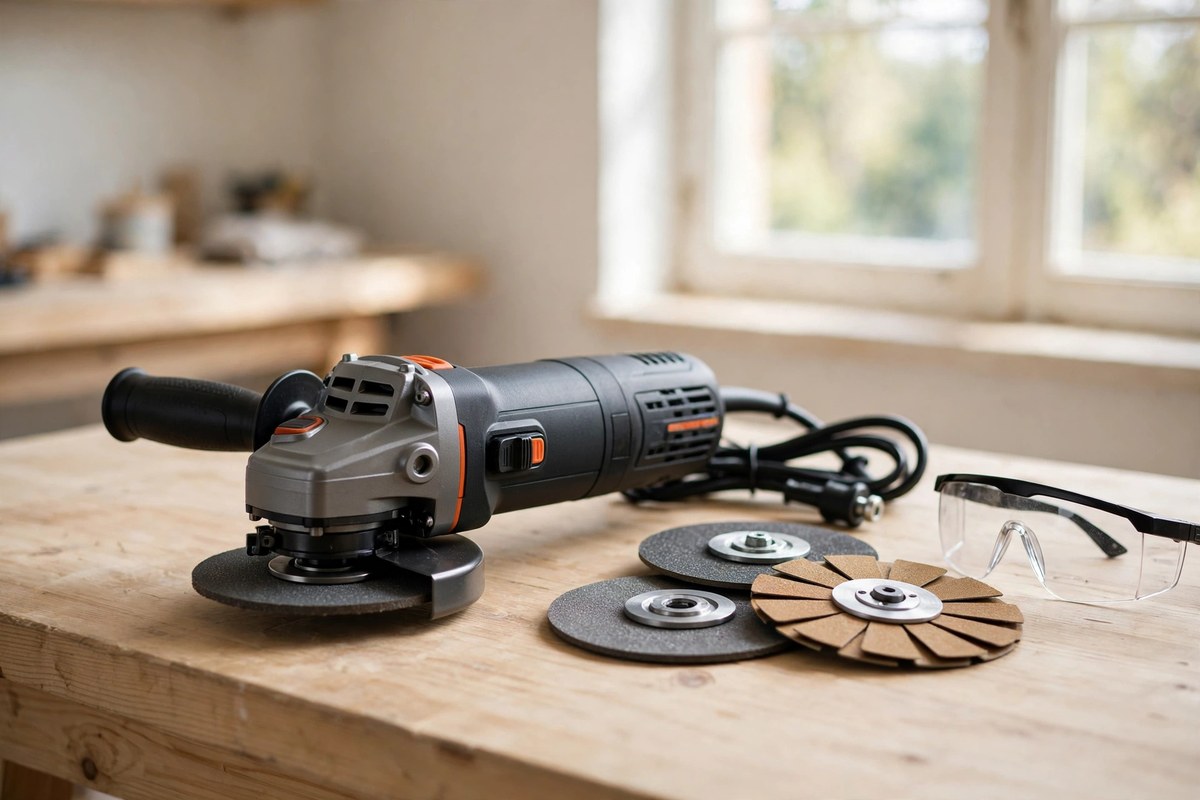
A budget angle grinder is a 4-1/2-inch corded grinder with a 6 to 7 amp motor, a paddle or slide switch, and a basic guard and side handle in the box. That combination cuts rebar, angle iron, and bolts, grinds down welds and rust, and — with the right diamond blade — cuts tile and pavers. For weekend DIY, that covers nearly everything.
What $60 does not buy is a 7- or 9-inch grinder or a brushless motor — larger grinders cost $100 and up and are heavier and harder to control one-handed. A 4-1/2-inch grinder is also the safest size to learn on: lighter, and less likely to kick when a disc binds.
Worth it if: you cut metal, grind welds, strip rust, or sharpen tools a few times a month. Skip it if: your only cutting is wood — a circular saw does that better, and a grinder is the wrong tool for it.
The 5 Specs That Matter
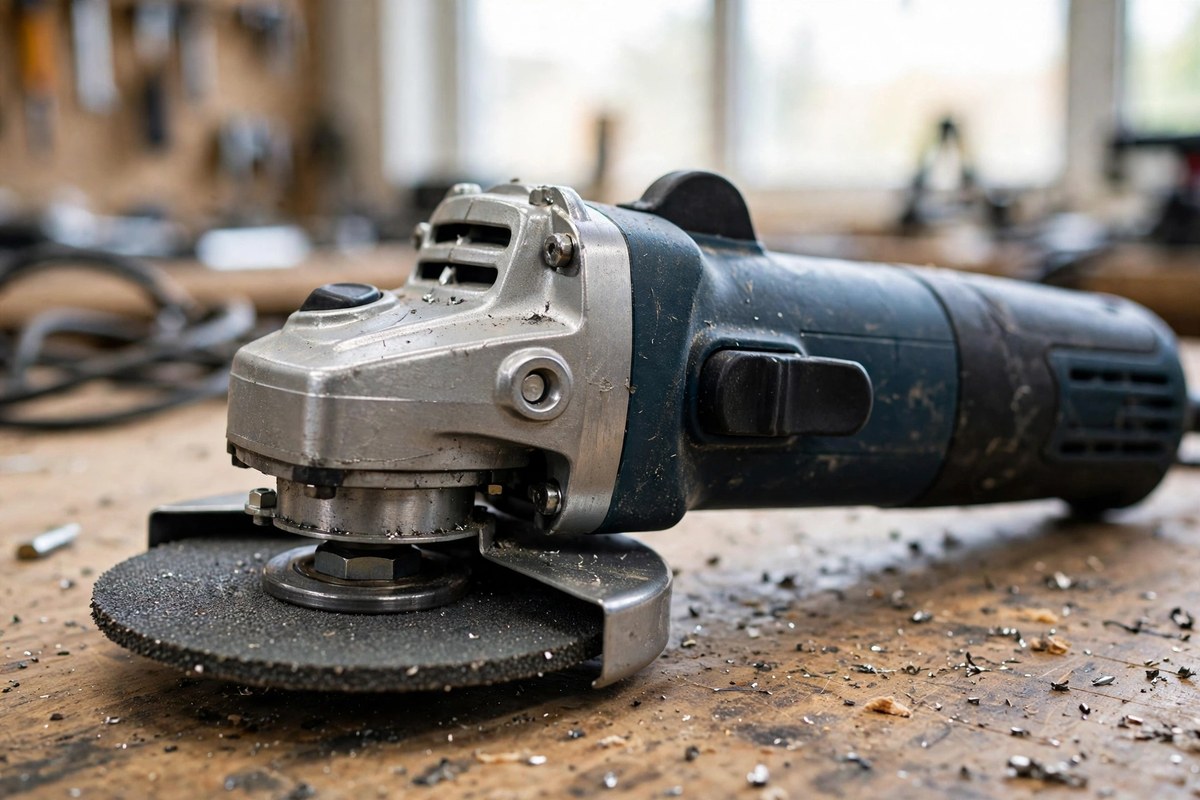
Ignore the marketing and check these five things before you buy.
1. Amps. For a 4-1/2-inch corded grinder, 6 amps is the floor and 7 amps is comfortable. Below 6 amps the disc bogs down in thick steel. Above 7 amps at this price, you are usually paying for a brand name.
2. Disc size. 4-1/2 inches is the standard for budget grinders, and discs are cheap and everywhere. Larger discs cut deeper but cost more and need a bigger, heavier grinder.
3. Switch type. A paddle switch (dead-man style) stops the grinder when you let go — safer, and the better choice for a first grinder. A slide switch stays on, which is convenient for long grinding sessions but demands more respect.
4. Spindle lock and tool-free guard. A spindle lock makes disc changes a one-wrench job. A tool-free adjustable guard lets you reposition the guard without hunting for a screwdriver.
5. Weight. Budget grinders run about 4 to 5.5 pounds. A pound matters more than it sounds when you are holding a spinning disc overhead.
Best Overall: Metabo HPT G12SR4
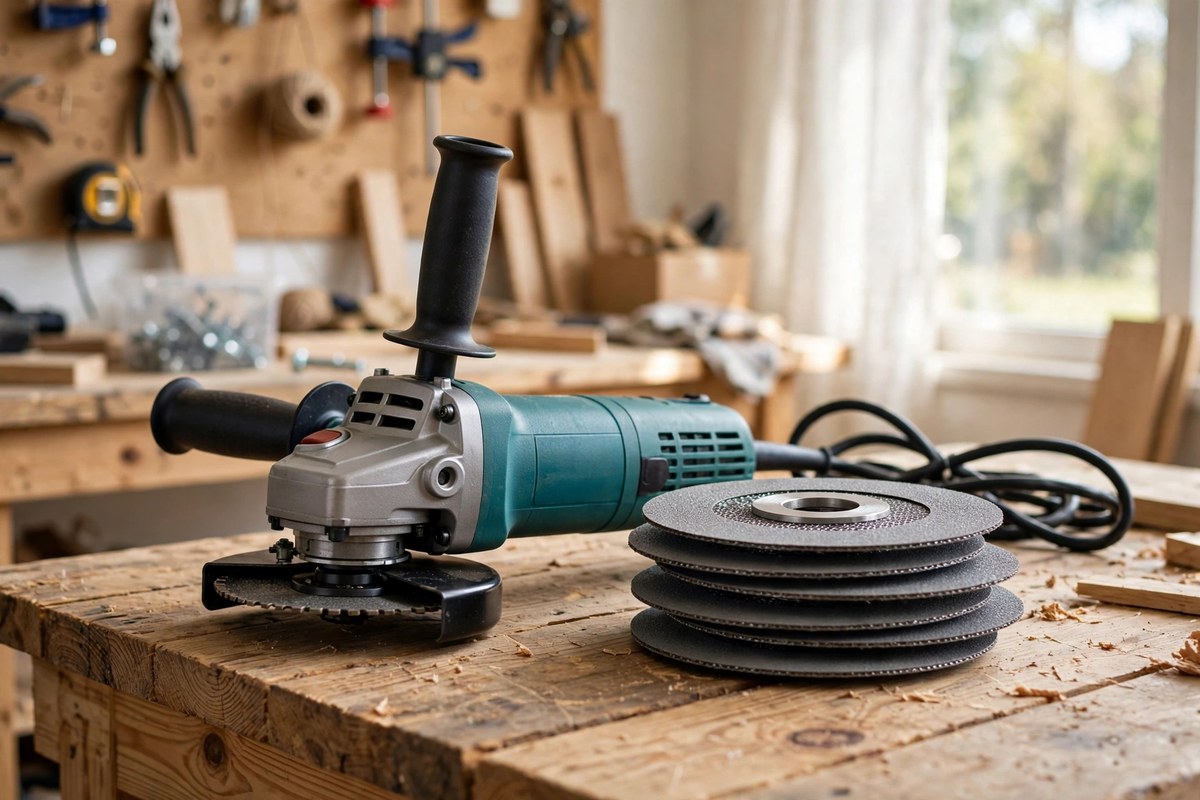
Typical price: $45–$55. 6.2 amps, 4-1/2-inch disc, 10,000 RPM, about 4 pounds.
The Metabo HPT G12SR4 (formerly Hitachi) is the grinder we recommend to most people: enough power for real cutting, light enough to use one-handed, and priced mid-range. The 6.2-amp motor holds its speed in 1/4-inch steel without the bogging of cheaper 6-amp grinders, and the slim grip fits smaller hands.
It ships with a side handle, guard, and grinding wheel, so you can work the day it arrives — just add cutting discs. The slide switch is the one compromise: it stays on until you slide it off, so unplug before every disc change.
Worth it if: you want one grinder that does everything well and lasts. Skip it if: you want a dead-man paddle switch for maximum safety — then look at the DeWalt below.
Best Budget: Black+Decker BDEG400
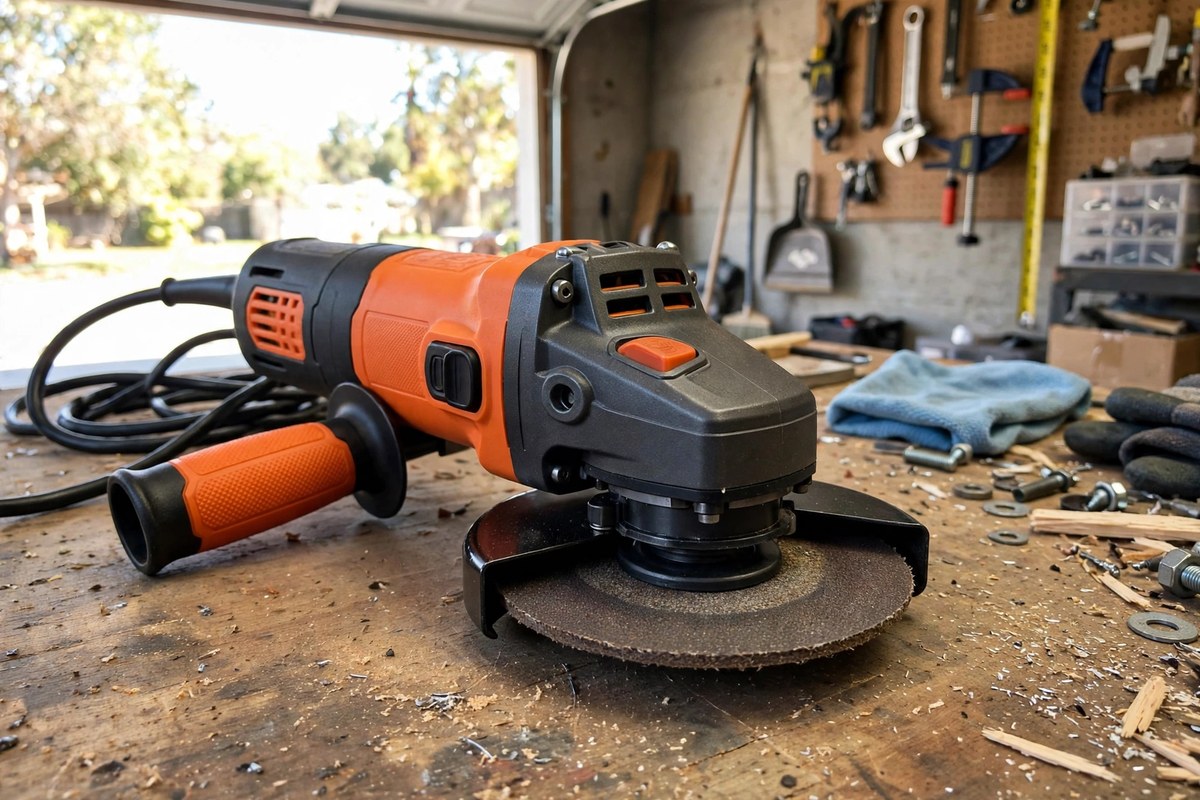
Typical price: $25–$35. 6 amps, 4-1/2-inch disc, 10,000 RPM, about 4.4 pounds.
The BDEG400 is the cheapest grinder in this guide by a wide margin, and it has the clearest job: occasional use. It cuts bolts, grinds rust, and sharpens mower blades perfectly well a few times a month — just take lighter passes in thick steel, where the 6-amp motor will bog down.
Build quality is where the price shows — more plastic in the housing and a shorter life under heavy use. But for a homeowner who needs a grinder twice a month, that trade is honest: $30 for a tool that does $30 worth of work.
Worth it if: you need a grinder a few times a month and want the lowest possible price. Skip it if: you grind or cut weekly — spend the extra $20 on the Metabo HPT.
Best for Cutting Metal: DeWalt DW402
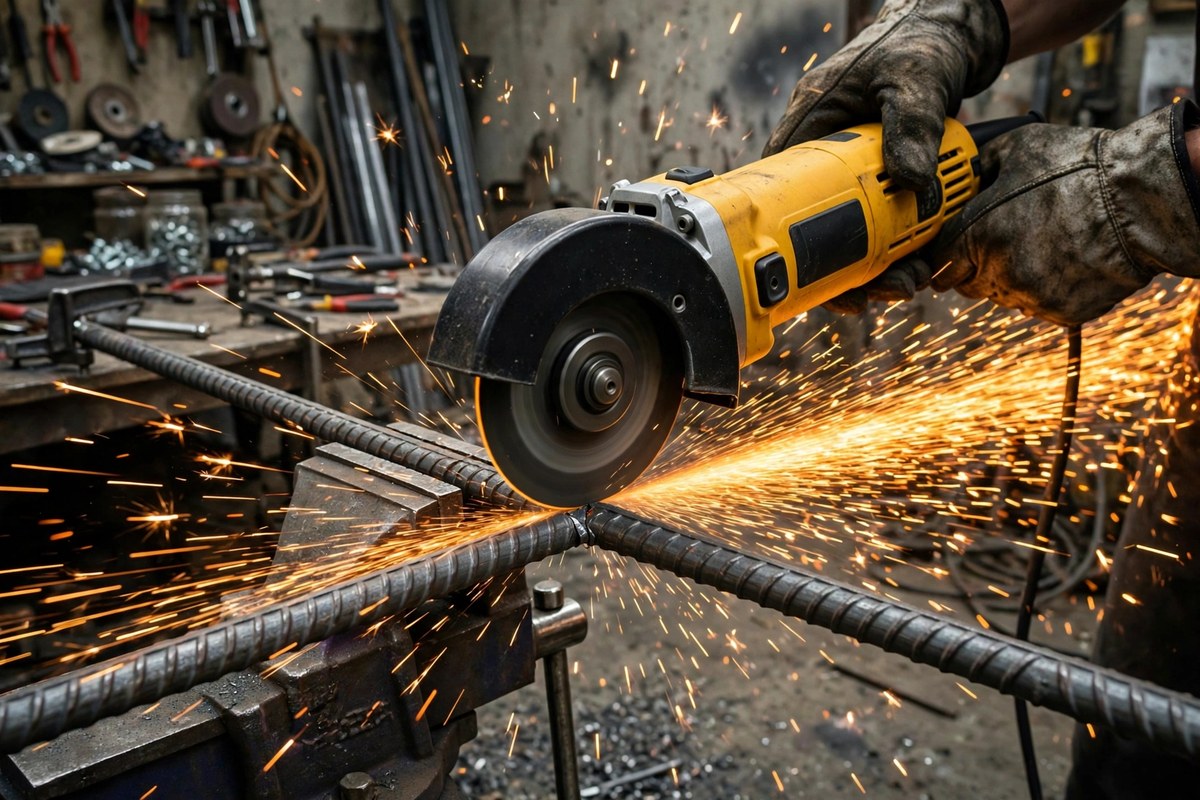
Typical price: $50–$60. 7 amps, 4-1/2-inch disc, 11,000 RPM, about 4.6 pounds.
The DW402 is the strongest corded grinder under $60, and it shows in the cut: the 7-amp motor and 11,000 RPM spindle keep thin cutting discs spinning through rebar and angle iron, where weaker grinders stall and glaze the disc. It also has the best switch in this guide: a paddle switch that stops the tool the moment you release it.
The trade-off is vibration: it shakes more than the Metabo HPT on long grinding sessions. For cutting work — its best job — that matters little.
Worth it if: cutting metal is your main job. Skip it if: you mostly grind and smooth — the Metabo HPT is quieter and smoother for that work.
Best Compact: Milwaukee 6130-33
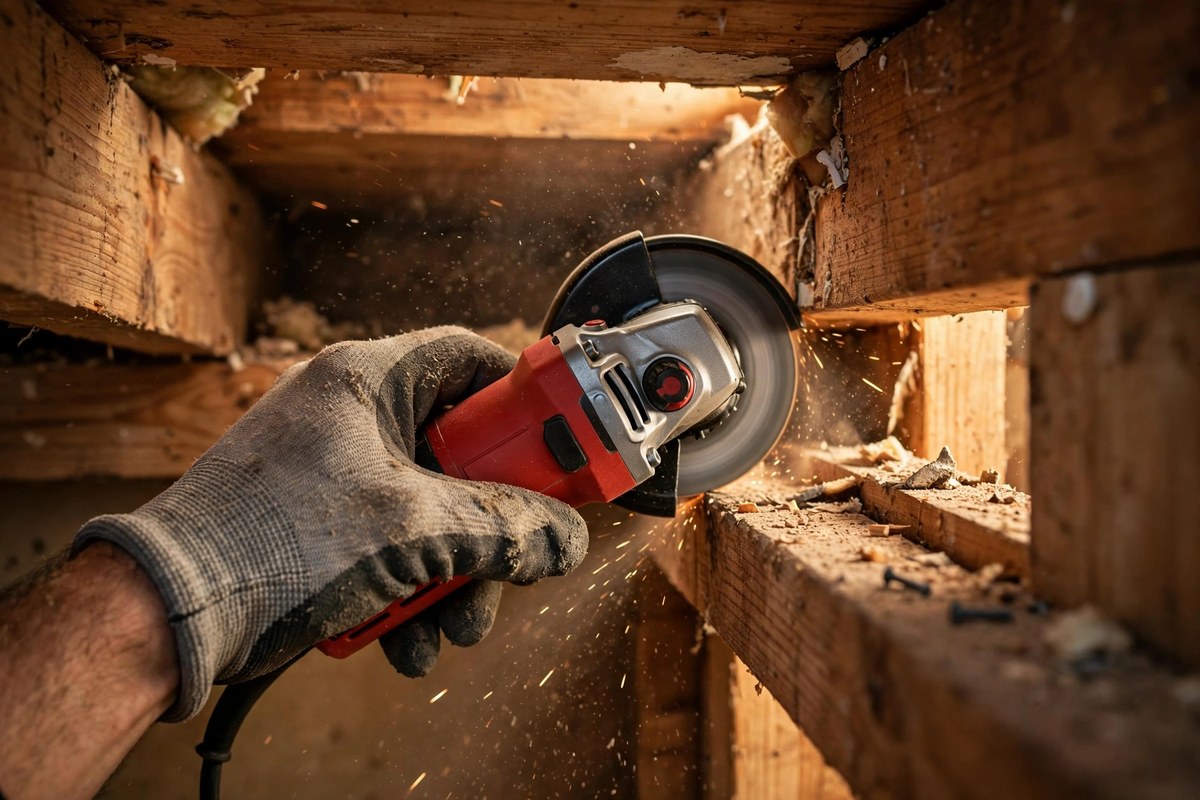
Typical price: $50–$60. 7 amps, 4-1/2-inch disc, 11,000 RPM, about 4.2 pounds.
The 6130-33 is the smallest full-power grinder here: a short body and slim grip that fit between joists, inside a mower deck, and under a car, where longer grinders will not go. It still packs a 7-amp motor, so the compact size costs nothing in cutting power.
It is a slide-switch grinder with a lock-on button, less forgiving for a first-timer than the DeWalt’s paddle switch, and it runs loud. But if your work happens in cramped spaces, nothing else under $60 reaches where this one does.
Worth it if: you work in tight spaces or want the lightest 7-amp grinder available. Skip it if: this is your first grinder — the DeWalt’s paddle switch is the safer start.
Best Cordless Value: Ryobi 18V ONE+ P421
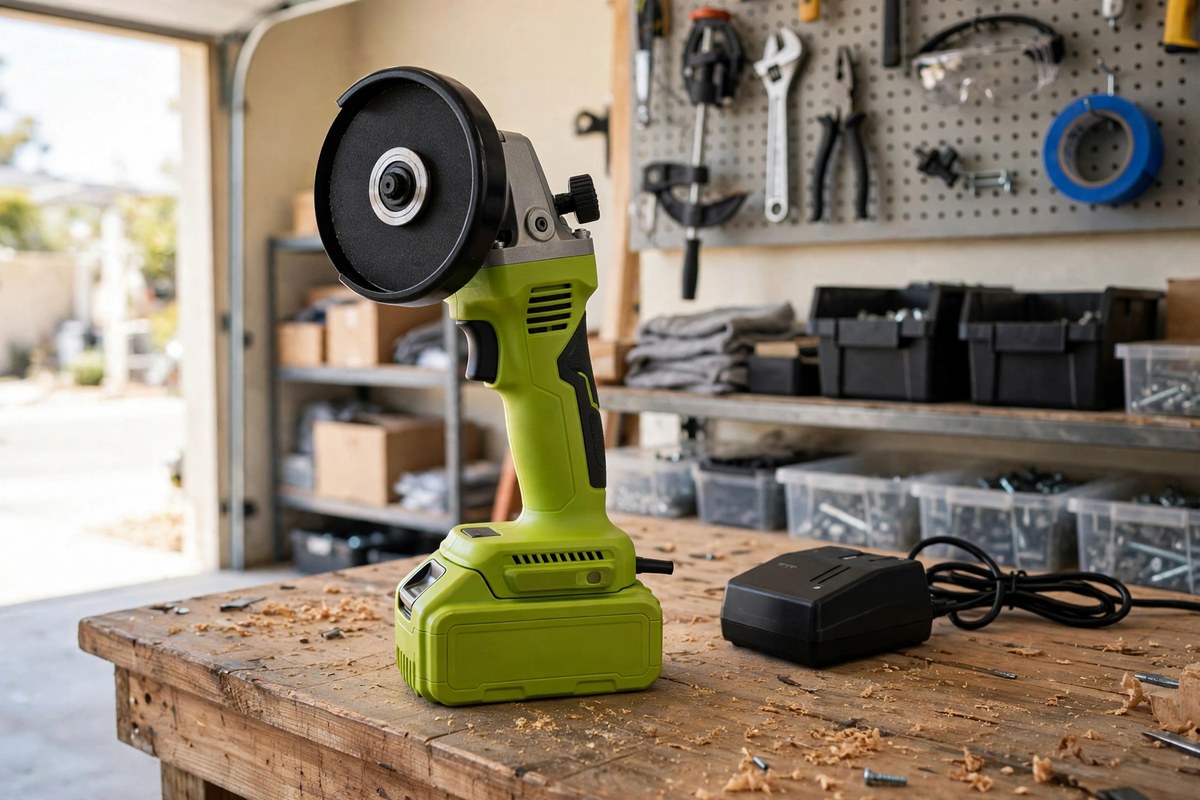
Typical price: $40–$55 (bare tool — battery and charger sold separately).
The P421 is the only cordless pick in this guide, and it earns its place on one condition: you already own Ryobi 18V ONE+ batteries. As a bare tool it costs less than most corded grinders, and it goes anywhere — no outlet, no extension cord, no cord to snag while you cut a fence post in the yard.
Runtime is the honest limit: a 4.0Ah battery gives roughly 15 to 20 minutes of steady cutting, so this is a grinder for short jobs, not a full afternoon of grinding. With a 5.0Ah battery it does real work; with the small 1.5Ah battery from a drill kit, it will frustrate you.
Worth it if: you already own Ryobi 18V batteries and cut outdoors or away from outlets. Skip it if: you own no Ryobi batteries — by the time you buy a battery and charger, you have spent twice the budget.
Safety Gear You Actually Need
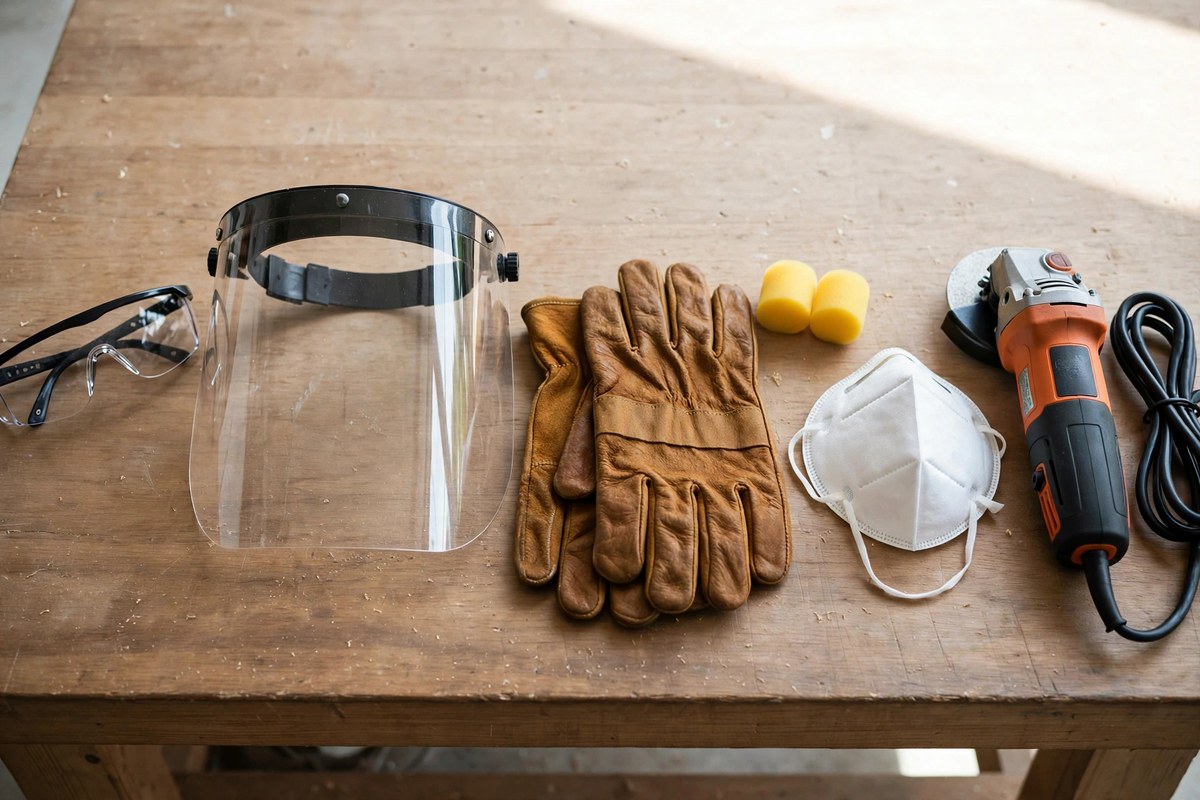
An angle grinder is the one budget tool where safety gear is not optional. A cutting disc spins at 10,000 RPM, and a shattered disc or a kicked grinder can do real damage. Budget about $20–$30 for gear, and buy it with the grinder.
Eye protection: impact-rated safety glasses at minimum; a full face shield is better and costs about $10. Gloves: snug leather work gloves — loose gloves can catch. Hearing protection: grinders run around 90 decibels; foam earplugs cost almost nothing. A dust mask: grinding metal and cutting masonry both make dust you do not want in your lungs.
Two habits matter as much as the gear: check every disc for cracks before you start — a dropped disc goes in the trash, not on the grinder — and never remove the guard to “see better.” It is the only thing between you and a shattered disc.
What to Skip — and Our Verdict
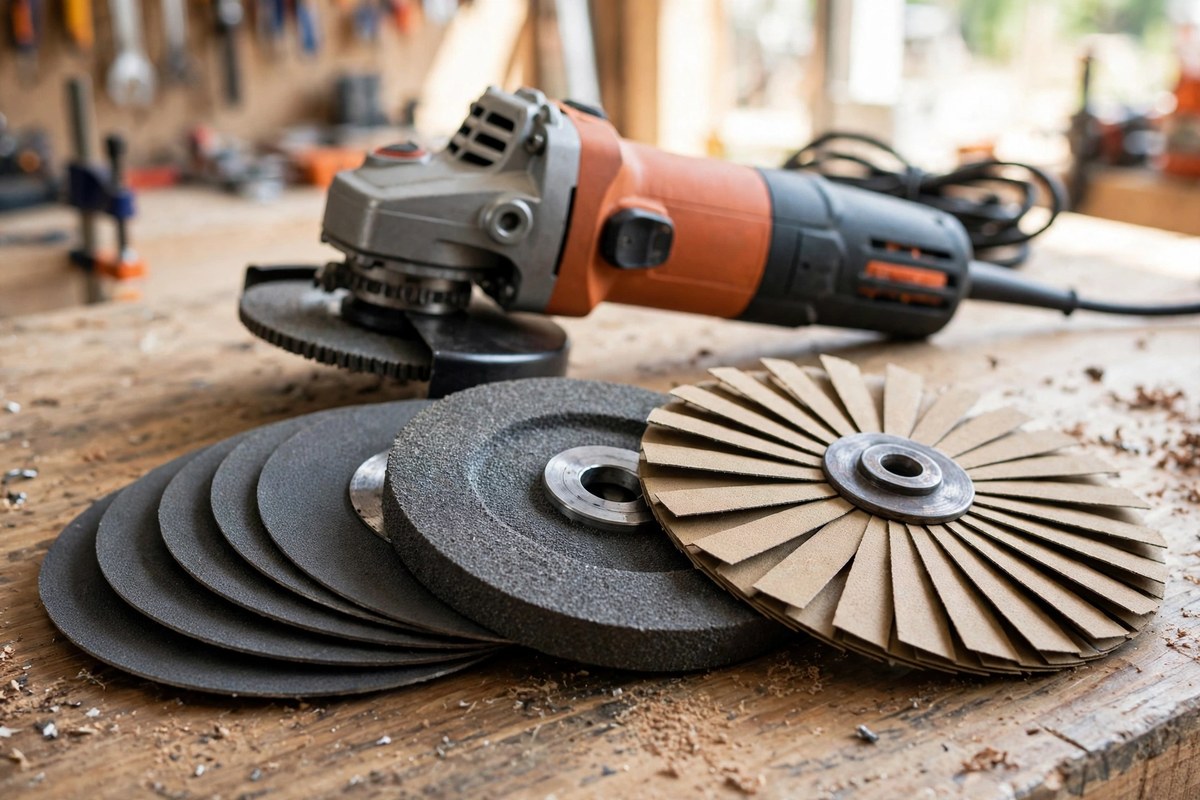
Skip the no-name $15 grinders from marketplace sellers: unbranded motors, guards that do not fit standard discs, and no parts support when the switch fails. Skip 7- and 9-inch grinders as a first buy — they are heavy, harder to control, and overkill for homeowner work. And skip buying a second grinder just because one is on sale; it earns its keep only when you keep different discs mounted on each.
Our verdict: for most homeowners, the Metabo HPT G12SR4 at $45–$55 is the buy — the best balance of power, weight, and price. On the tightest budget, the Black+Decker BDEG400 at $25–$35 does honest work. If cutting metal is the job, spend the extra $10 on the DeWalt DW402. Whichever you pick, buy the safety gear the same day.