Types of Drills: Which One Do You Actually Need?
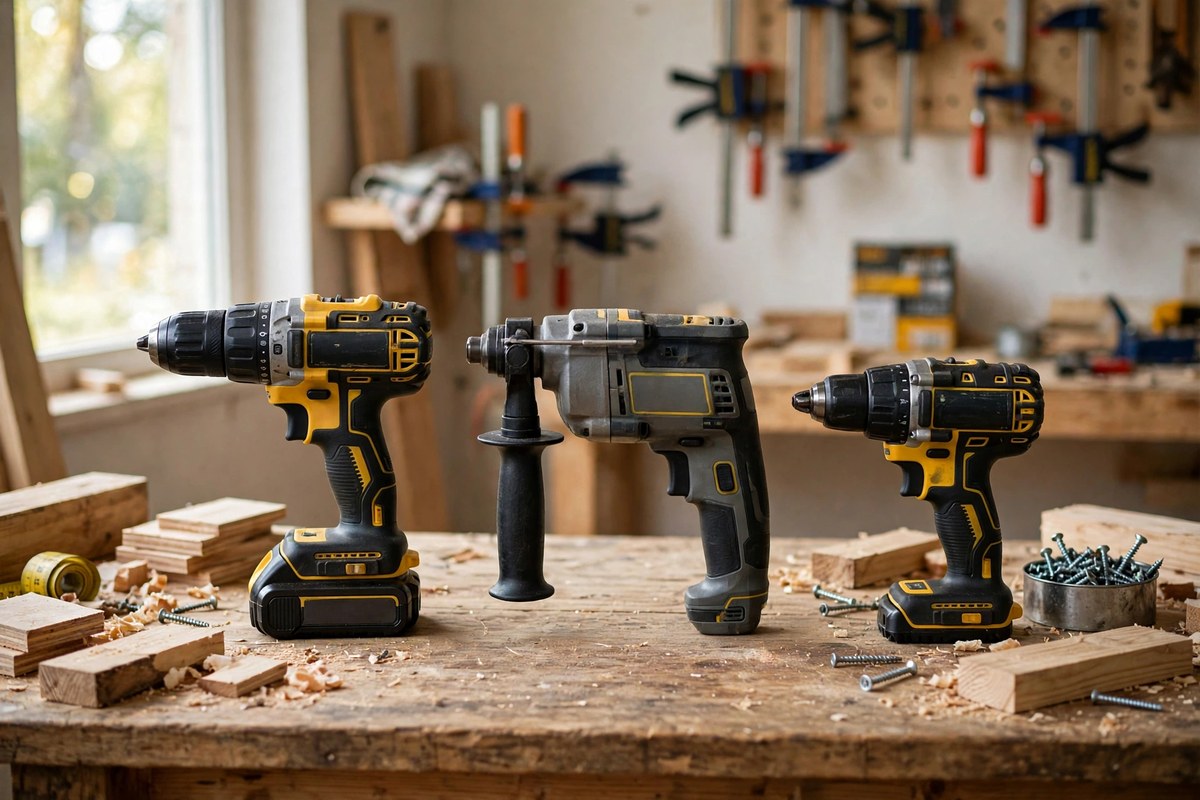
Walk into any hardware store and the drill aisle looks like a trick question. Drill/drivers, hammer drills, impact drivers, rotary hammers, drill presses — all spin a bit, all claim to be the one you need, and prices run from under $50 to over $300. No wonder most people buy the cheapest one on the shelf or the most expensive one and hope for the best.
The truth is simpler than the aisle suggests. Most homeowners need exactly one drill, a second earns its keep fast, and the rest are specialists you rent or buy only when a specific job demands them. This guide explains every type in plain language, with an honest verdict on each.
The Drill/Driver: The One Most People Need
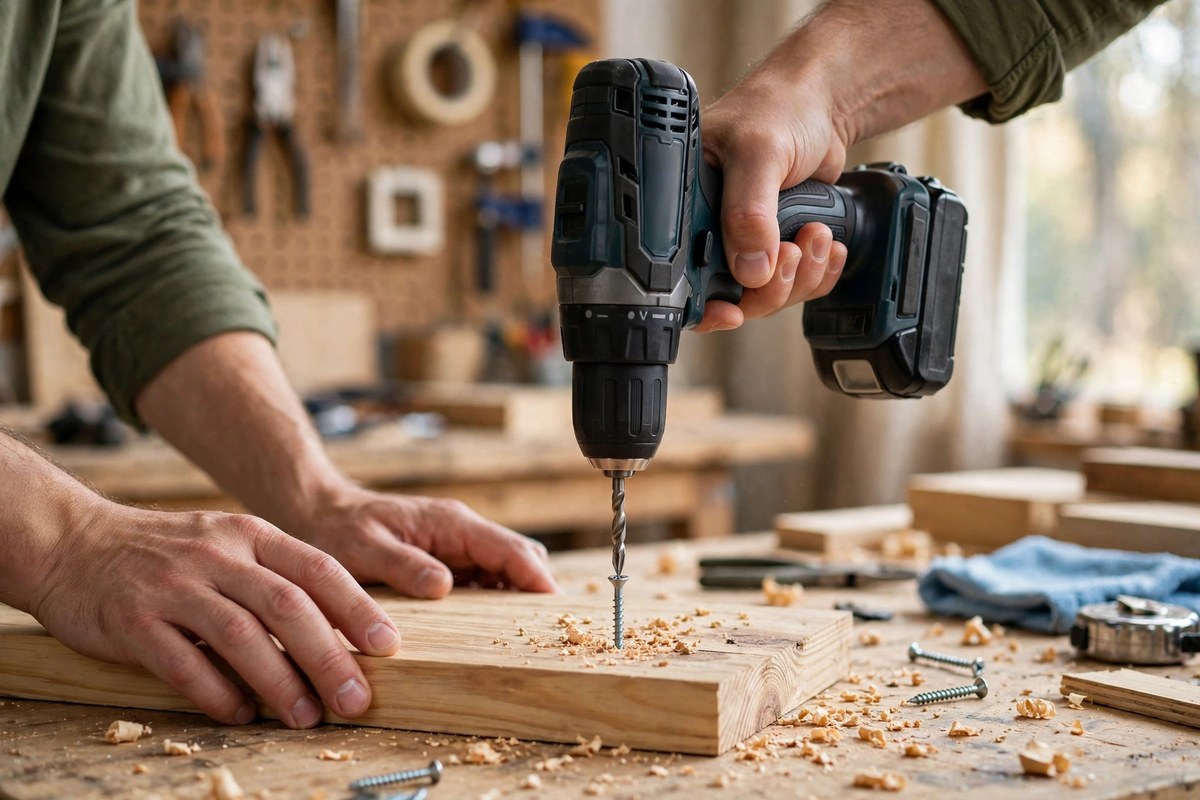
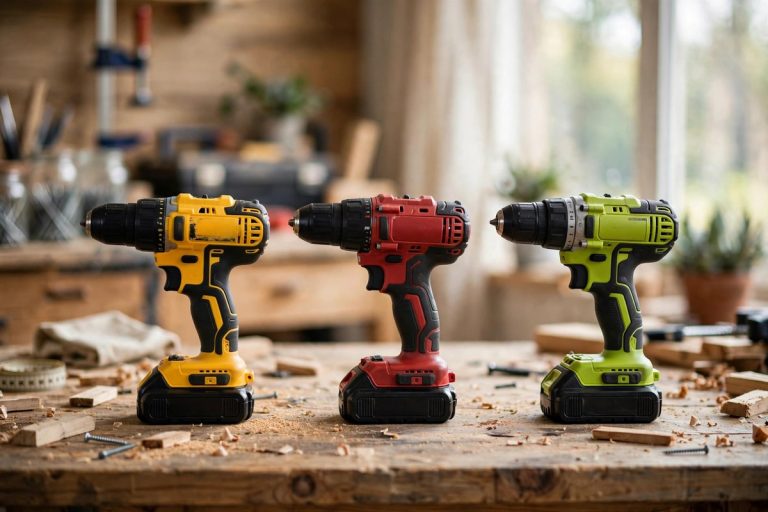
The drill/driver is the default drill — the one this guide means when it says “a drill.” It drills holes in wood, plastic, and light metal, and with the clutch set right, it drives screws without stripping them. One tool, two jobs, and for most households it is the only drill that ever gets used.
Two sizes dominate. A 12V drill/driver is light — usually under 2.5 pounds — and easy to hold overhead, a good pick for apartments and furniture assembly. An 18V or 20V drill/driver is the workhorse: more torque, bigger batteries, and a much wider range of tools on the same battery. For a first and only drill, the 18V/20V class is the safer buy.
Worth it if: you hang shelves, assemble furniture, mount a TV, or do general home repair. Skip it if: your only drilling is the occasional picture hook. If you want specific models, see our 5 best cordless drills for beginners.
The Hammer Drill: When the Wall Fights Back
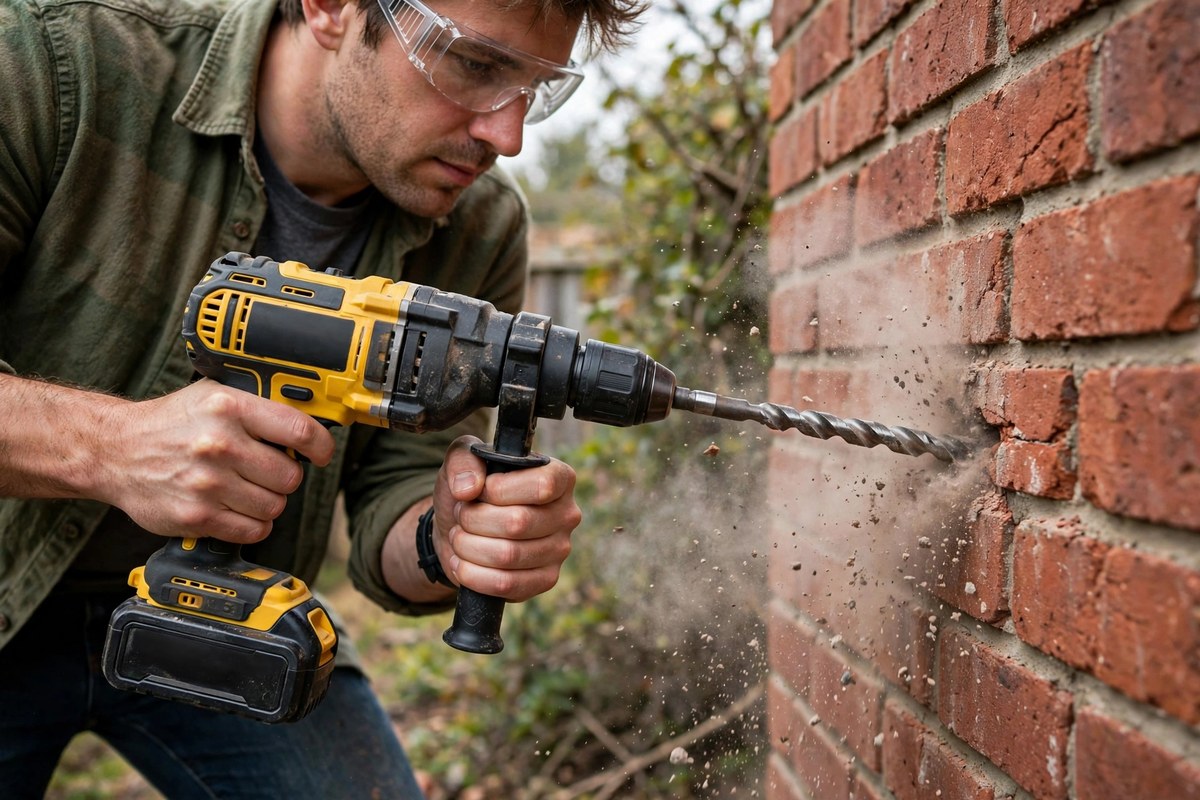
A hammer drill looks like a drill/driver, but it adds a rapid hammering action — thousands of tiny impacts per minute — that pulverizes brick, block, and concrete as the bit turns. A standard drill/driver will barely scratch a brick wall, while a hammer drill goes through it in seconds with the right masonry bit. Many mid-range drill/drivers include a hammer mode, so you may already own one without knowing it.
Worth it if: your home has brick, block, or concrete walls and you hang things on them. Skip it if: your walls are wood framing and drywall; hammer mode will sit unused.
The Impact Driver: The Screw-Driving Specialist
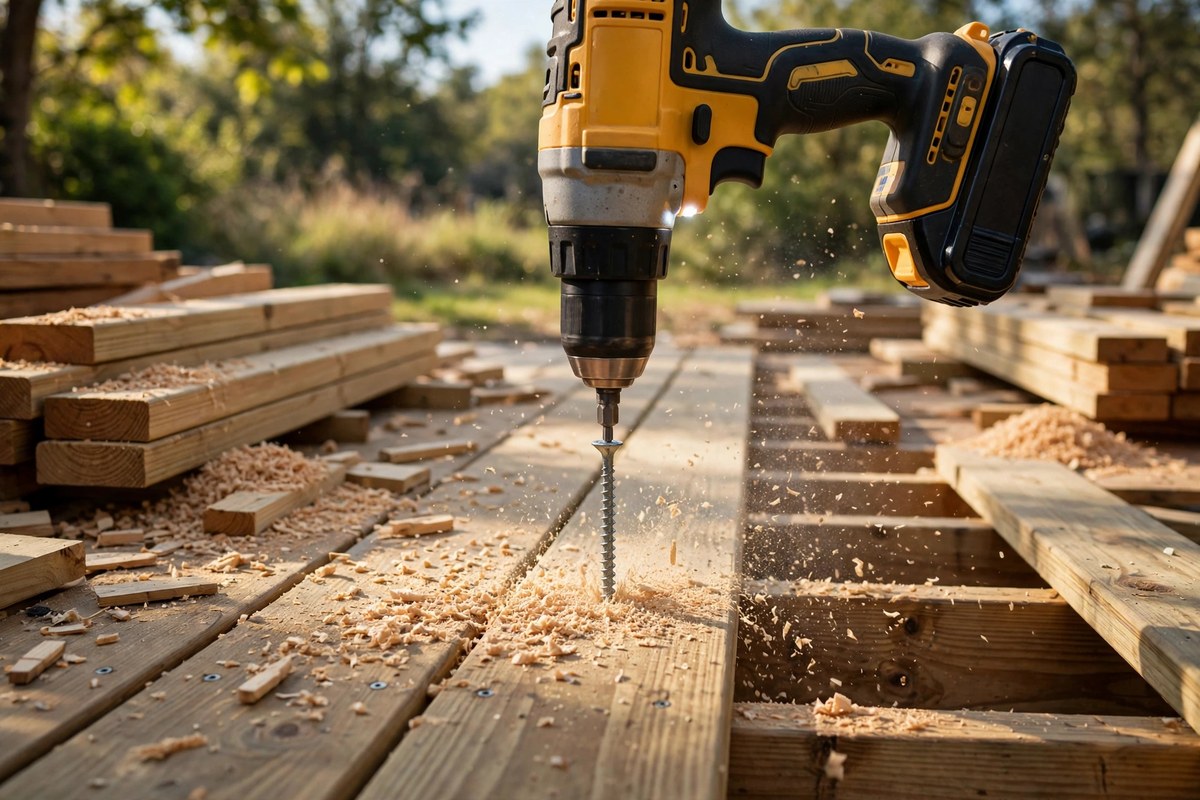
An impact driver does one thing better than anything else: drive screws. Instead of steady torque, it delivers rapid rotational impacts, so long screws go into dense wood without the bit camming out or your wrist twisting. It takes hex-shank bits and is shorter and lighter than a drill — on a deck or fence project it feels like cheating.
What it does not do is drill precise holes — the impacts that make it great at screws make it poor at clean drilling, and the bit wanders. It is a partner to a drill, not a replacement for one.
Worth it if: you build decks, fences, or raised beds, or assemble a lot of flat-pack furniture. Skip it if: you only drive a handful of screws a year — your drill/driver handles those. Many brands sell a drill/driver and impact driver as a two-tool kit, typically $129–$199 — the best value in the whole aisle.
Corded vs Cordless: Picking Your Power Source
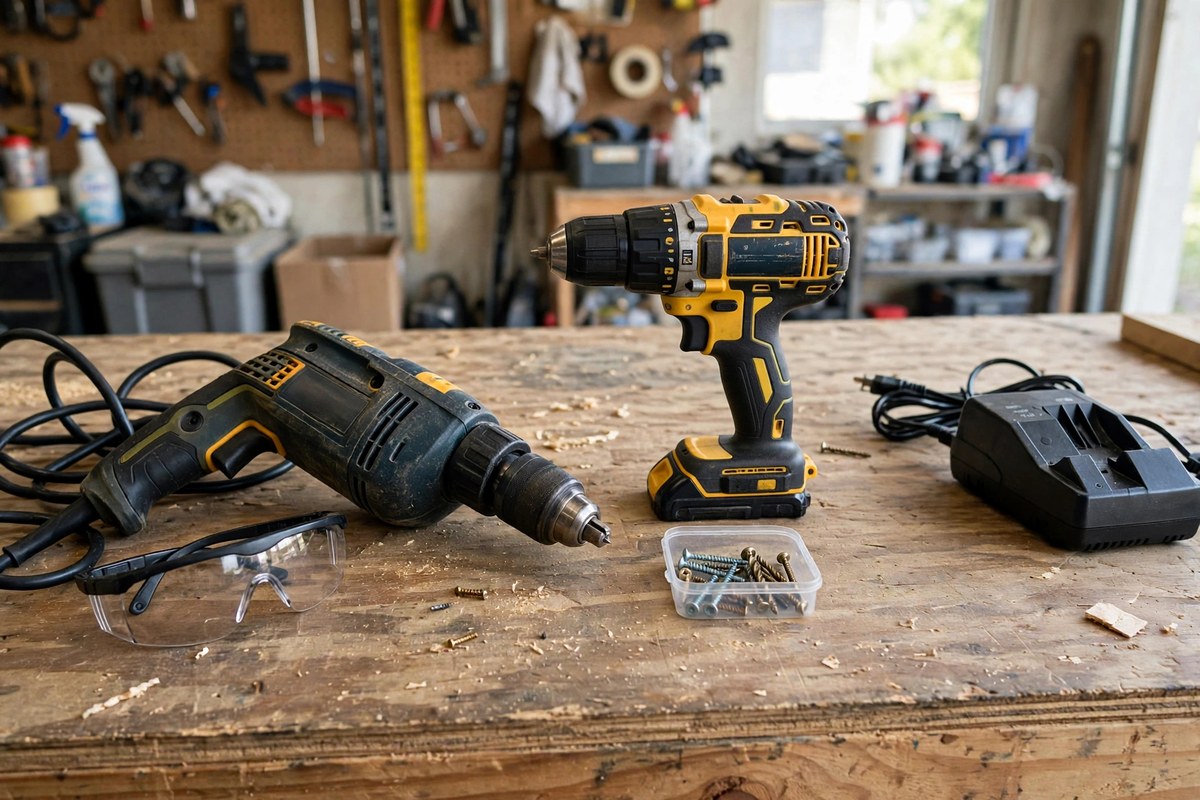
Almost every drill sold today is cordless, and for good reason: no cord to trip over, no outlet hunting, and batteries that hold a charge for months. The real cost is not the drill — it is the battery platform. Once you buy into a brand’s batteries, every later tool gets cheaper, so choose like you will live with it for years.
Corded drills still exist for a reason. They never run out of power, cost less for the same torque, and suit a drill that lives on a workbench and runs for hours. A solid corded drill typically runs $49–$99.
Our verdict: go cordless unless you have a specific bench-bound job in mind. If you already own batteries from the same brand, buy the drill as a bare tool — often under $100 — and skip paying for a second charger and battery.
The SDS Rotary Hammer: Serious Concrete Work
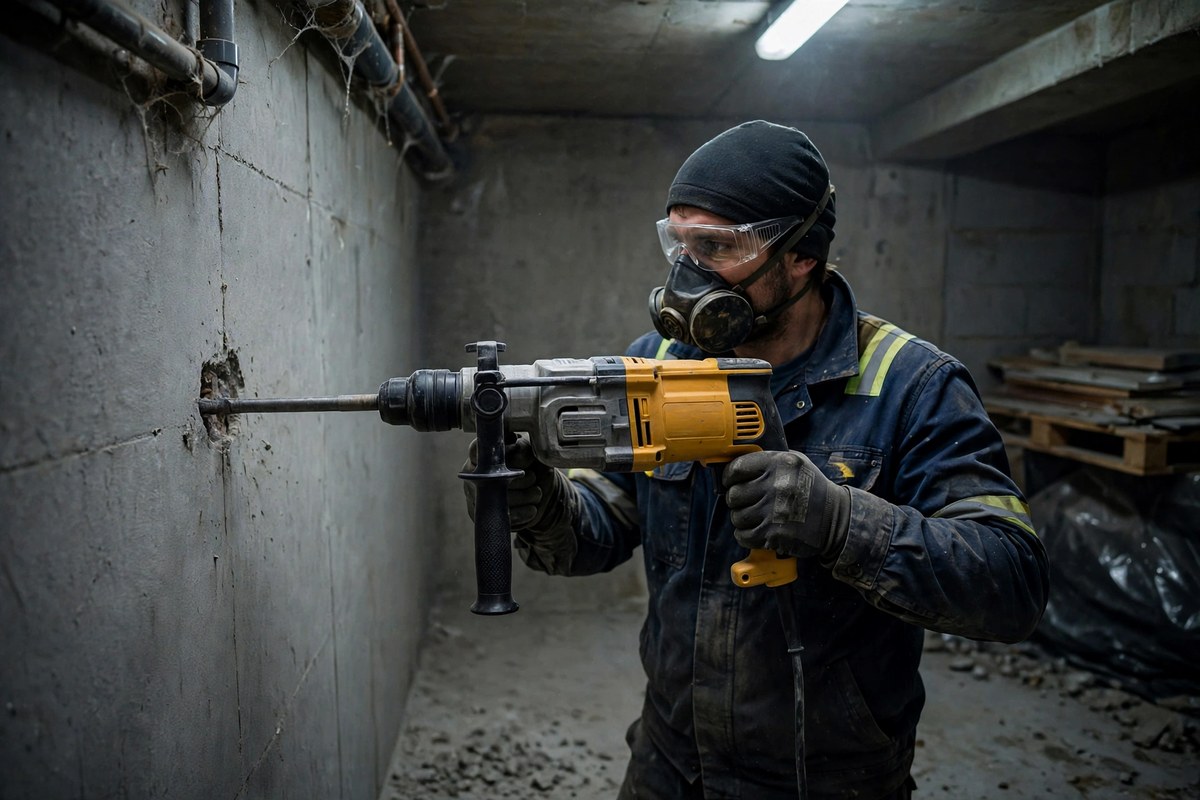
An SDS rotary hammer is what you reach for when a hammer drill gives up. It uses a piston-driven hammer and special SDS bits that lock into the chuck, and it chews through solid concrete, stone, and foundation walls the way a normal drill goes through pine.
For most homeowners it is a rental, not a purchase. A decent SDS rotary hammer costs $149–$299, while a half-day rental typically runs $30–$50.
Worth it if: you regularly drill into concrete — a stone house, a retaining wall, a basement fit-out. Skip it if: the job is one afternoon: rent it, return it, and spend the savings on the drill you will actually use weekly.
The Drill Press: Precision in the Workshop
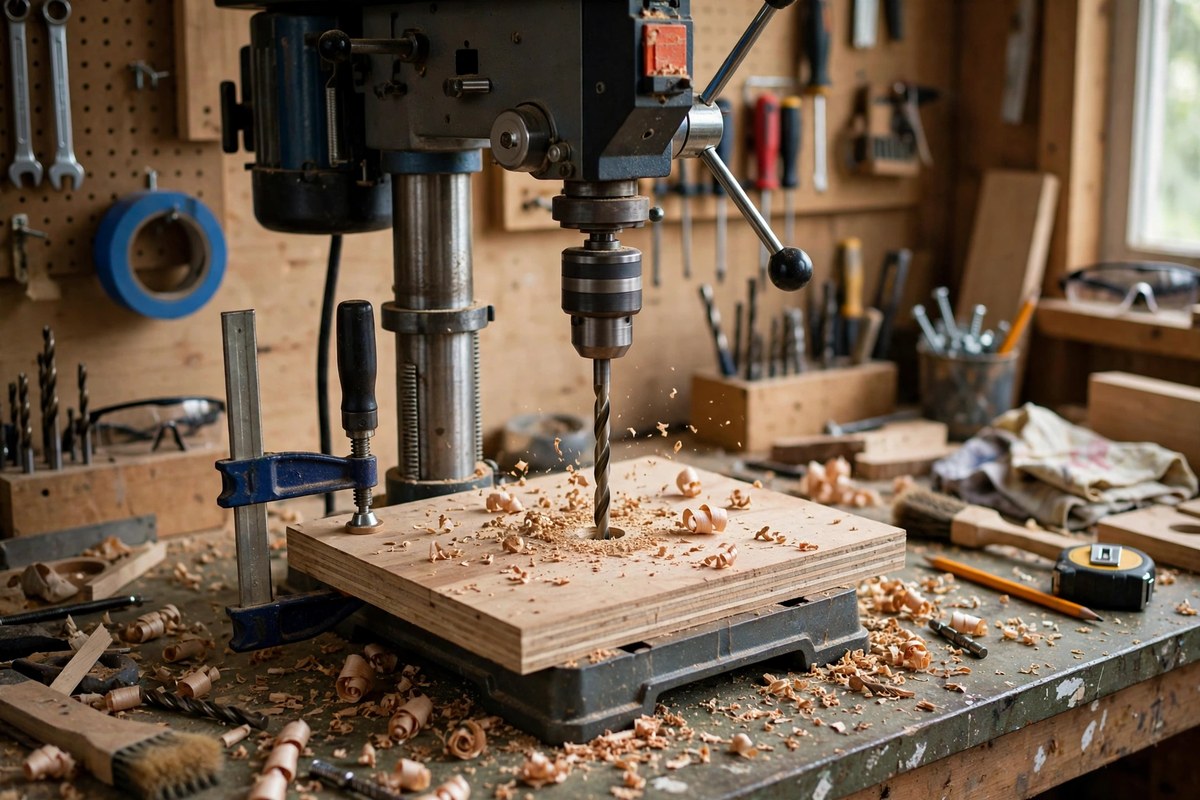
A drill press is a drill bolted to a stand: the bit comes straight down, the table holds the workpiece square, and a depth stop makes every hole identical. It drills perfectly perpendicular holes, which is something no hand-held drill can promise. Woodworkers use it for dowel joints and mortises — any hole where “close enough” is not good enough.
The trade-off: it does not leave the bench, and it drills holes and nothing else.
Worth it if: you have a workshop and do woodworking or any project with repeated precise holes. Skip it if: your drilling happens around the house; a hand-held drill with a drill guide gets you close enough for a tenth of the price. Benchtop models typically run $149–$399.
Right-Angle and Specialty Drills
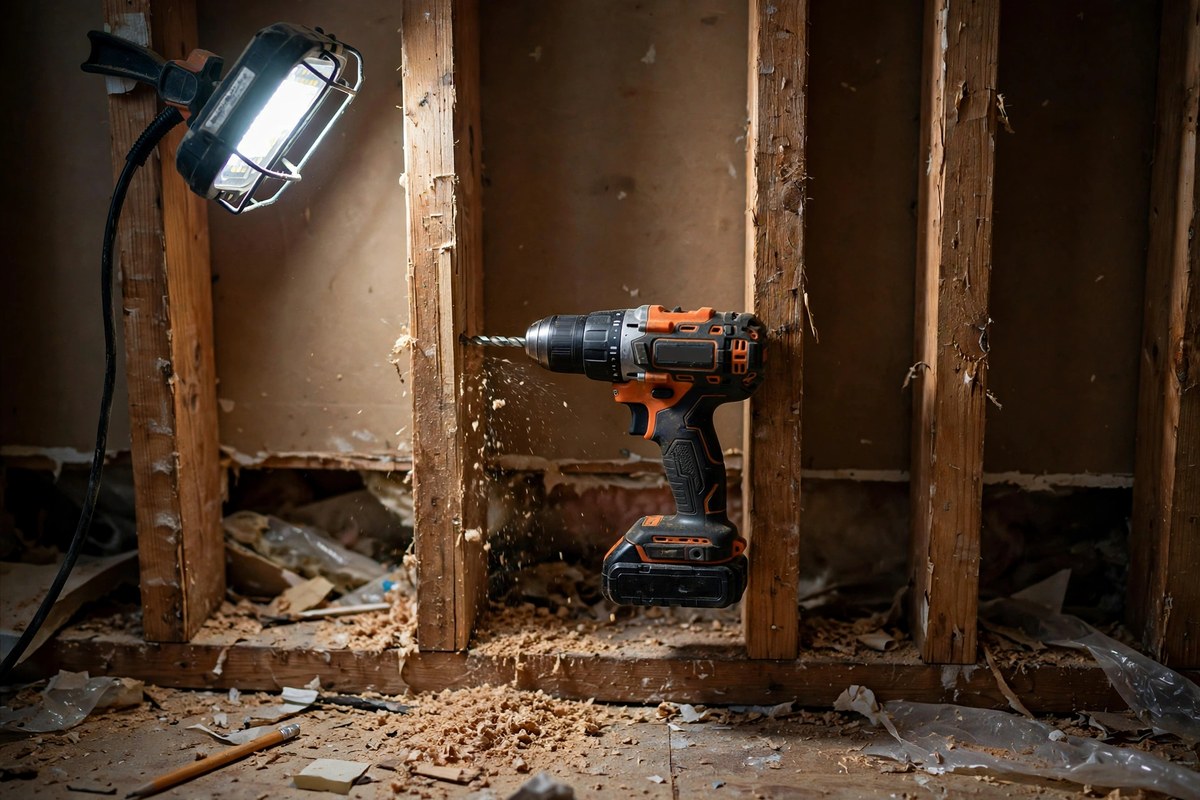
A right-angle drill has its chuck at 90 degrees to the body, so it fits where no normal drill can: between wall studs, inside cabinets, under floor joists. For a homeowner, it is the tool that saves a renovation when a pipe or wire needs a hole in a spot your drill cannot reach.
Other specialists are narrower still. A drywall screw gun sets screws to an exact depth all day — a drywaller’s tool, not a homeowner’s. A magnetic drill press clamps to steel beams for metal fabrication.
Worth it if: you are opening walls during a renovation and keep hitting spots your drill cannot reach. Skip it if: you have never needed one — a rental or a borrowed tool covers a one-off job.
Chuck Size, Clutch, and Speed: The Specs That Matter
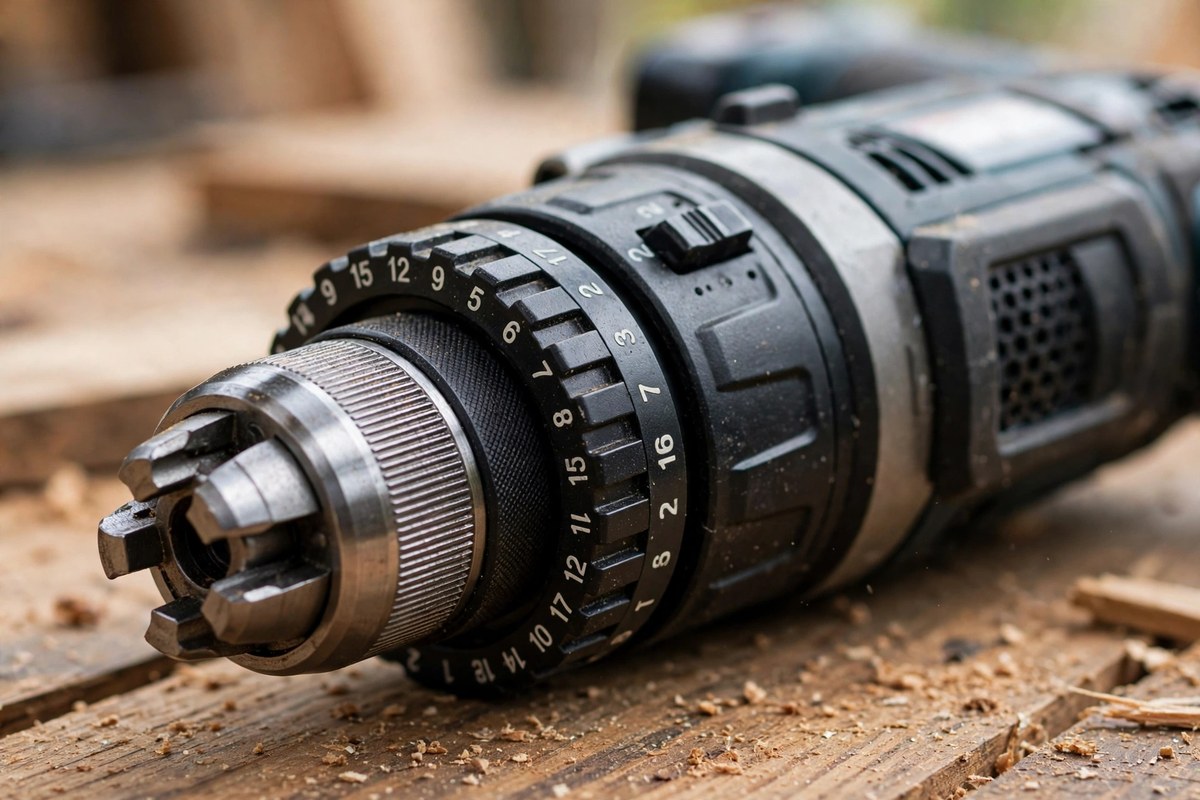
Three specs decide how a drill feels in use. Chuck size is the maximum bit shank the drill accepts: 3/8-inch on compact 12V drills, 1/2-inch on most 18V/20V drills. The half-inch chuck takes bigger bits and is the safer choice for a first drill.
The clutch is the numbered ring behind the chuck. It limits torque so screws stop at the right depth instead of stripping. Low numbers for small screws and soft wood, high numbers for large screws and hardwood — and a drill setting, usually marked with a drill-bit icon, that locks the clutch out for drilling holes.
Speed matters too. A two-speed gearbox is standard: low speed with high torque for screws and big bits, high speed for small holes. Brushless motors cost more but run cooler and last longer — worth it on a drill you will own for a decade.
Battery Platforms: Buy Into the Right One
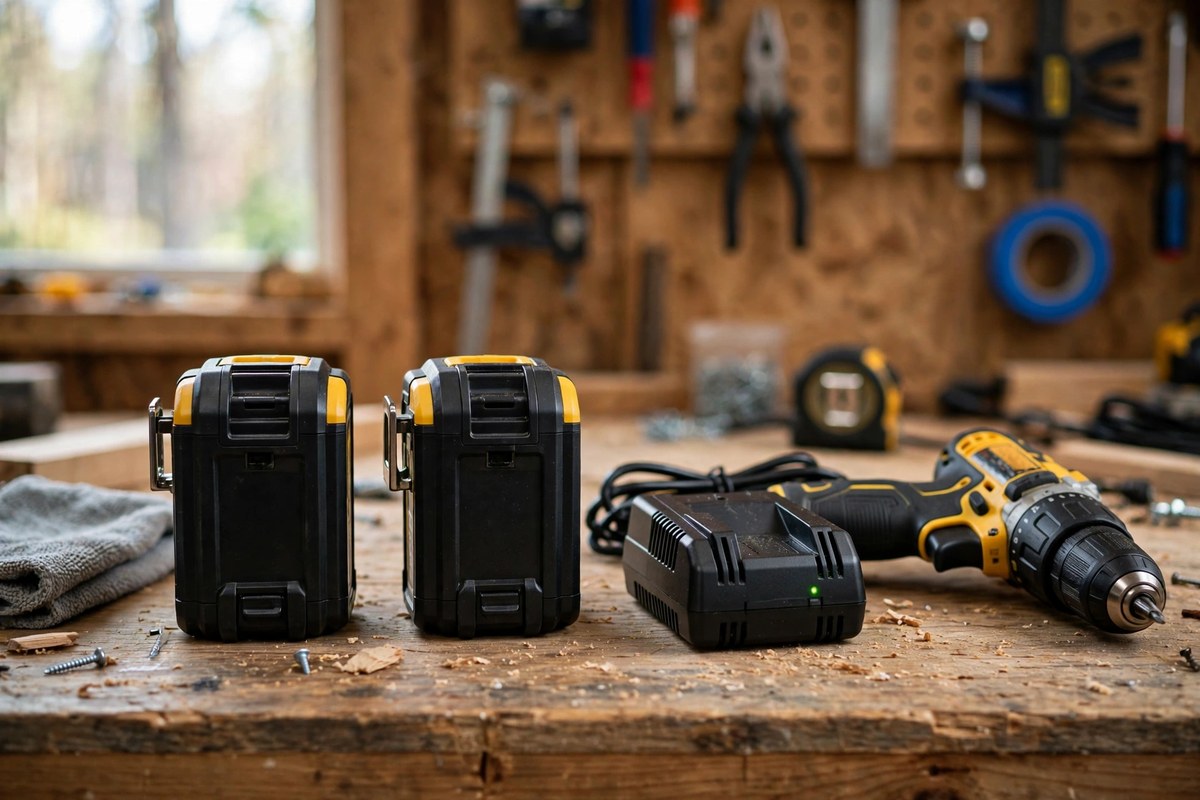
The battery is the real purchase. A drill is cheap; the platform is the commitment. Every major brand runs its own battery system, and batteries do not cross brands, so pick one with a wide tool range — later tools will be bare tools at half the price once you own the batteries.
Two numbers matter on a battery. Voltage (12V or 18V/20V) sets the power class. Amp-hours (Ah) set the runtime: a 2.0Ah battery is light and fine for quick jobs, a 5.0Ah battery runs two to three times longer. Get two batteries — one in the drill, one on the charger — or the project stops every time the battery does.
What to Spend — and Our Verdict
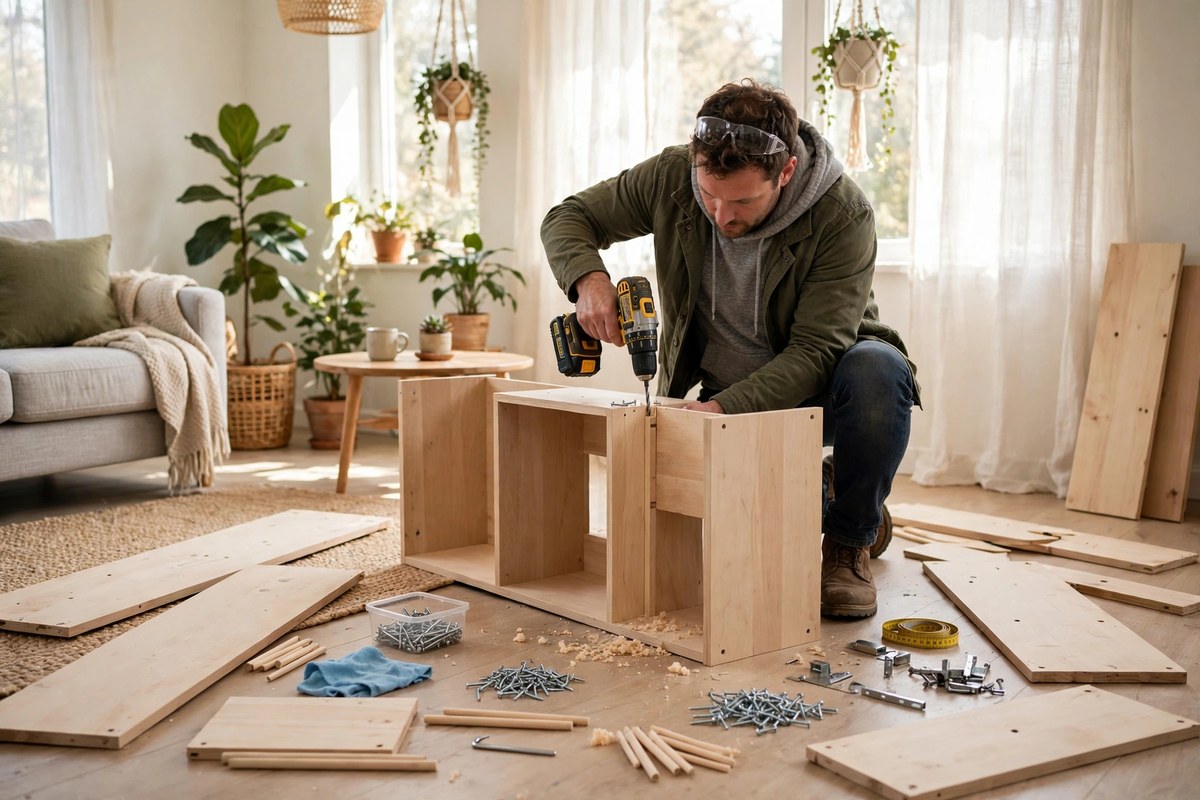
Three budget tiers cover the whole market. Budget, $49–$99, buys a solid 12V drill/driver or a basic 18V kit — enough for apartments and light repairs. Mid-range, $99–$179, is the sweet spot: an 18V/20V brushless drill/driver kit, often with a second battery, or a two-tool drill/driver plus impact driver combo. Pro, $179–$299, buys top-tier brushless tools and bigger batteries — more than most homes need.
Our verdict: buy an 18V/20V brushless drill/driver kit in the $99–$179 range from a brand with a wide battery platform, and add the matching impact driver later as a combo kit. Add a hammer drill only if your walls are masonry, and rent the SDS rotary hammer when concrete calls. One good drill, bought once, handles nearly everything a home asks.