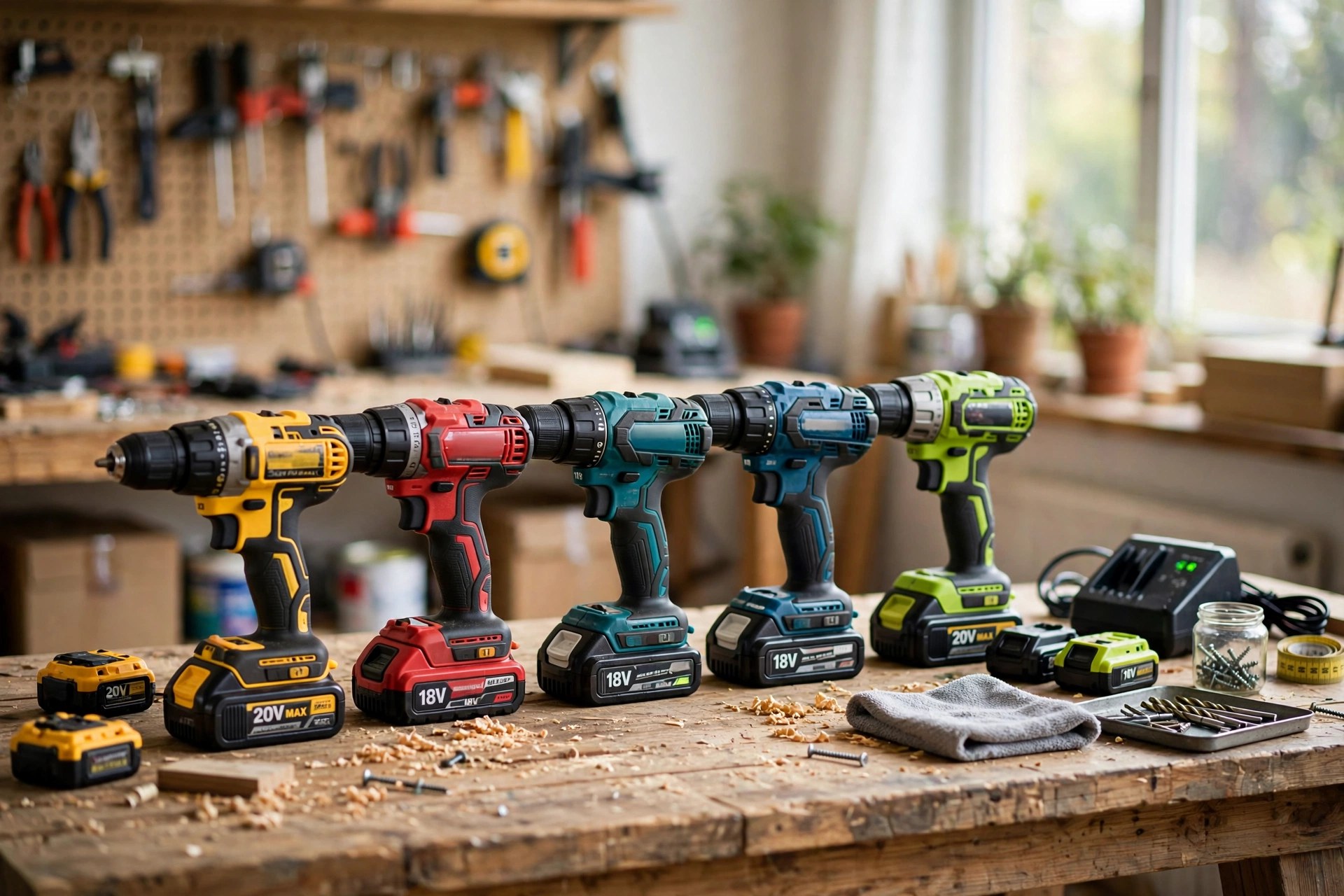
5 Best Cordless Drills for Beginners (2026 Tested)
Your first cordless drill is the tool that turns “I should call someone” into “I can fix that myself.” But walk into any store (or scroll any product page) and you’ll face a wall of voltages, torque numbers, and battery platforms that all claim to be the best. This guide cuts through it: five drills that genuinely suit beginners, what separates them, and the few specs that actually matter for your first projects.
One honest note up front: you do not need the most powerful drill. You need one that is light enough to control, strong enough for furniture, shelves, and flat-pack builds, and part of a battery family you can grow with later.

What to Look for in Your First Cordless Drill
Voltage: 12V vs 18V/20V
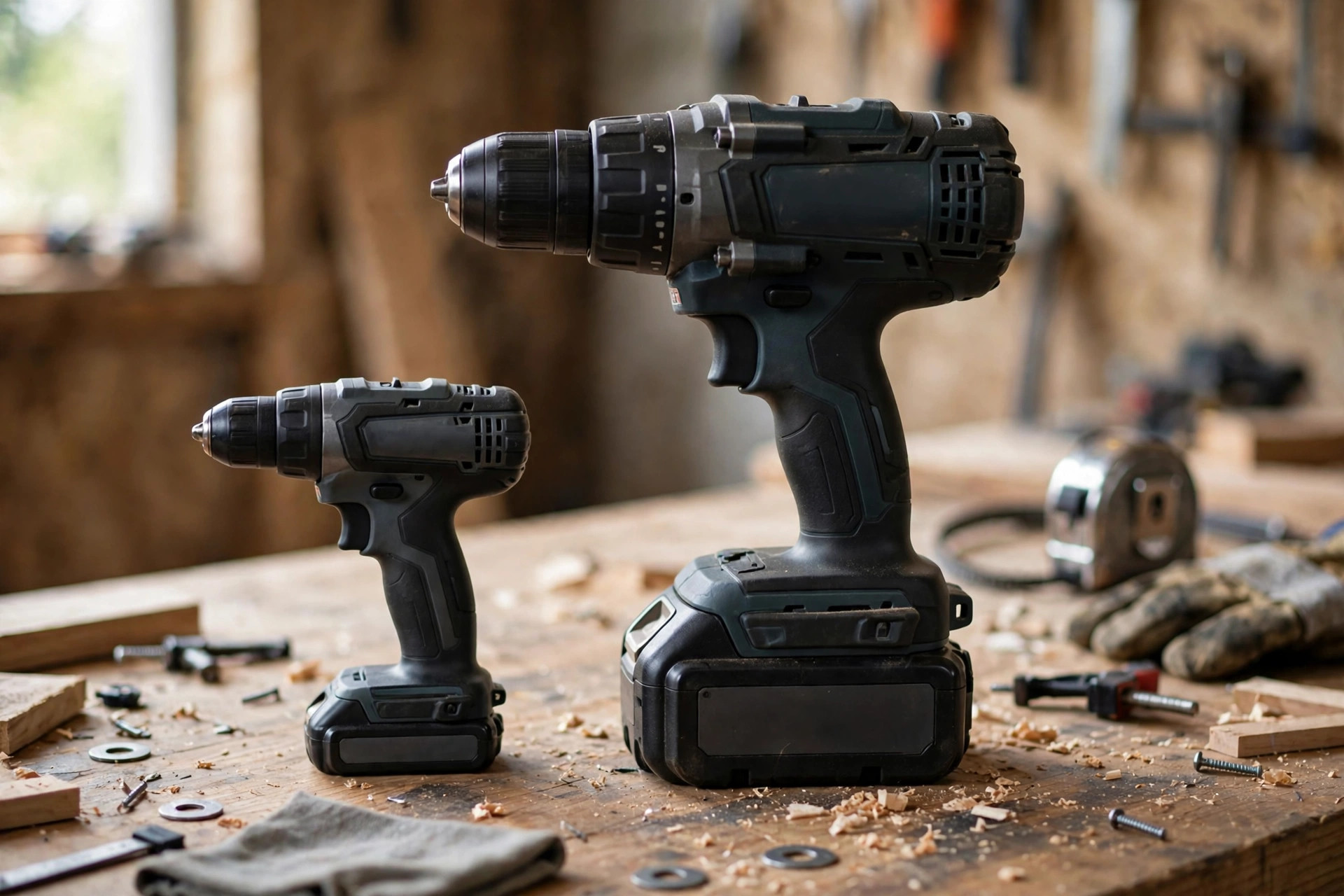
Voltage is the class, not a quality score. 12V drills are compact and light — great for apartments, furniture assembly, and anyone who finds full-size tools tiring. 18V/20V drills (the same class — “20V MAX” is marketing for 18V nominal) handle everything 12V does, plus bigger jobs like drilling into studs and mixing small batches. If you plan to own one drill for years, start with 18V/20V. If weight matters more than headroom, 12V is a smart, cheaper start.
Chuck size
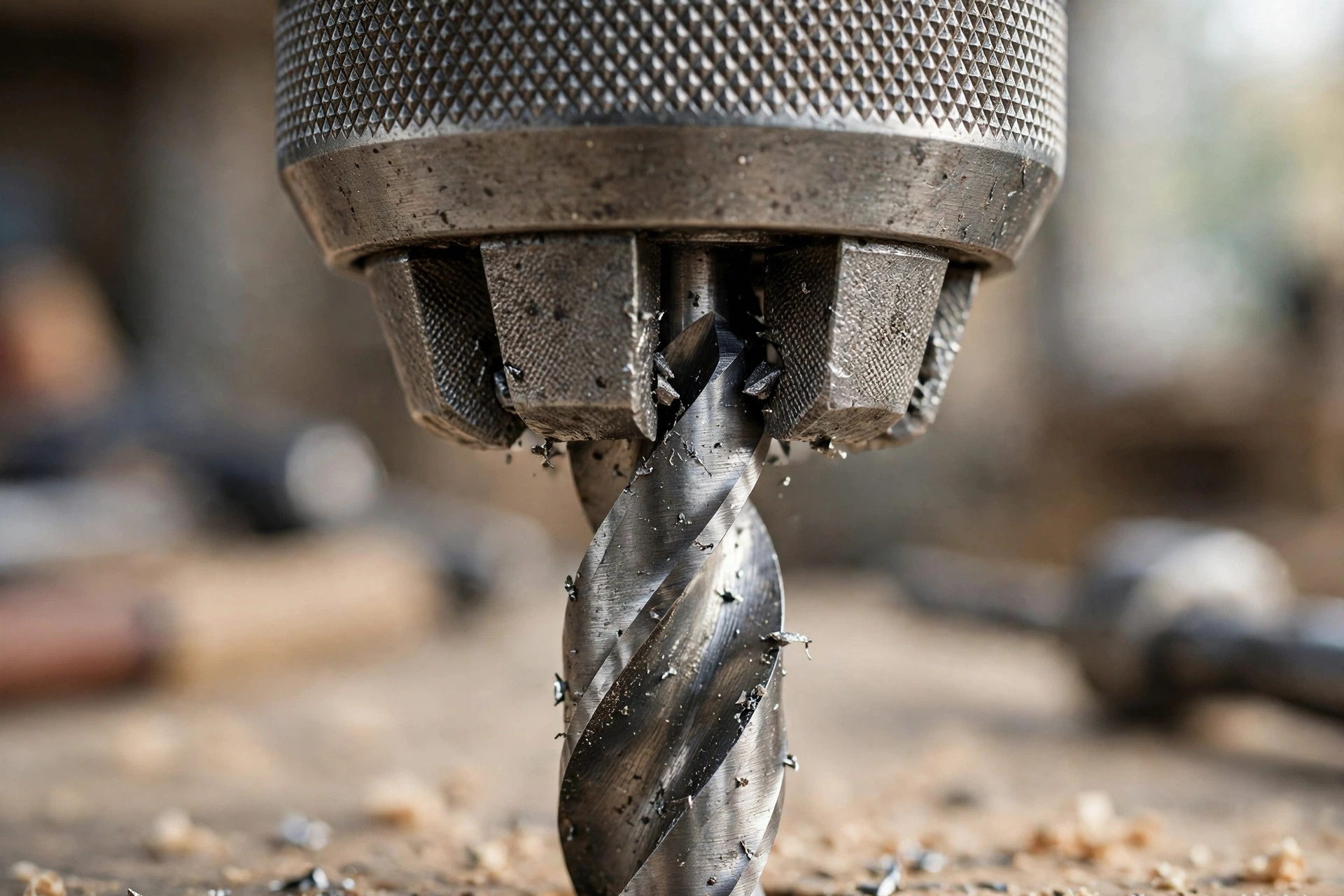
The chuck is the clamp that holds the bit. 1/2-inch chucks accept bigger bits and are the standard on most 18V/20V drills. 3/8-inch chucks appear on smaller 12V models and cover almost all beginner tasks. Either works — just know larger accessories need the 1/2-inch.
Brushed vs brushless
Brushless motors run cooler, last longer, and squeeze more from each battery — but they cost more. For a first drill used a few times a month, a good brushed kit is perfectly fine. Brushless is a “worth it” upgrade only if you’ll use the drill weekly or already know you want the platform long-term.
The battery platform is the real decision
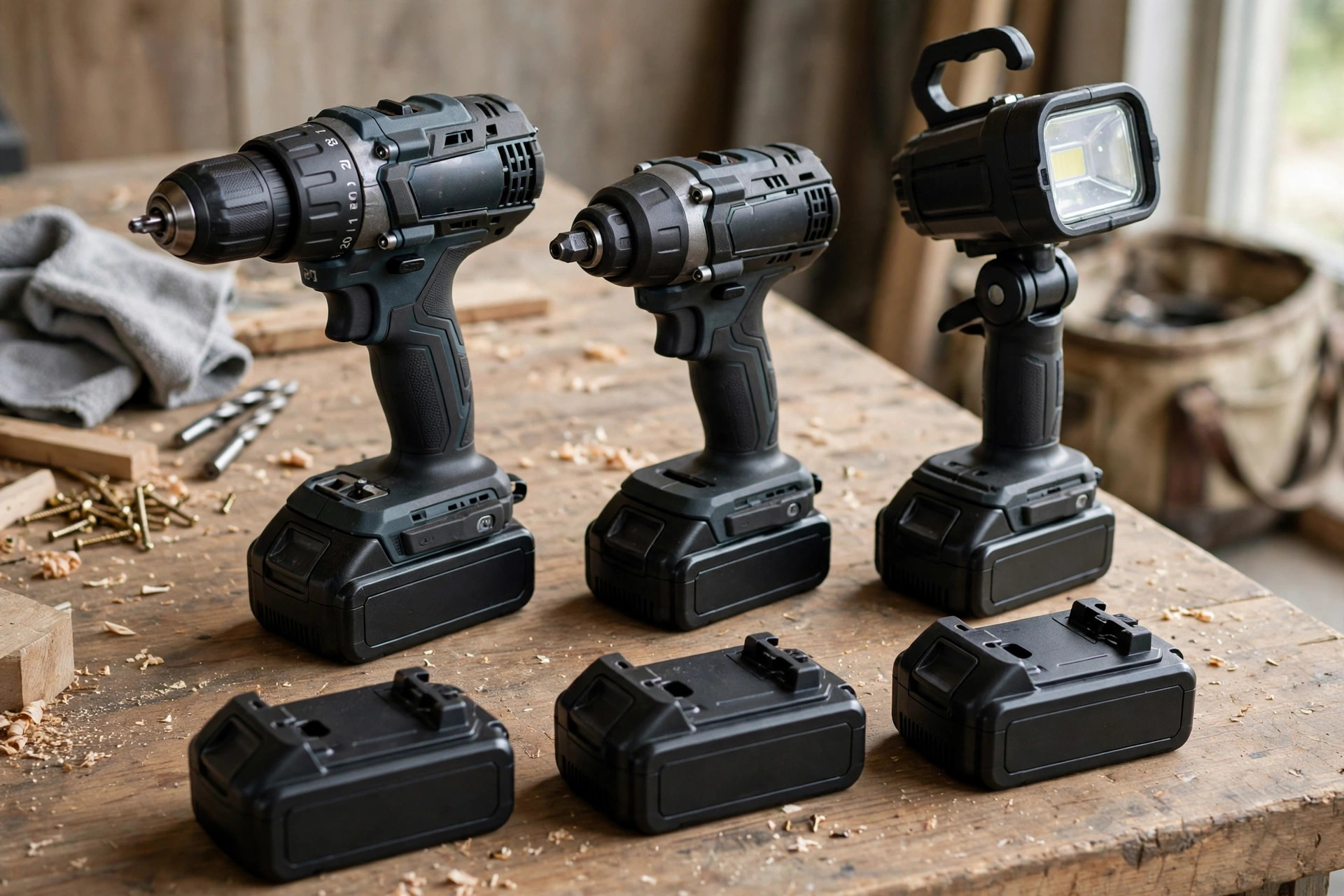
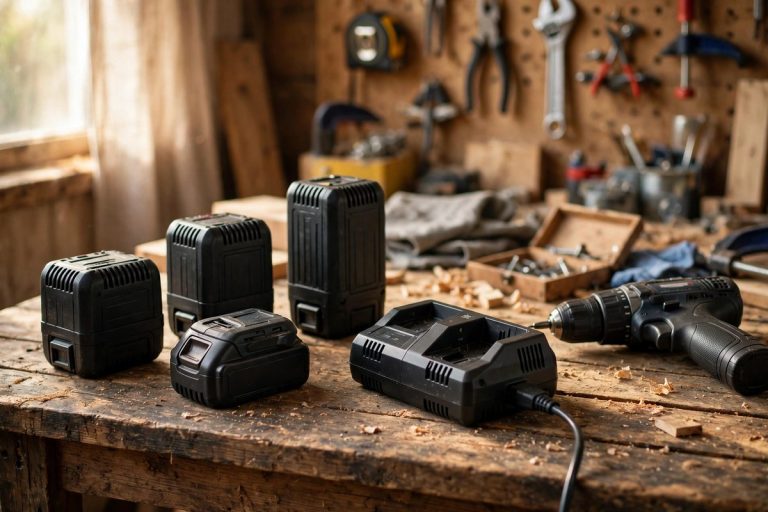
Batteries don’t swap between brands. Your first kit quietly chooses your future tools — the same battery will later power your sander, saw, or trimmer if you stay in the family. Every pick below comes from a platform with a wide, affordable tool range, so none of them is a dead end.
The 5 Best Cordless Drills for Beginners
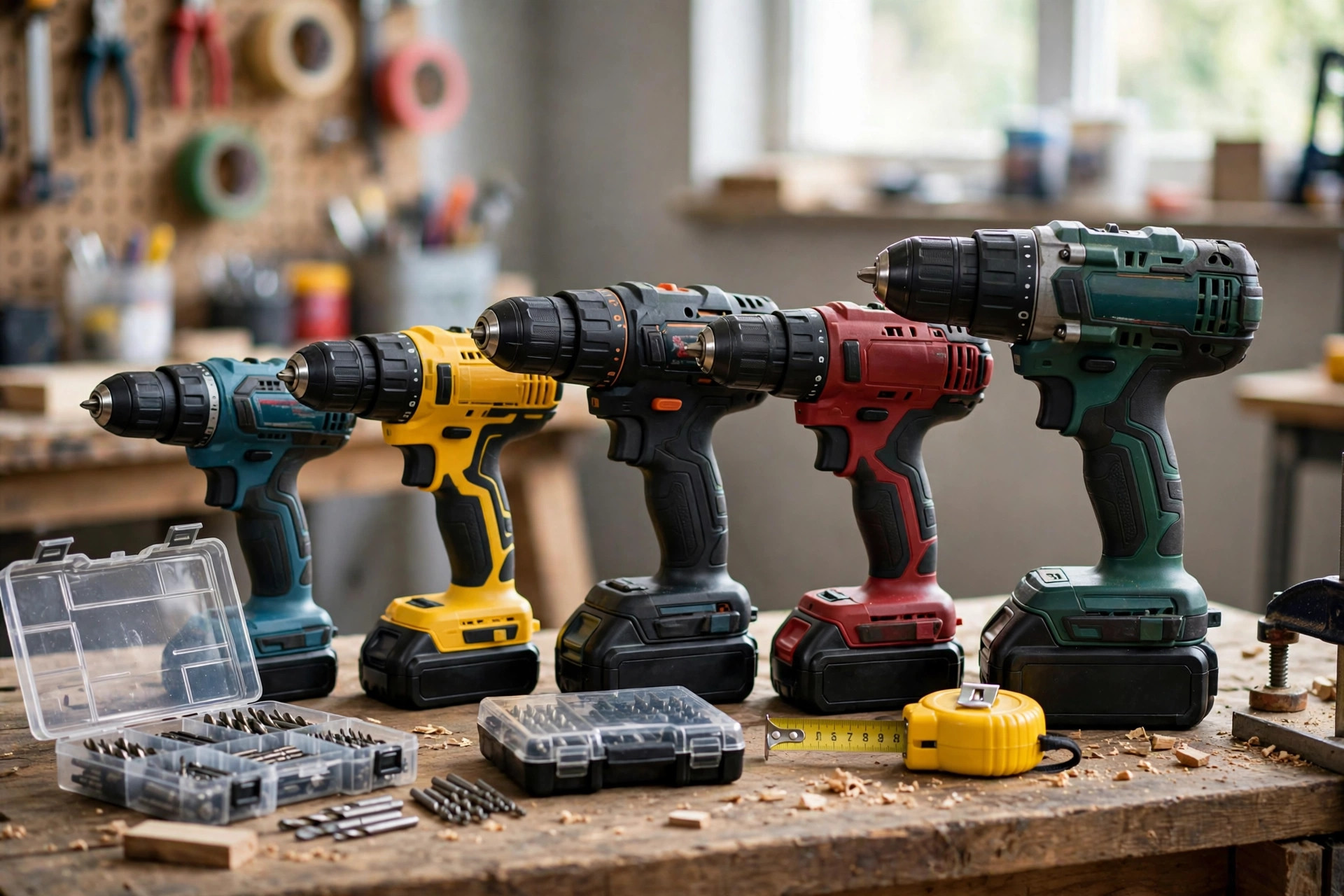
1. DeWalt 20V MAX Drill/Driver Kit — Best Overall
The safe, do-everything first drill. It’s compact enough for flat-pack furniture, strong enough for studs and deck repairs, and the 20V MAX platform is one of the deepest in the business. Kits typically include two batteries and a charger, usually in the $99–$159 range.
Worth it if: you want one drill that lasts a decade and a platform you’ll never outgrow.
Skip it if: you only assemble furniture twice a year — a cheaper pick below will do.
2. Ryobi 18V ONE+ Drill/Driver — Best Budget Pick
Ryobi’s ONE+ family is the largest budget platform there is — hundreds of tools share one battery, and kits are frequently the cheapest way in, typically $59–$99. The drill itself is a touch bulkier than premium rivals, but for beginner projects it gives up very little that matters.
Worth it if: budget is the priority and you like the idea of cheap future tools on the same battery.
Skip it if: you want the most compact drill for tight cabinets — look at the 12V pick below.
3. Milwaukee M12 Drill/Driver — Best Compact & Lightweight
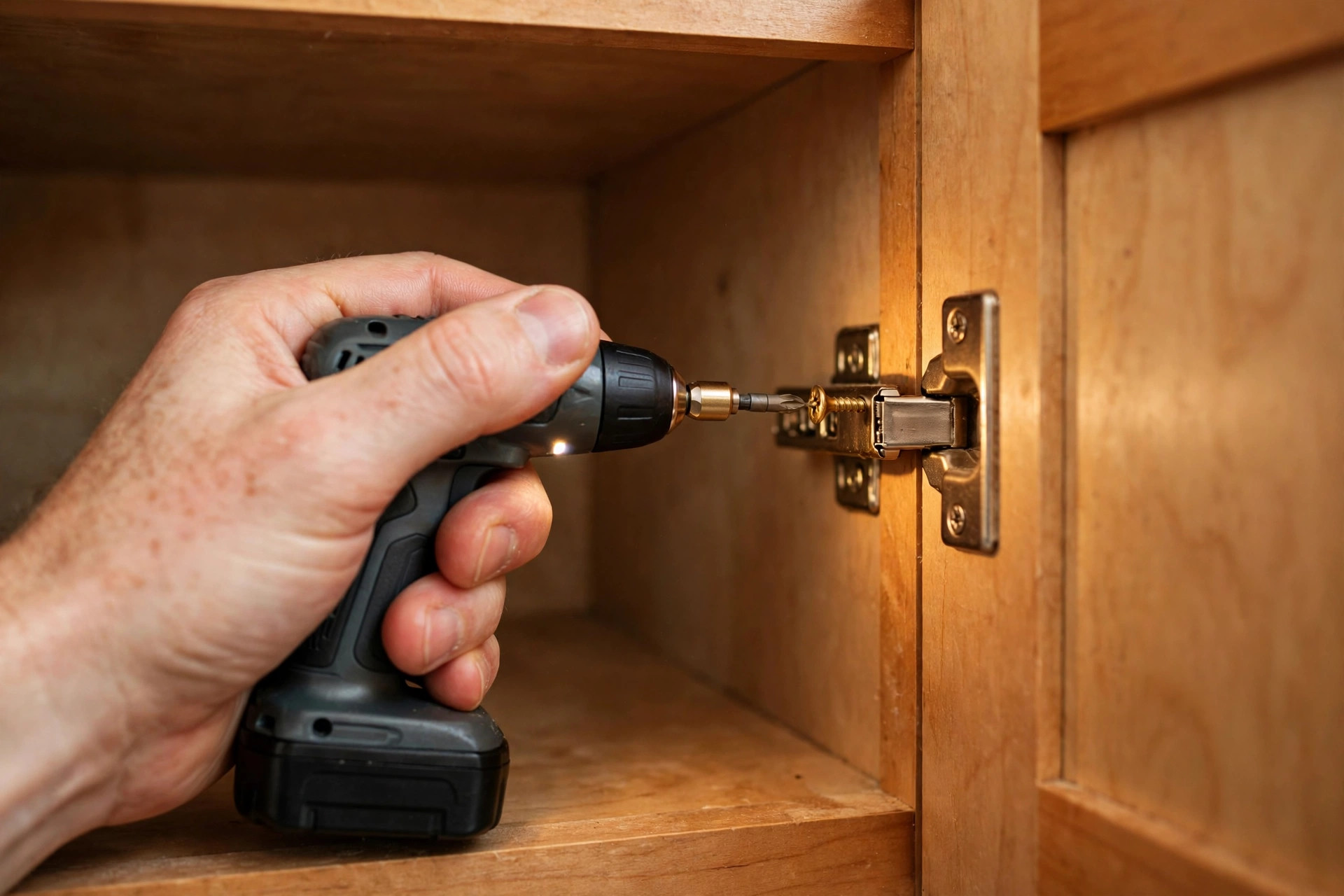
The M12 line proves small doesn’t mean weak. This is the drill to pick if a full-size tool feels heavy or awkward: it slips into cabinets, between studs, and overhead without wearing out your arm. Kits typically run $99–$149.
Worth it if: you do mostly indoor projects, furniture, and fixtures, and comfort matters most.
Skip it if: you plan to drill into masonry or build a deck — step up to an 18V model.
4. Black+Decker 20V MAX Drill/Driver — Best for Apartments & Small Jobs
The lightest commitment on this list: inexpensive (typically $49–$79), simple, and entirely adequate for hanging pictures, assembling furniture, and light repairs around a small home. The platform is narrower than the others, which only matters if you plan a big tool collection.
Worth it if: you rent, space is tight, and your project list is honestly small.
Skip it if: you already know bigger DIY projects are coming — the Ryobi costs little more and grows much further.
5. Makita 18V LXT Compact Drill/Driver — Best Step-Up
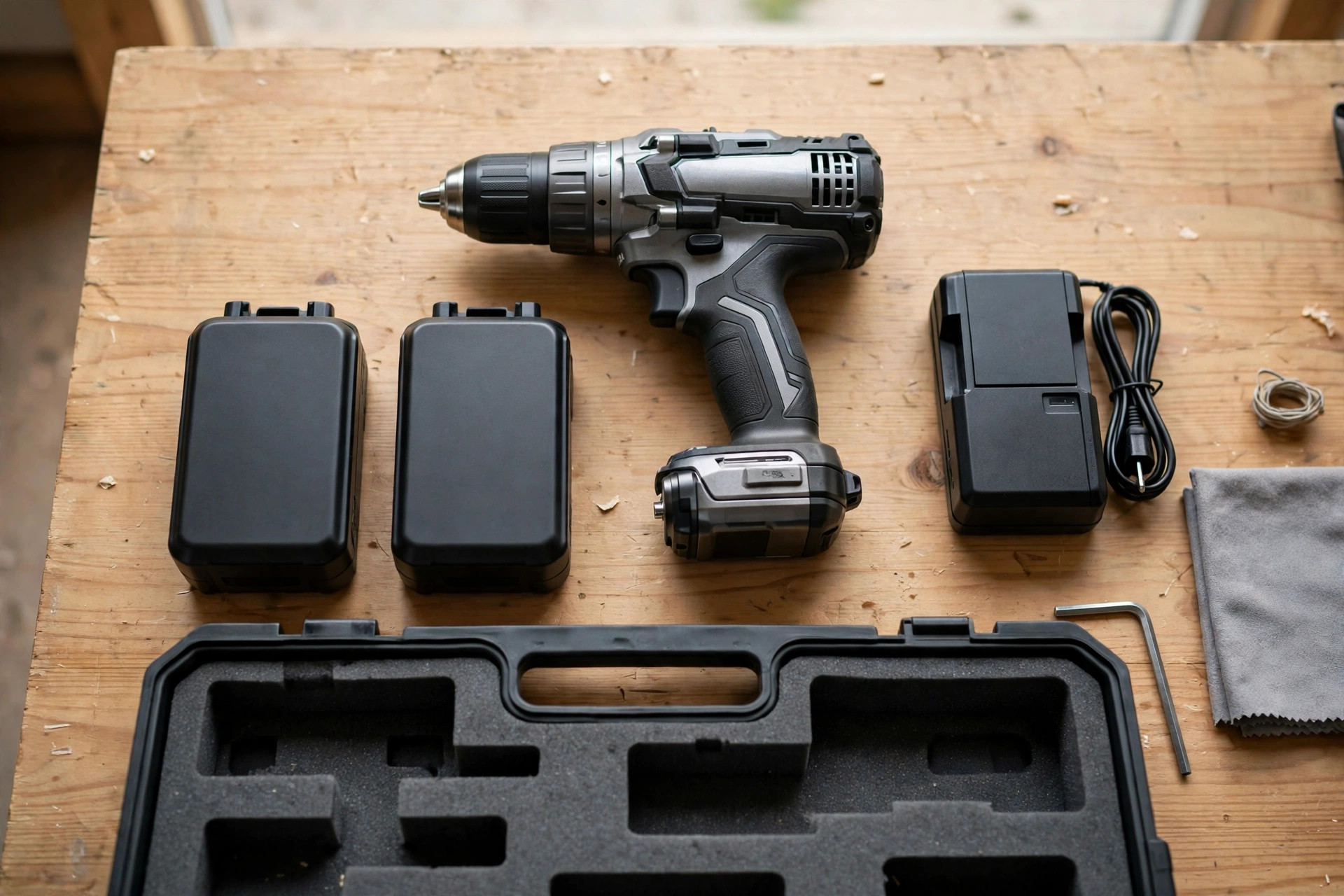
If you’d rather buy once and buy well, Makita’s LXT platform is the connoisseur’s beginner pick: smooth, well-balanced, and known for long service life. Kits typically run $119–$179. It’s more than a beginner strictly needs — and that’s exactly why some people should buy it.
Worth it if: you’ll use the drill monthly for years and value balance and durability over a low price.
Skip it if: you’re still finding out whether DIY is for you — start with pick 1 or 2.
Quick Comparison
| Pick | Class | Best for | Typical kit price |
|---|---|---|---|
| DeWalt 20V MAX | 20V | All-round first drill | $99–$159 |
| Ryobi 18V ONE+ | 18V | Budget + biggest cheap platform | $59–$99 |
| Milwaukee M12 | 12V | Compact, lightweight comfort | $99–$149 |
| Black+Decker 20V MAX | 20V | Apartments, smallest jobs | $49–$79 |
| Makita 18V LXT | 18V | Buy-once step-up quality | $119–$179 |
Beginner Mistakes to Avoid

- Buying a bare tool with no battery. “Tool only” listings look cheap until you add a battery and charger. Your first purchase should be a kit.
- Chasing torque numbers. Every drill here drives screws and drills wood with ease. Weight, grip, and platform matter more at your level.
- Skipping a basic bit set. A drill without drilling and driving bits is a paperweight. Budget a basic accessory kit from day one.
- Using drill mode on screws near the end. Switch to a low clutch setting for the final snug — it stops stripped screws and split wood.
FAQs
Is 12V enough for a beginner?
For furniture, shelves, and indoor fixtures — yes, comfortably. Choose 18V/20V if you’ll drill into studs regularly or want one platform for heavier future tools.
Should my first drill be brushless?
Not necessary. A brushed kit from a good platform will serve a beginner for years. Put the savings toward a second battery and a quality bit set instead.
How many batteries do I need?
Two is the sweet spot: one in the drill, one on the charger. Most kits on this list include two — check before you buy, because some budget kits include only one.
Can a beginner drill into brick or concrete?
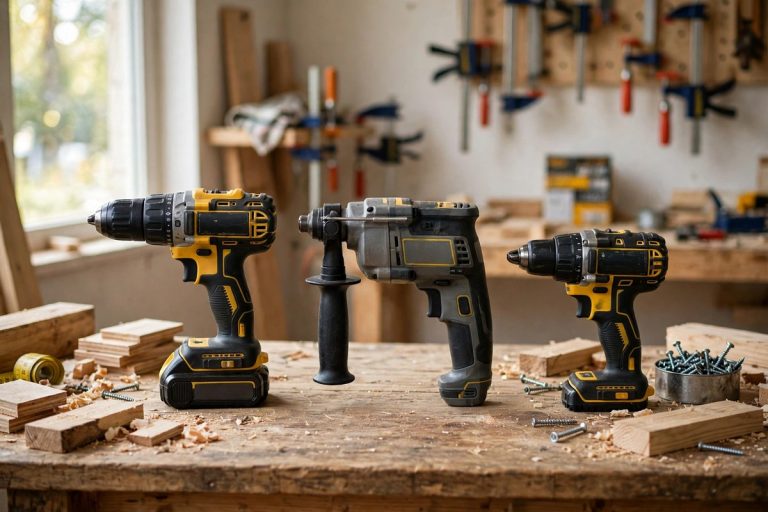
Light masonry work needs a hammer-drill function and masonry bits. None of these picks is the right tool for serious concrete — and that’s fine; it’s a rare beginner task, and renting a rotary hammer for a day is cheaper than overbuying now.
The Bottom Line

Most beginners should start with the DeWalt 20V MAX kit (best balance of size, power, and platform) or the Ryobi ONE+ if budget leads the decision. Pick the platform you can see yourself growing with, keep the drill light enough that you actually enjoy using it, and your first project will teach you the rest.