Corded vs Cordless Circular Saw: Which Is Right for You?
A circular saw is the first “real” saw most DIYers buy — the tool that turns a stack of plywood and 2x4s into actual projects. The first decision you’ll face isn’t the brand or the blade size. It’s the power source: plug it into the wall, or run it on a battery?
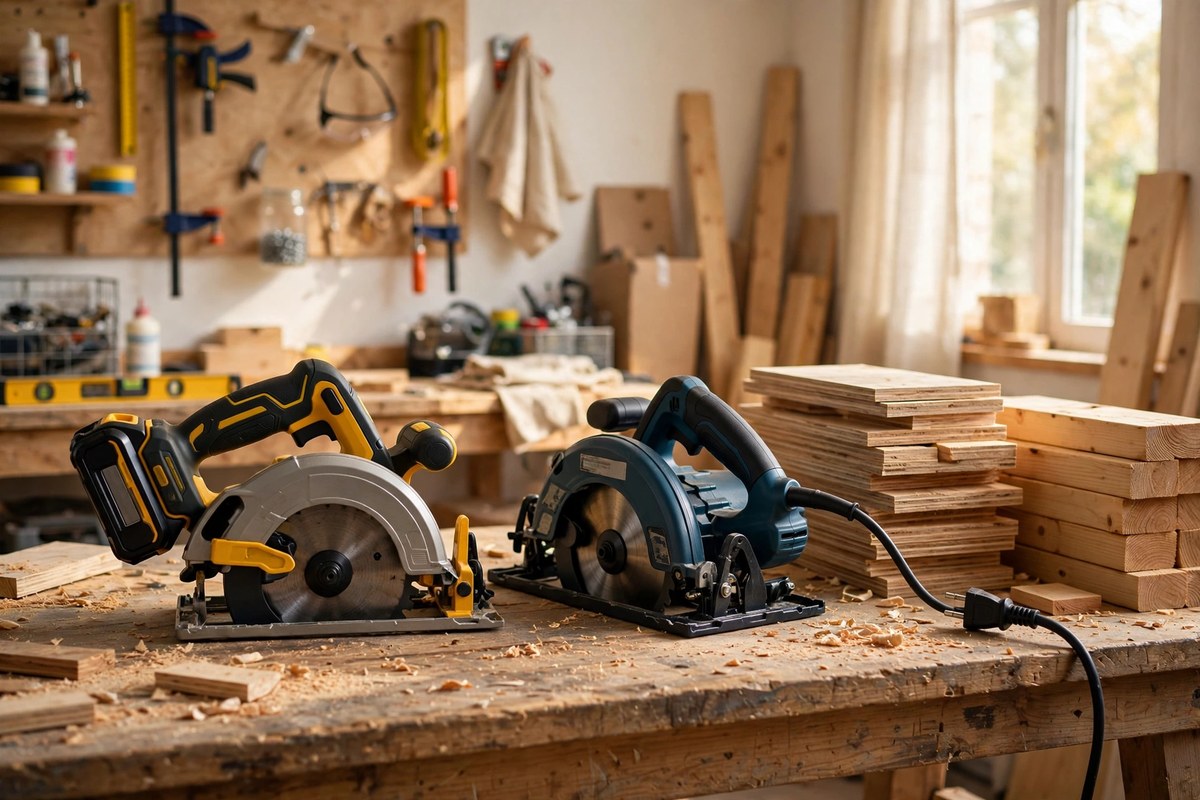
Both cut the same wood. But they behave very differently on a job site, in a garage, and on your wallet. This guide compares them honestly — power, runtime, cost, weight, and which jobs each one genuinely suits — so you buy the right saw the first time.
The Short Answer
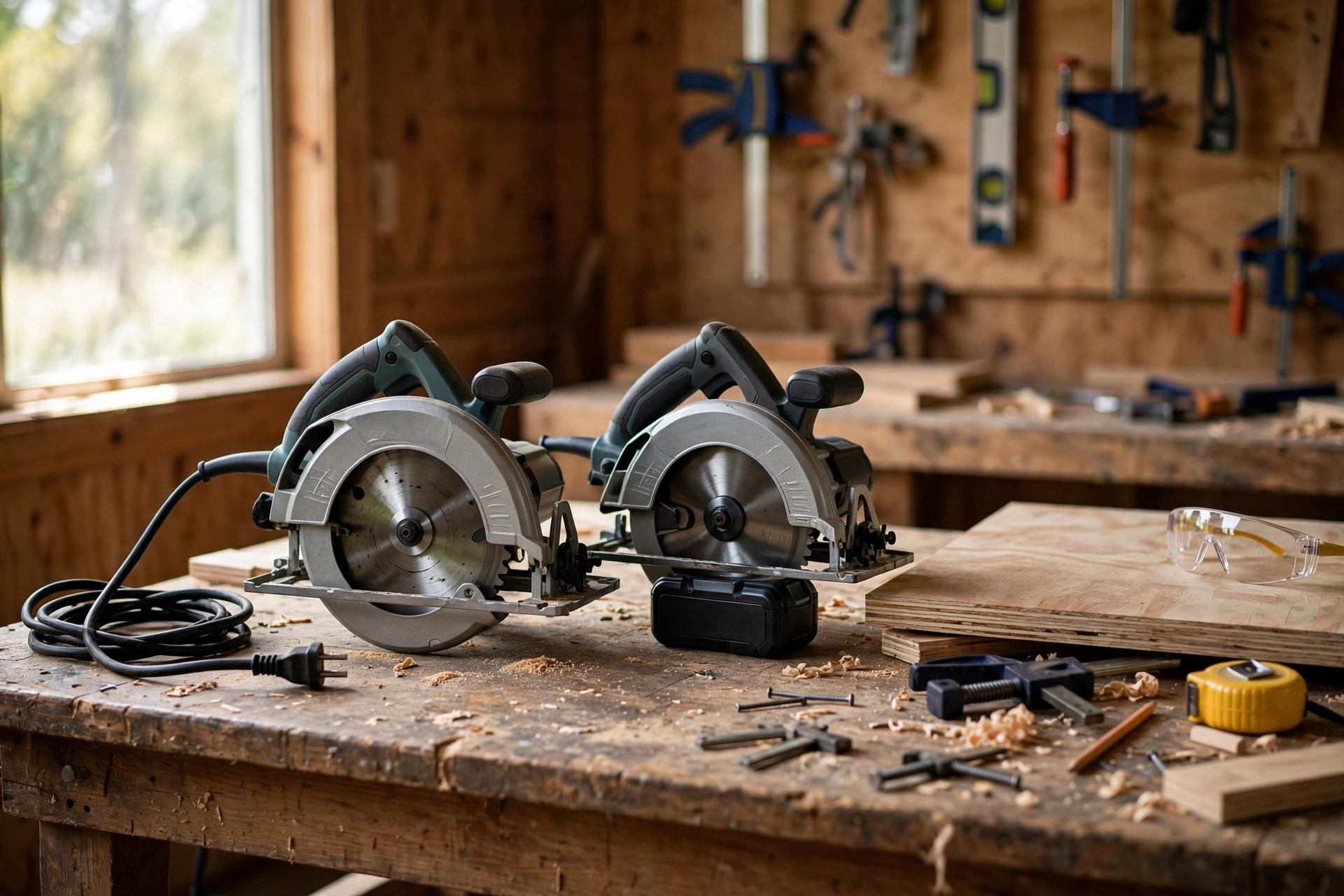
Buy corded if you cut a lot, cut thick material, or work mostly in one place with an outlet nearby. Buy cordless if you value freedom of movement, work outdoors or on roofs and decks, or already own batteries in a major platform. If you can only own one saw and you do a mix of everything, cordless is the more useful tool for most beginners — with one caveat we’ll get to.
How They Differ in Practice
Power and cutting capacity
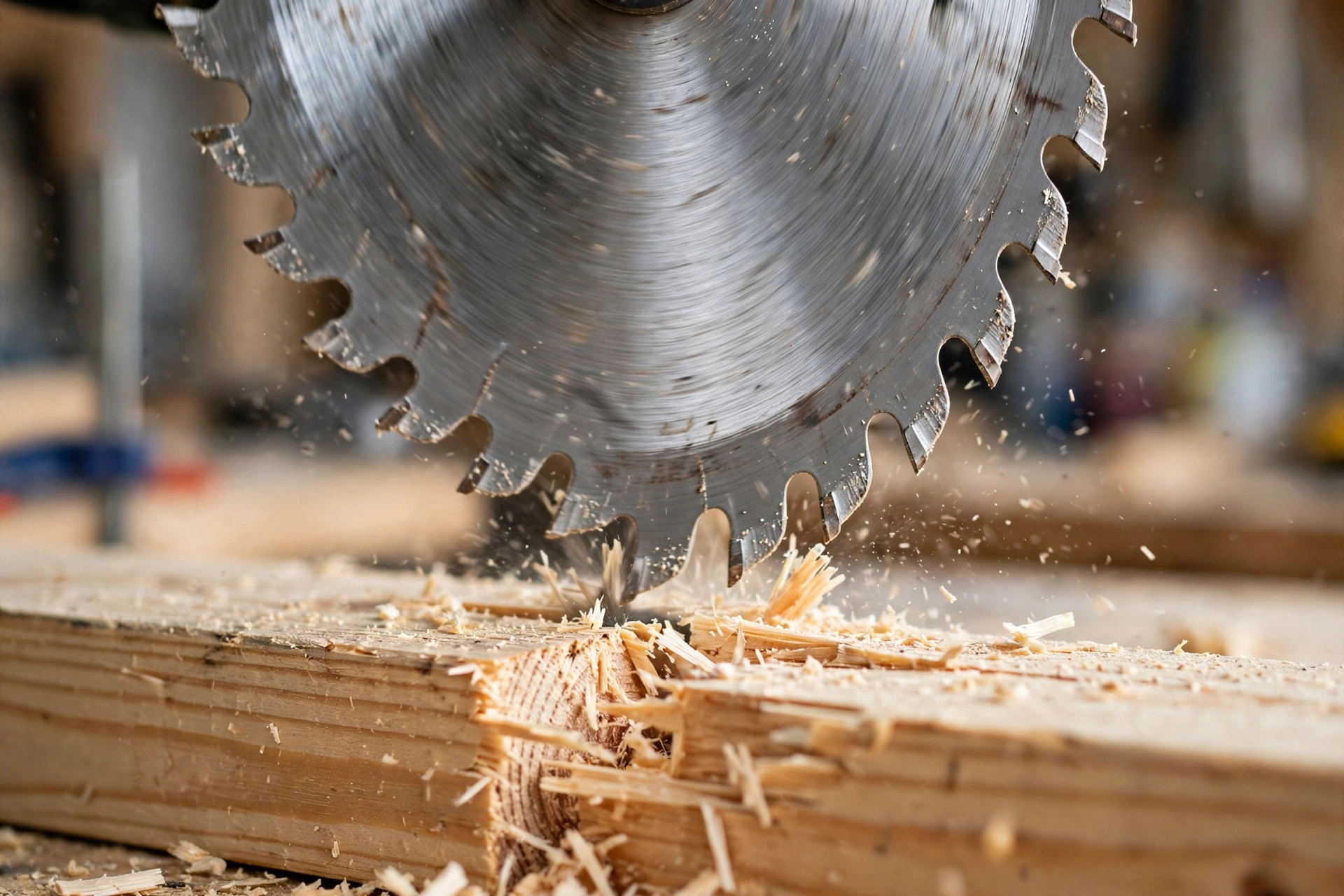
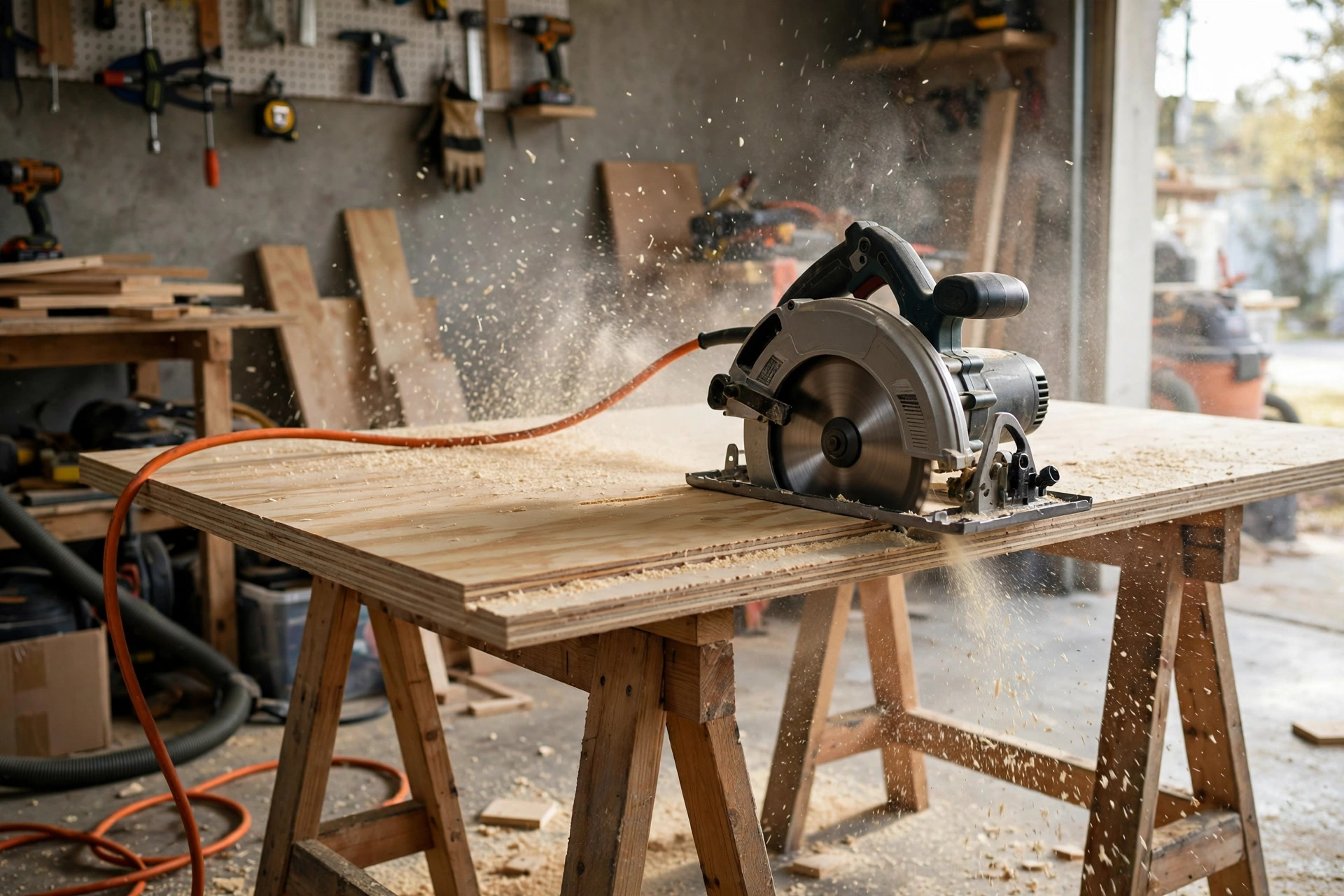
Corded saws run on mains power, so they deliver full power for as long as they’re plugged in. A typical corded 7-1/4-inch saw cuts through 2x lumber, thick plywood, and dense sheet goods without slowing down, and it does it all day. There’s no battery to sag halfway through a long rip cut.
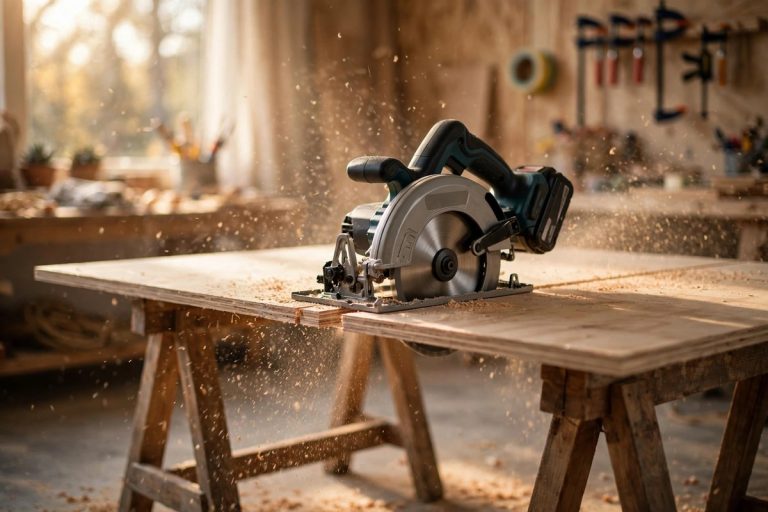
Cordless saws have closed the gap fast. A modern 18V/20V saw with a high-capacity battery handles the same cuts a beginner or weekend DIYer will make — 2x4s, plywood, deck boards — with power that feels nearly identical on a single cut. The difference shows up over a long session: after dozens of cuts, a battery saw slows as the charge drops, and you feel it on thick or wet lumber.
Verdict: for single cuts and typical DIY jobs, cordless keeps up. For volume — framing a deck, ripping a stack of sheets — corded still wins.
Runtime: unlimited vs “enough”
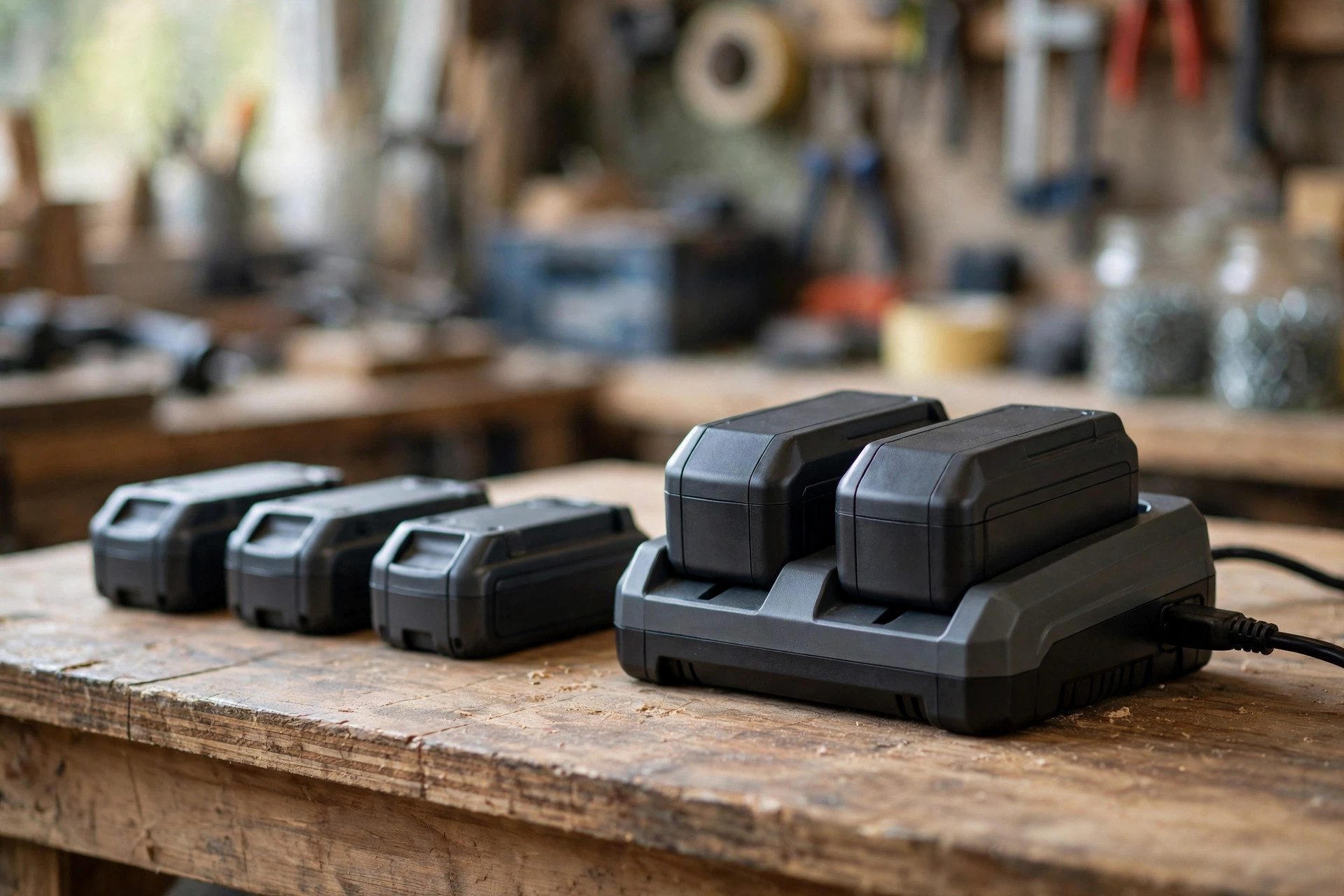
This is the real trade-off. A corded saw never runs out. A cordless saw runs as long as its battery does — typically 30–60 minutes of active cutting per charge on a standard 5.0Ah battery, depending on the material. That’s plenty for a Saturday project, but it’s a hard stop mid-job if you only own one battery.
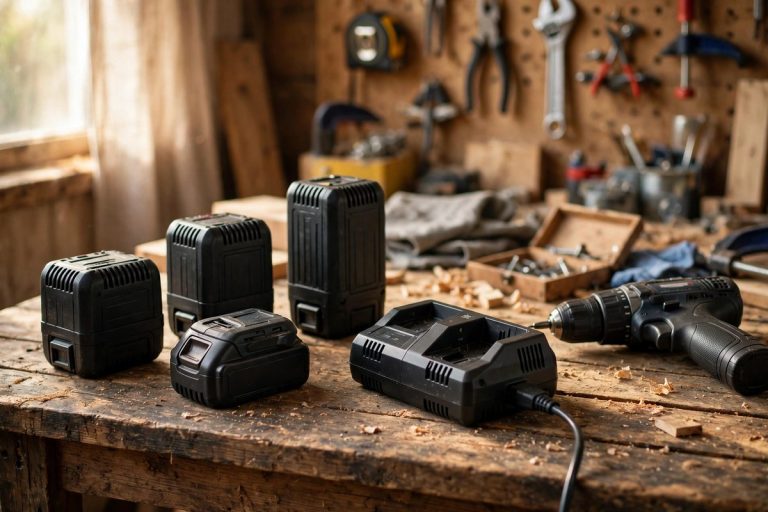
The fix is simple and costs money: a second battery. Two batteries — one in the saw, one on the charger — remove runtime as a practical concern for almost any home project. If you’re buying a cordless saw, budget for the kit with two batteries, or a spare battery from the start.
Cost: what you’ll actually pay
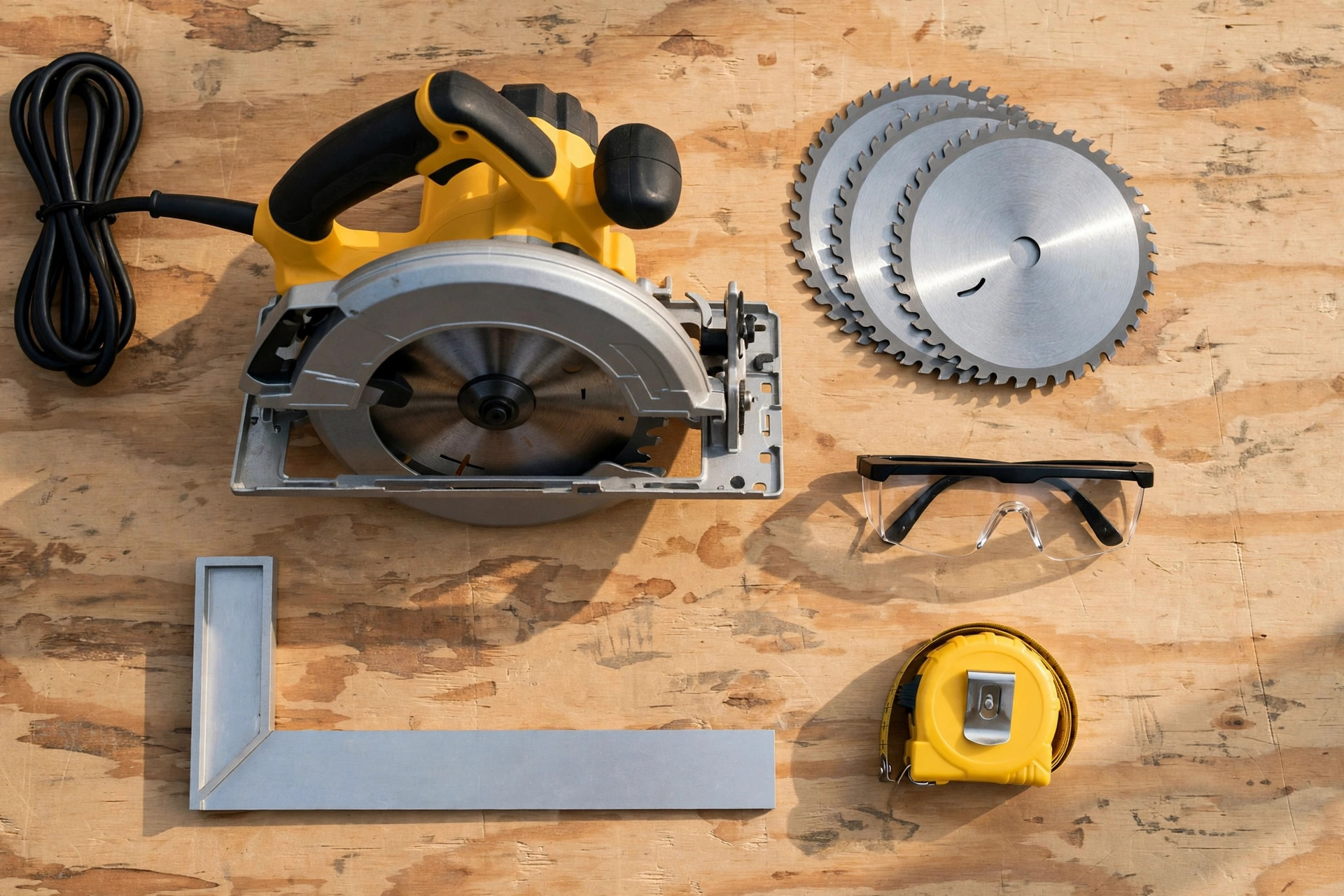
Corded saws are the cheaper way in. A solid corded 7-1/4-inch saw from a reputable brand typically runs $59–$129, and that price is the whole price — no batteries to buy, ever.
Cordless saws cost more up front. A kit with one battery and charger typically runs $129–$249, and a two-battery kit can run higher. But the math changes if you already own batteries: a bare tool (no battery) from the platform you already use can cost about the same as a corded saw. If you own a drill or other tools in the same battery family — the same platform thinking from our cordless drill guide applies here — the cordless saw is often the cheaper real-world buy.
Weight and handling
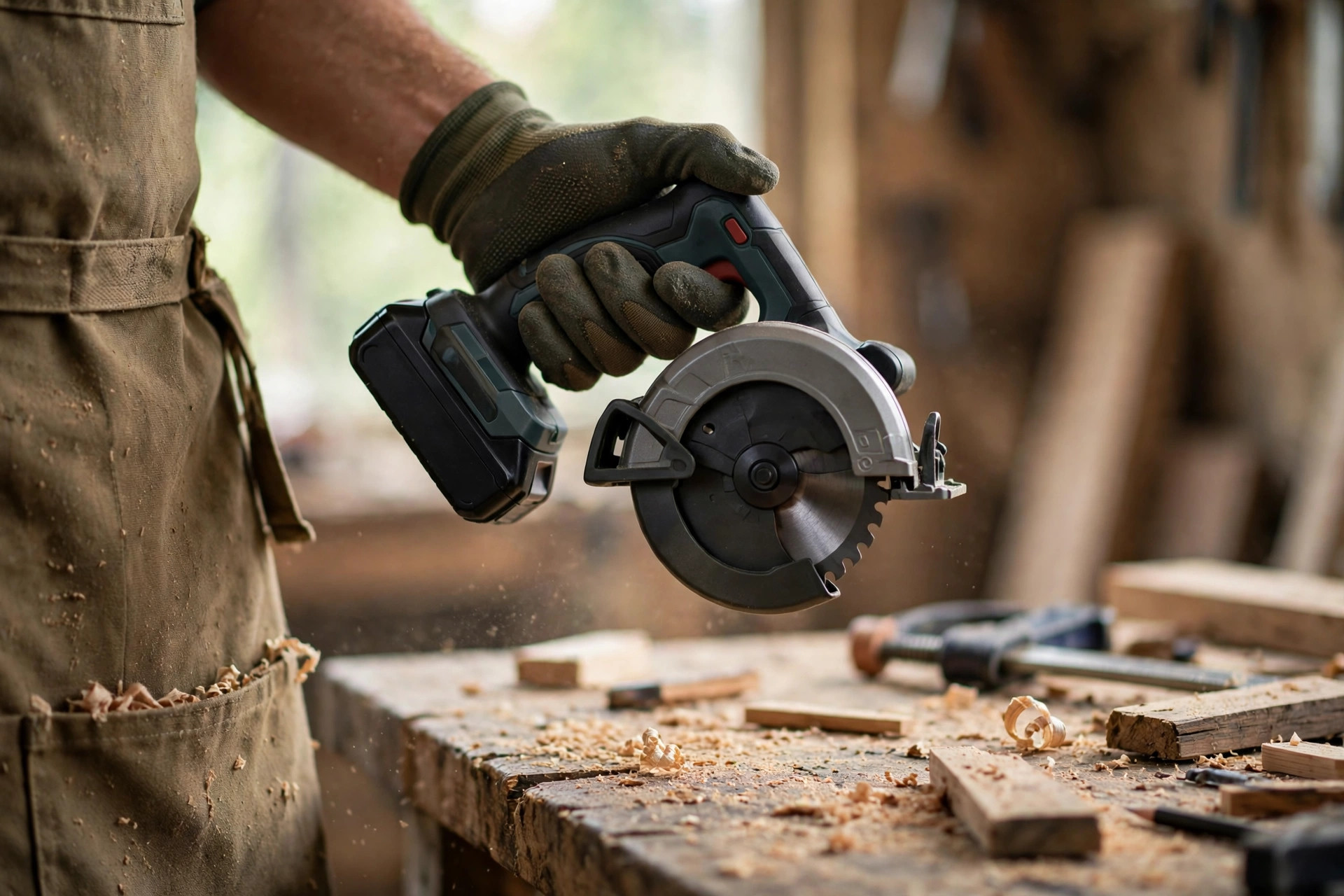
Cordless saws are heavier — a battery adds real weight at the back of the tool. On overhead cuts or long sessions, you notice it. Corded saws are lighter and better balanced for the same blade size, which makes them easier to control on precise cuts.
But the cord itself is a handling cost. It drags, snags on sawhorses, limits where you can stand, and needs an extension cord outdoors. On a roof or a deck, a cord is a genuine hassle and a trip hazard. In a garage workshop with a bench and an outlet, it disappears.
Where you work matters most
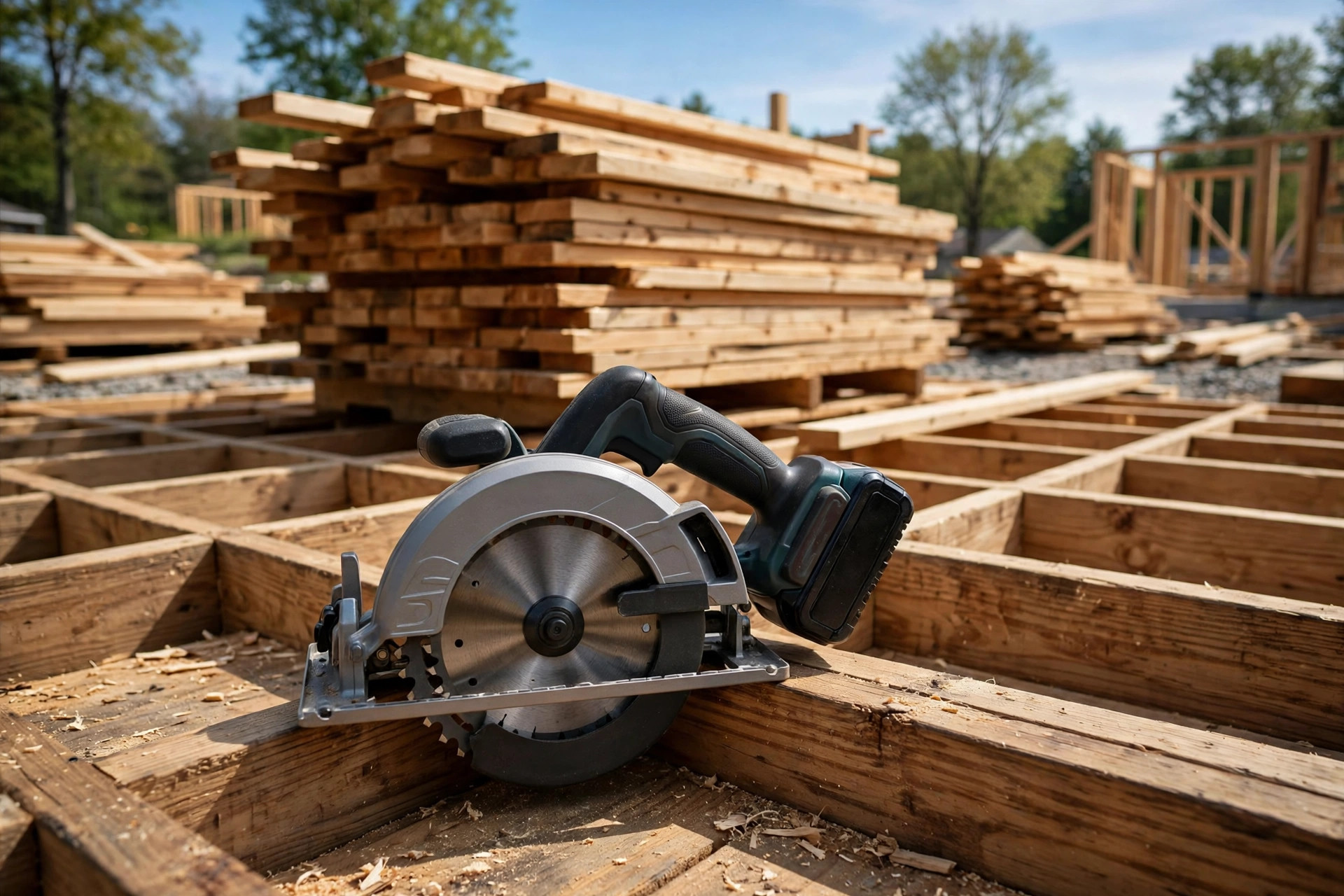
- Garage or workshop with outlets: corded is comfortable and cheap.
- Outdoors, decks, roofs, fences, job sites: cordless is the obvious pick.
- Apartments and small spaces: cordless — no cord to manage, and the saw stores easily.
- Long rip cuts and framing: corded holds full power through the whole cut.
Corded vs Cordless at a Glance
| Corded | Cordless | |
|---|---|---|
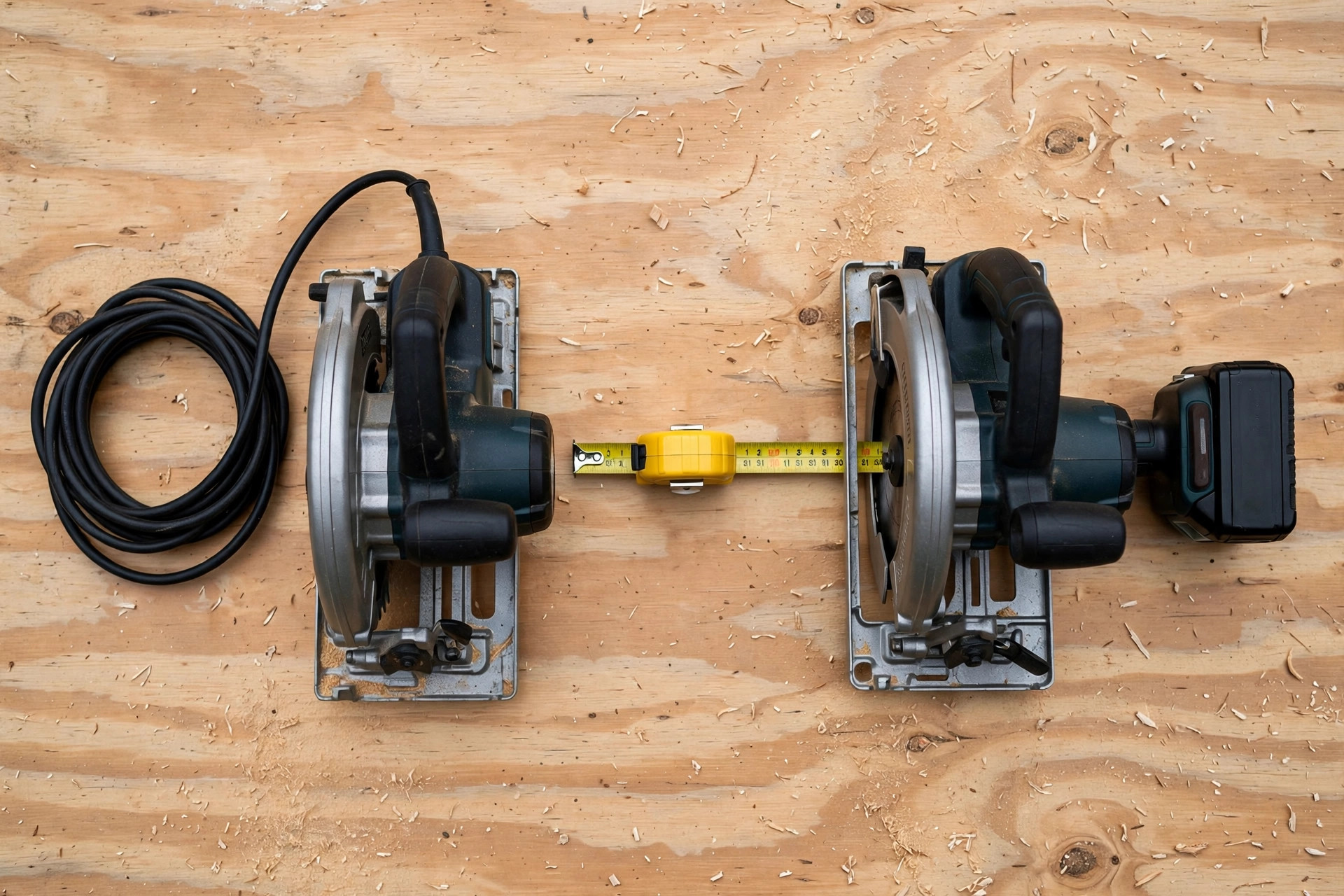
| Power | Full power, unlimited | Nearly equal per cut; fades as battery drains |
| Runtime | Unlimited | 30–60 min per battery; 2 batteries fix it |
| Typical price | $59–$129 | $129–$249 kit; less as a bare tool |
| Weight | Lighter, better balanced | Heavier — battery at the back |
| Best setting | Workshop, garage, long cuts | Outdoors, decks, roofs, quick jobs |
| Ongoing cost | None — just blades | Batteries age; spares cost $50–$100+ |
Worth It If / Skip It If
Corded circular saw
Worth it if: you work mostly in one place with power nearby, cut a lot in a session, or want the most saw for the least money.
Skip it if: you work outdoors, on roofs, or anywhere a cord would be in the way — the savings aren’t worth the hassle.
Cordless circular saw
Worth it if: you already own batteries in the platform, work outdoors or away from outlets, or want one saw that goes anywhere.
Skip it if: you only cut in the garage and the budget is tight — a corded saw gives you the same cuts for half the price.
What to Check Before You Buy Either One
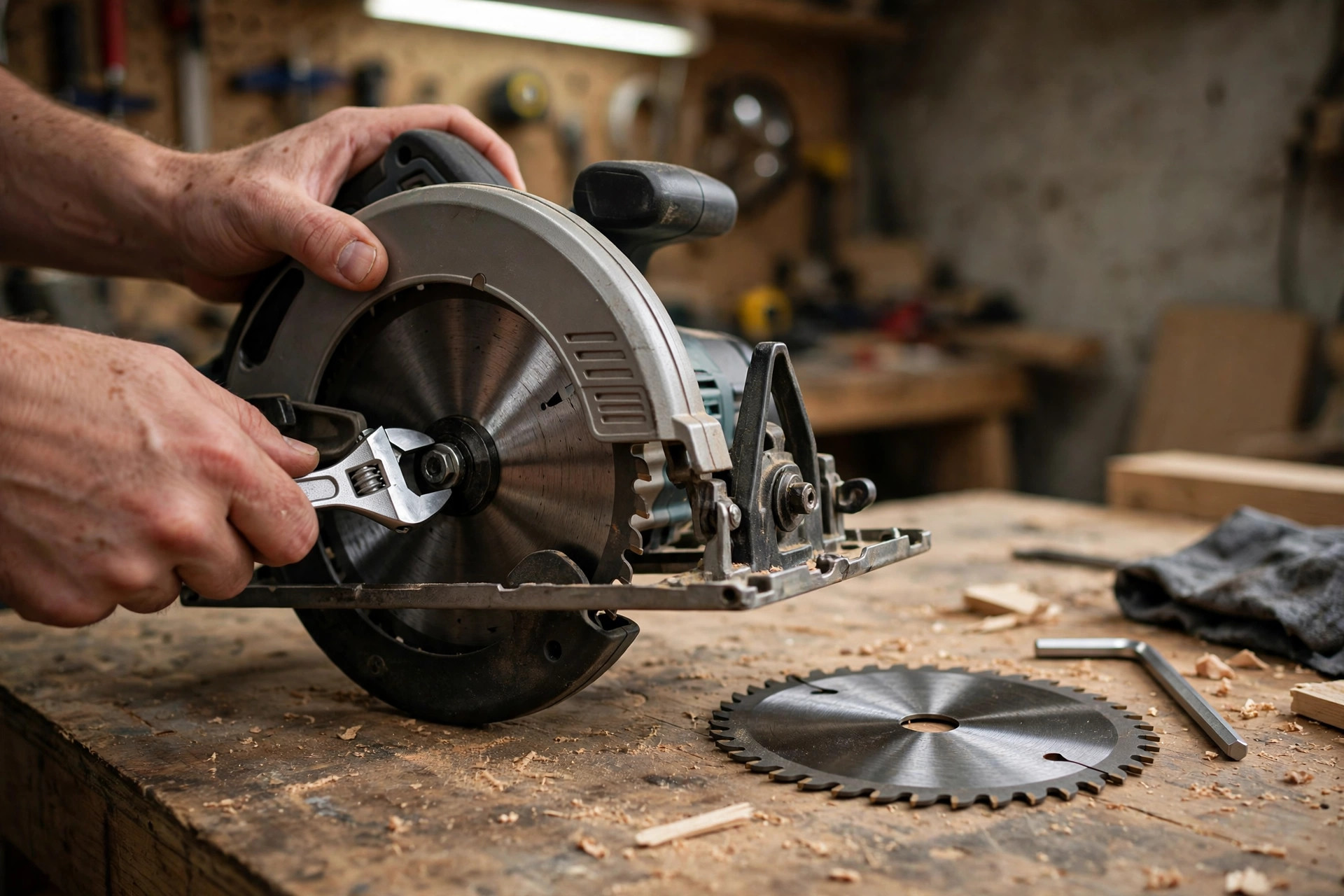
- Blade size: 7-1/4-inch is the standard for full-size saws and cuts 2x lumber at 90°. Smaller 6-1/2-inch saws are lighter but can’t cut as deep.
- Bevel capacity: look for 0–57° bevel adjustment; a saw that only goes to 45° limits angled cuts.
- Blade visibility: a clear sightline to the cut line (or a laser guide) matters more than it sounds — most bad cuts are bad because you couldn’t see the line.
- Electric brake: stops the blade seconds after you release the trigger instead of letting it spin down. Worth having, especially for beginners.
- Dust port: a port that takes a vacuum hose keeps your cut line visible and your workspace cleaner.
- Bare tool vs kit: if you’re buying cordless, check whether the price includes a battery. “Tool only” listings look cheap until you add a battery and charger.
Beginner Mistakes to Avoid
- Buying the cheapest saw available. The very cheapest saws often have sloppy base plates and weak guards. Spend the extra $20–$30 for a reputable brand.
- Ignoring the blade. The blade that comes in the box is a general-purpose blade. A sharp, job-matched blade (fine-tooth for plywood, framing blade for 2x) makes more difference than the saw itself.
- Cutting without support. Always support both sides of the cut — an unsupported offcut pinches the blade and kicks back.
- Forgetting the second battery. One battery is a project interrupted. If you go cordless, a second battery is not optional — it’s part of the saw’s real price.
FAQs
Can a cordless circular saw cut 2x4s?
Yes — easily. A modern 18V/20V cordless saw with a sharp blade cuts 2x lumber all day for typical DIY volumes. It’s sustained, heavy-volume cutting (framing a whole deck, ripping sheet after sheet) where corded pulls ahead.
Is a corded circular saw outdated?
No. Corded saws are the cheapest way to get full, unlimited power, and they’re still the standard on professional job sites for stationary cutting stations. Outdated would mean worse — corded is simply different, not worse.
How many batteries do I need for a cordless saw?
Two. One in the saw, one on the charger. With two 5.0Ah batteries, most home projects never have to stop for charging.
Can I use my drill batteries in a circular saw?
Only if they’re the same brand and voltage platform — batteries don’t swap between brands. Check your platform before buying a bare tool; the battery you already own is the cheapest battery you’ll ever buy.
The Bottom Line
Most beginners should buy cordless — especially if they already own batteries in a major platform — because the freedom to cut anywhere outweighs the power edge of a cord, and two batteries erase the runtime worry. But if your work happens in one place, your budget is tight, or you cut in volume, a corded saw is the smarter buy: same cuts, half the price, power that never fades. Either way, spend the savings on a good blade — that’s what your cuts will actually feel like.