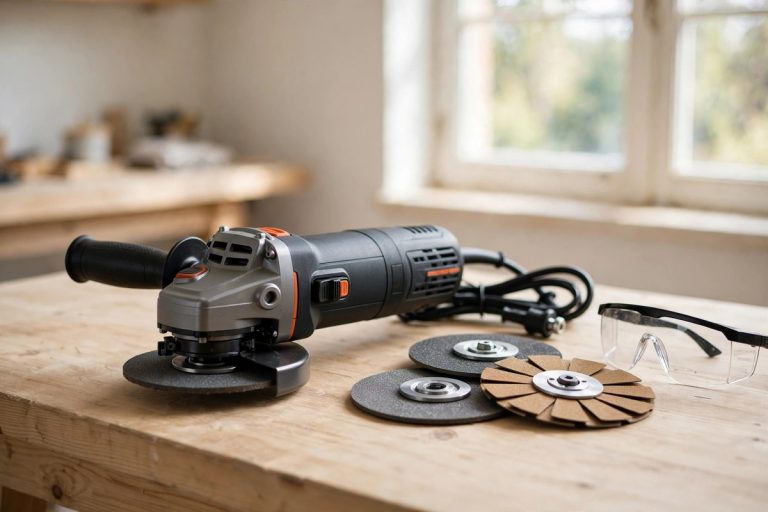
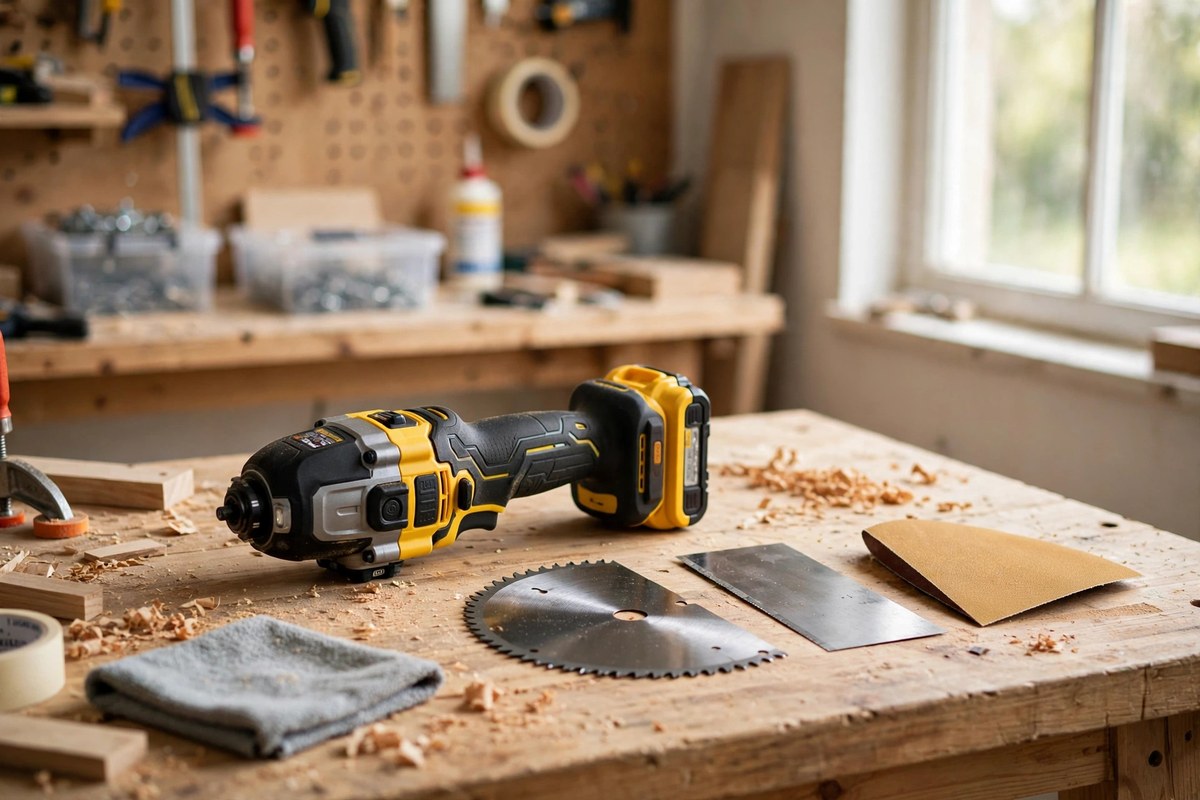
11 Jobs You Didn’t Know an Oscillating Multi-Tool Could Do
Most people buy an oscillating multi-tool for one job — usually cutting a door jamb or trimming a piece of flooring — and then it sits in a drawer for a year. That’s a shame, because this odd little vibrating tool is the Swiss Army knife of the workshop. It doesn’t spin like a saw or a drill. Instead, its blade rocks back and forth in a tiny arc, thousands of times a minute, which lets it cut, scrape, sand and grind in places no other tool can reach — right up against a wall, flush with a floor, or in the middle of a panel without a starting hole.
If you already own one, these eleven jobs are your excuse to take it out again. If you don’t, this list might convince you it’s worth the shelf space — a decent corded model typically runs $60–$120, and cordless kits usually land at $99–$199 with a battery. Either way, the real cost isn’t the tool. It’s the blades. More on that at the end.
What Is an Oscillating Multi-Tool, Anyway?
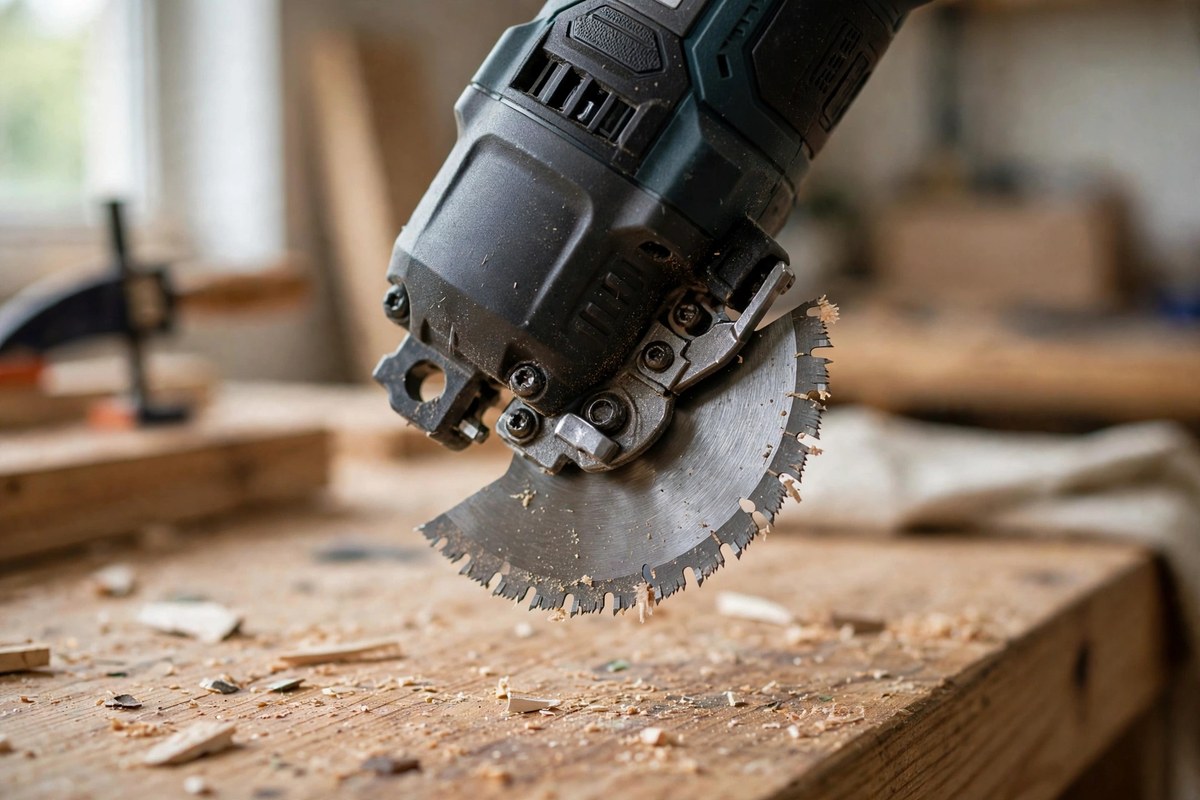
An oscillating multi-tool is a handheld power tool whose accessory — a blade, a scraper, a sanding pad — moves side to side in a very small arc, around 3 degrees, at roughly 10,000 to 20,000 oscillations per minute. Because the movement is so small and fast, the blade cuts without the kickback of a circular saw and without the tear-out of a reciprocating saw, and it stops cutting the instant you lift it off the work. That control is the whole point: you can plunge-cut into the middle of a board, shave a sliver off a door jamb, or sand into a corner without damaging what’s next to it.
Nearly every brand sells one now, and most use the same quick-change blade fitting, so cheap third-party blades usually fit. Worth it if you do any remodeling, flooring or repair work at all. Skip it if your DIY life is just hanging pictures and assembling flat-pack furniture — a drill and a handsaw will cover you.
1. Flush-Cut a Door Jamb — and Trim Shims and Dowels Flush
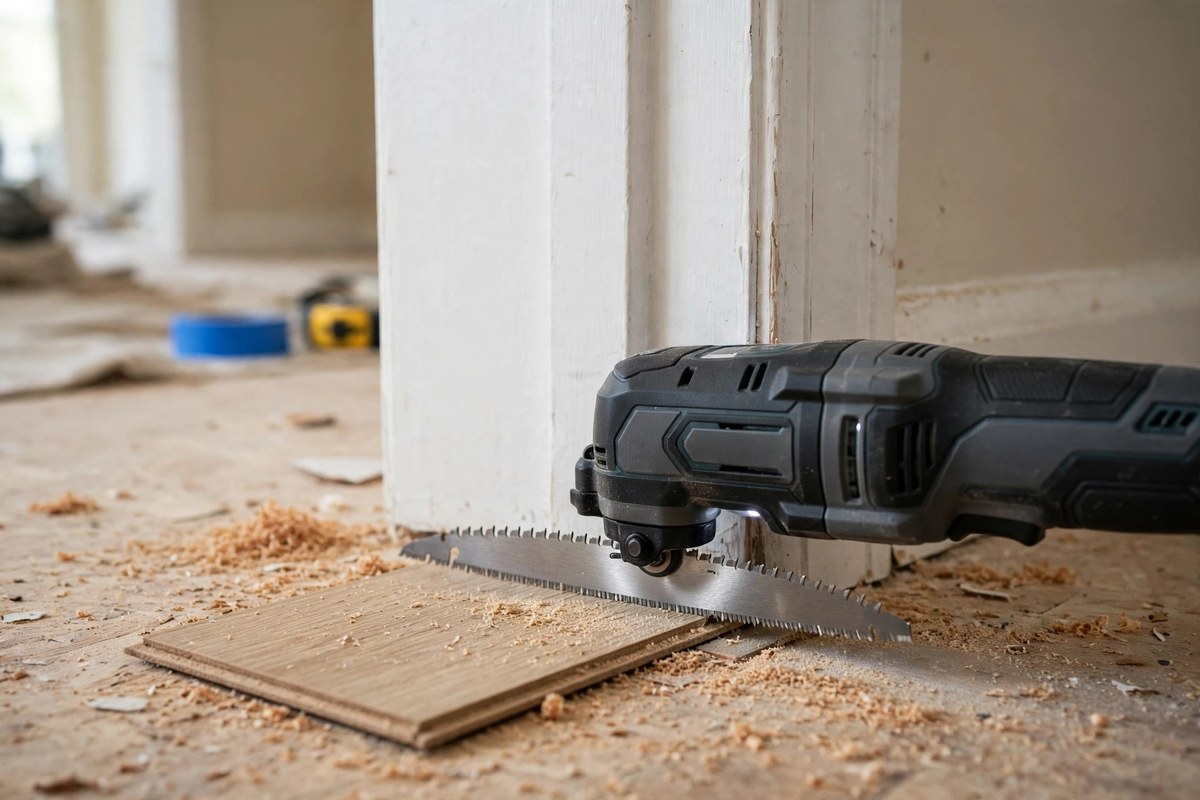
Job 1 — flush-cutting door jambs. Laying new flooring and the door casing is in the way? Slide a scrap of your new flooring under the jamb as a height guide, fit a flush-cut blade, and saw straight across. The blade rides flat on the flooring scrap, so the cut is perfectly level and the new floor slides right underneath. Try that with any other saw and you’ll either cut too high or gouge the jamb.
Job 2 — trimming shims and dowels flush. The same flush-cut blade trims wooden shims behind a window or door frame, dowel pins on a furniture repair, or a protruding screw plug — flat against the surface, no sanding marathon afterwards. It’s one of those jobs that takes ten seconds with this tool and ten minutes with anything else.
2. Cut Drywall Openings — and Plunge-Cut Flooring
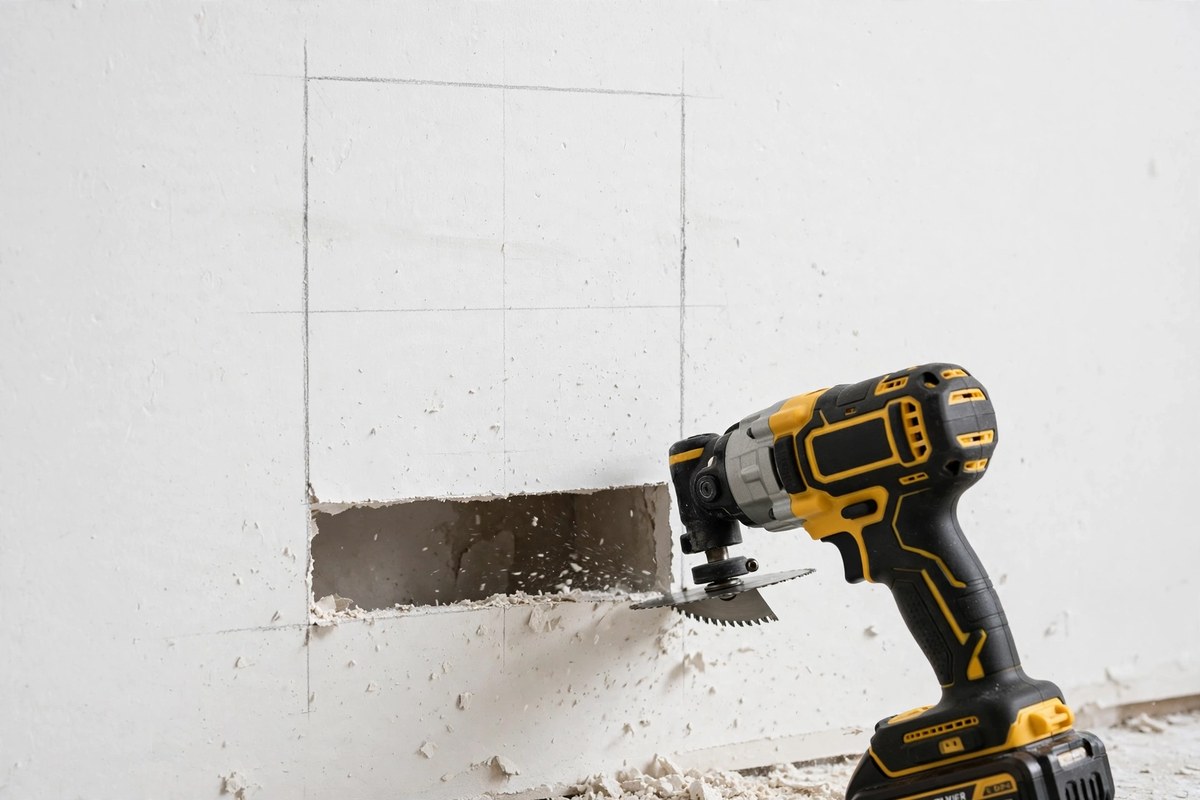
Job 3 — cutting drywall openings for outlets and boxes. Need a hole for a new outlet, a light switch or a vent? Mark the outline, plunge the blade straight in at a corner, and follow the line. The multi-tool cuts a clean rectangle with square corners — no pilot hole, no jab saw wandering off the line, and no dust cloud like a rotary cutter throws.
Job 4 — plunge-cutting flooring and panels. The same plunge trick works on laminate, vinyl plank and plywood subfloor: cut a damaged board out of the middle of a floor without lifting the surrounding planks, or notch a floorboard around a pipe. Cut slowly and let the blade do the work — pushing hard just overheats the blade and dulls it in minutes.
3. Remove Old Grout Without Chipping Tile
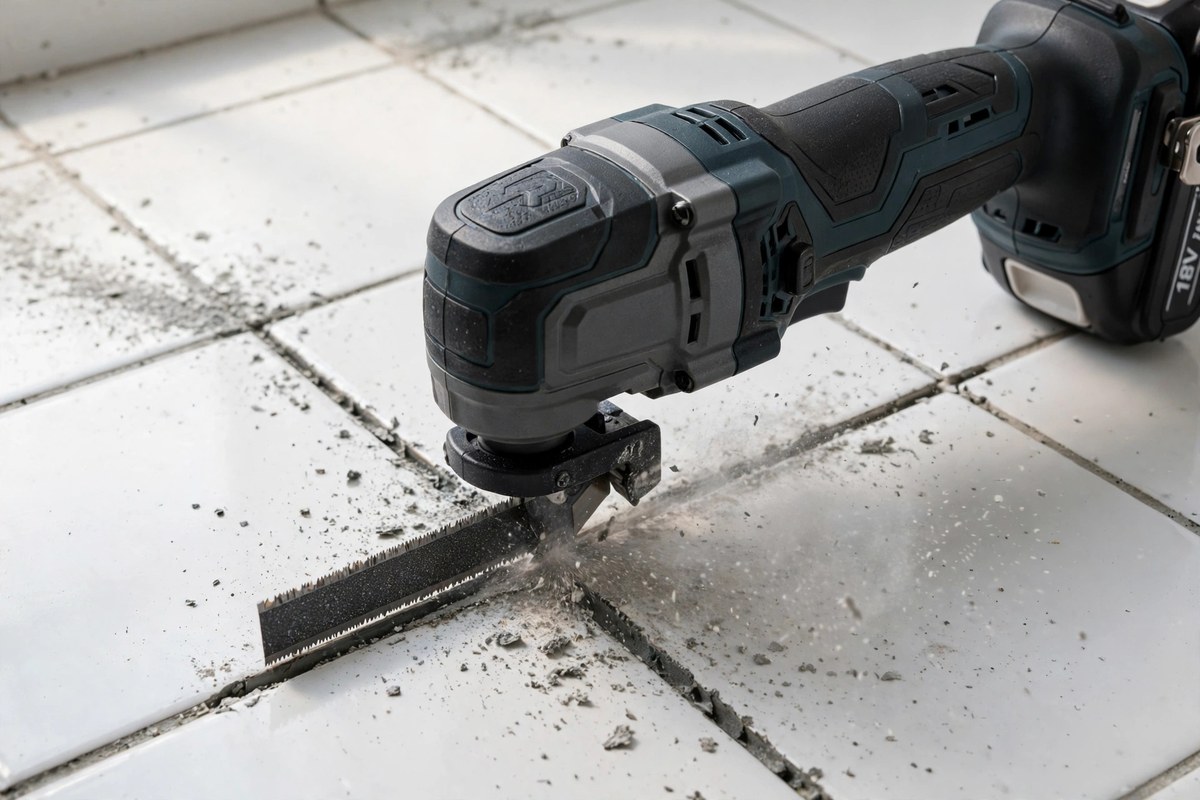
Job 5 — grout removal. Fit a carbide-grit grout blade and the multi-tool grinds old grout out of a joint without cracking the tile beside it. It’s slower than a rotary grout tool, but far more forgiving: the small arc means the blade stays in the joint instead of skipping across the tile face. It’s the right call for a small repair — a cracked shower corner, a few stained joints — rather than re-grouting a whole bathroom, where a dedicated grout saw earns its keep.
4. Cut Straight Through Nails and Screws in Reclaimed Wood
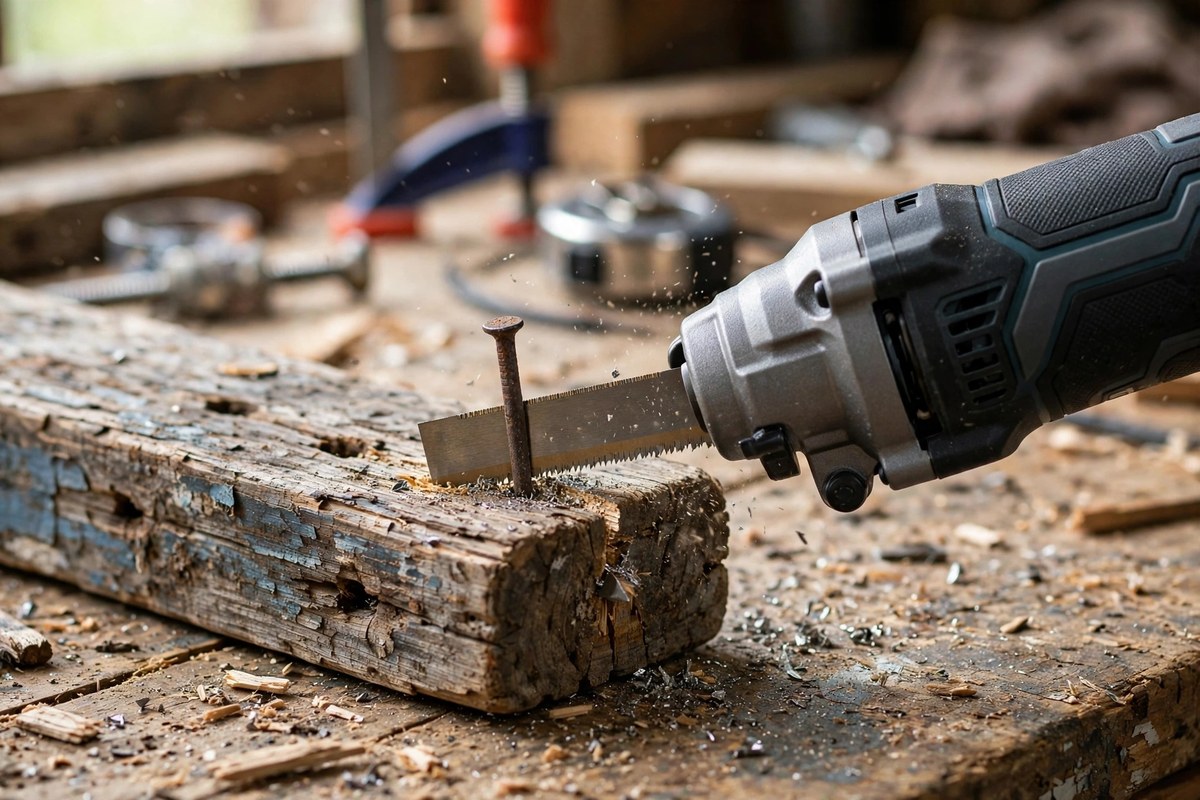
Job 6 — cutting through embedded nails and screws. Working with reclaimed lumber or demolition wood? A bimetal blade slices through hidden nails and screws that would chip a planer blade or a circular saw tooth. It’s also the fastest way to free a nailed-down board: cut the fasteners, not the wood. Just check the blade afterwards — hitting metal shortens blade life, so keep your cheap blades for this job and your good ones for clean wood.
5. Scrape Paint, Adhesive and Caulk
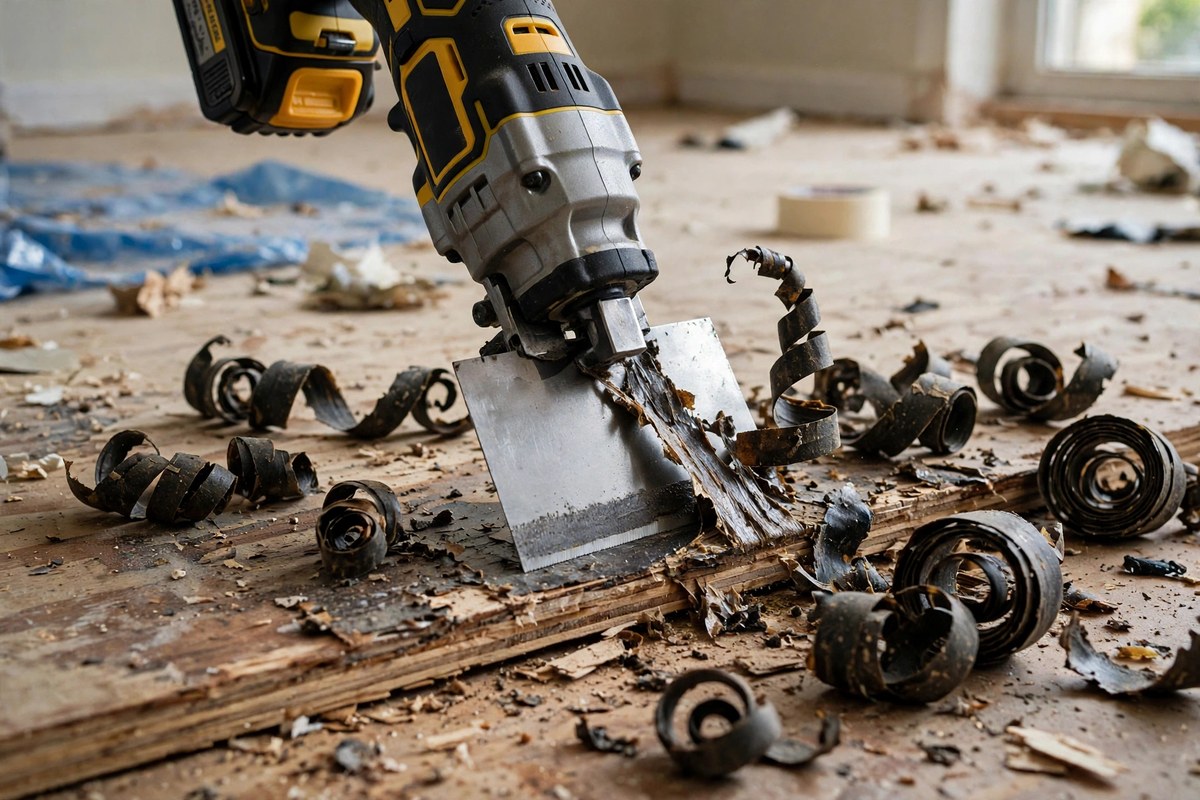
Job 7 — scraping. Swap in a rigid scraper blade and the multi-tool lifts old paint from trim, peels dried adhesive off a subfloor, and strips silicone caulk from a tub surround. It won’t replace a heat gun on thick paint, but for the fiddly residue a putty knife can’t budge, the vibration does the work your wrist used to. Keep the blade nearly flat to the surface and work in short passes — too steep an angle digs into the wood underneath.
6. Sand Into Corners No Sander Can Reach
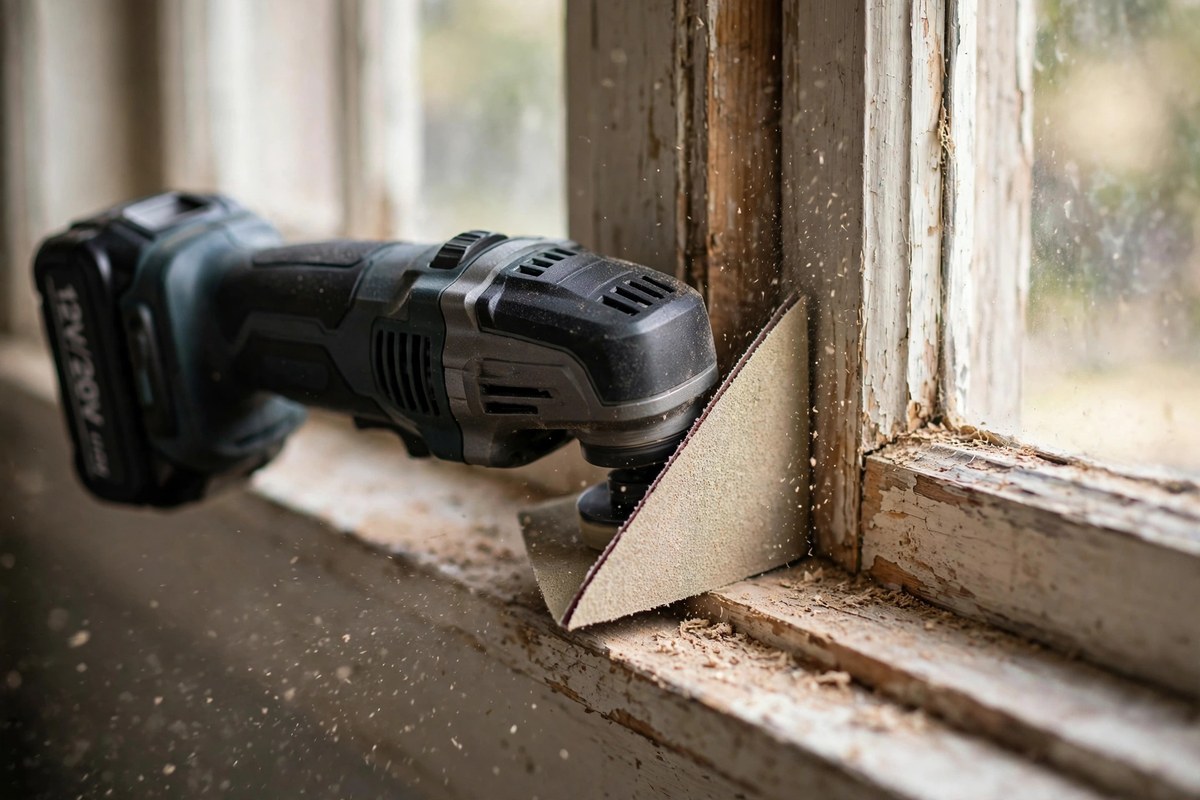
Job 8 — detail sanding. Clip on the triangular sanding pad and the multi-tool becomes a detail sander that reaches into inside corners, along window muntins, and into carved trim where a random-orbit sander can’t fit. The triangular pad’s pointed tip gets right into a 90-degree corner. It’s not a replacement for a full-size sander on a tabletop — the pad is small and the motion is gentle — but for edges, corners and touch-ups it’s the tool that finishes the job instead of leaving it “good enough.”
7. Cut Holes in Tile — and Trim Baseboards in Place
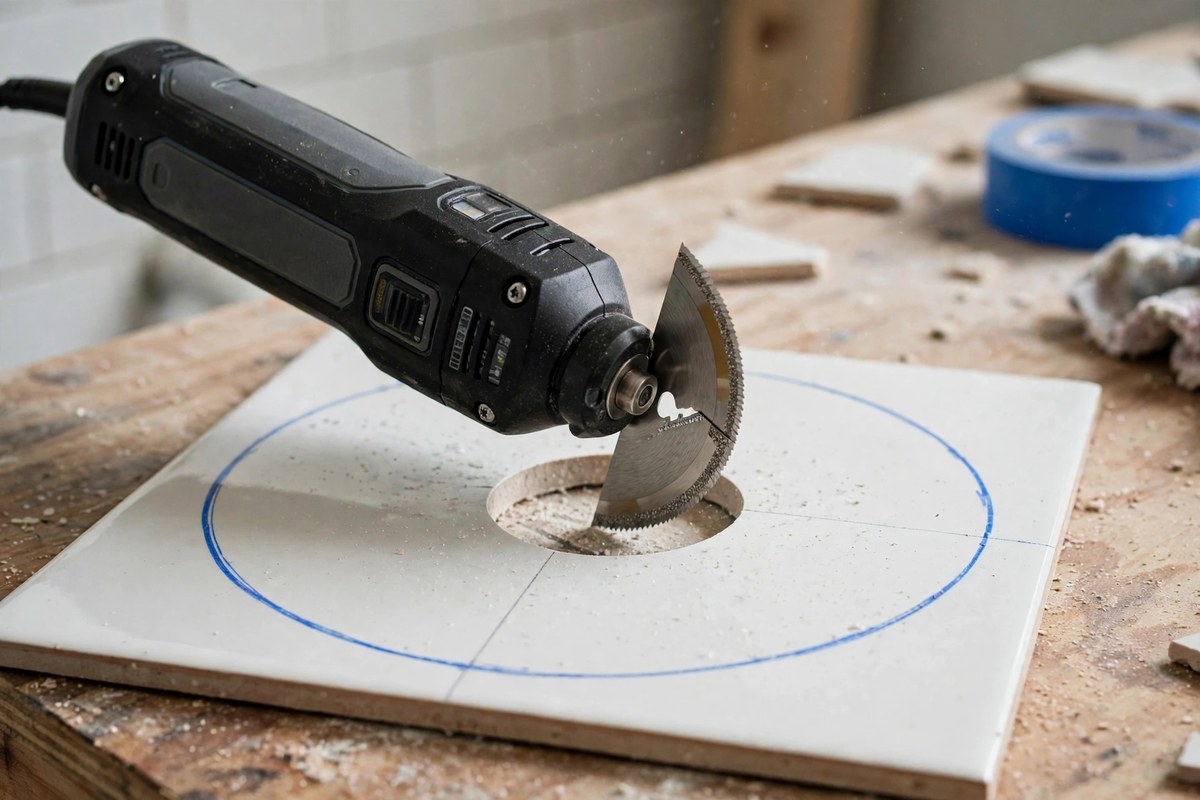
Job 9 — cutting holes in tile for fixtures. With a diamond-grit blade, an oscillating tool cuts a neat opening in ceramic tile for a shower valve, a pipe or an outlet — without a diamond hole saw and without cracking the tile. Score the outline first, work slowly, and keep the blade cool. It’s a rescue job, not a production method: one or two holes, not a whole bathroom.
Job 10 — trimming baseboards in place. Need a cabinet or a bookshelf to sit flush against the wall? Cut a notch in the baseboard right where the furniture goes, instead of removing the whole run. The flush-cut blade rides along the wall and leaves a clean, square notch that the furniture hides completely.
8. Cut Pipe in Tight Spots
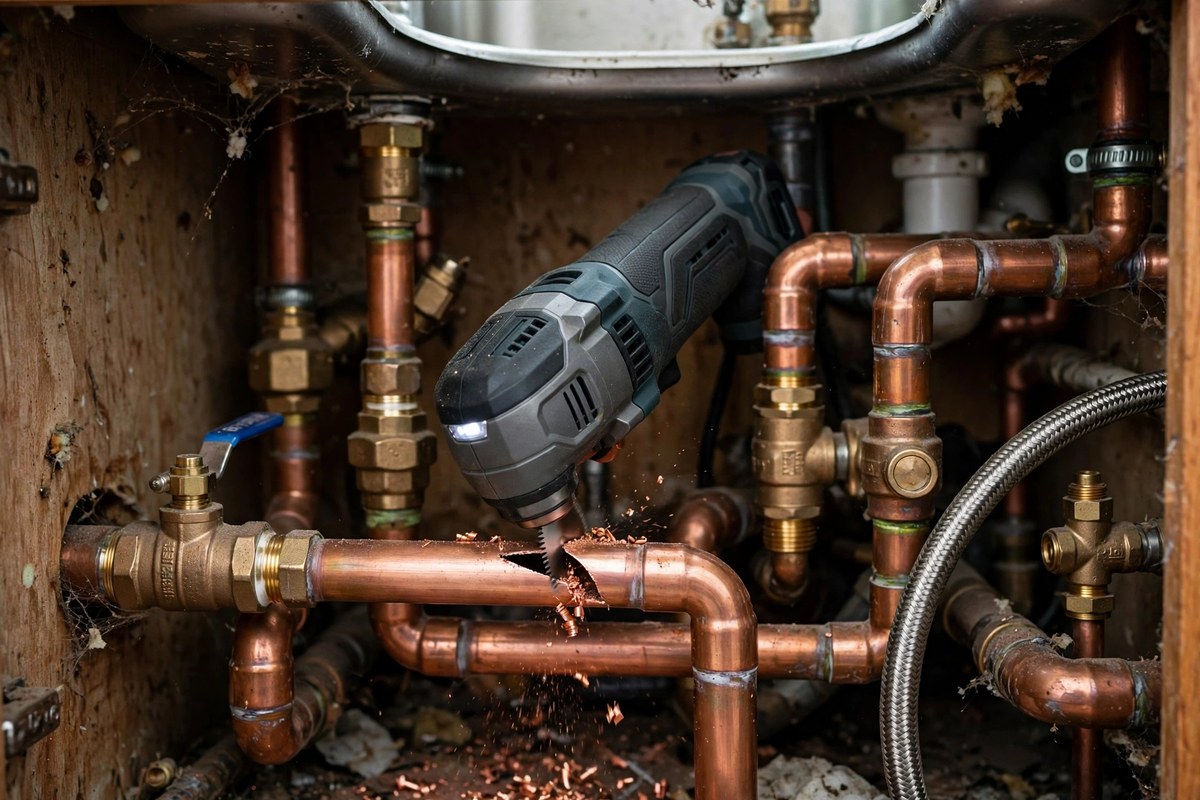
Job 11 — cutting pipe where nothing else fits. Copper supply lines, plastic drain pipe, even a rusted bolt under a sink — a bimetal blade reaches into the gap between a pipe and a wall where a hacksaw can’t swing and a reciprocating saw can’t fit. Plumbers keep a multi-tool in the bag for exactly this: one cut, no disassembly, no burned fingers from a torch. Just mind what’s behind the pipe — the blade cuts whatever it touches, so know where the wires and other lines run.
Blades Make the Tool: What to Buy
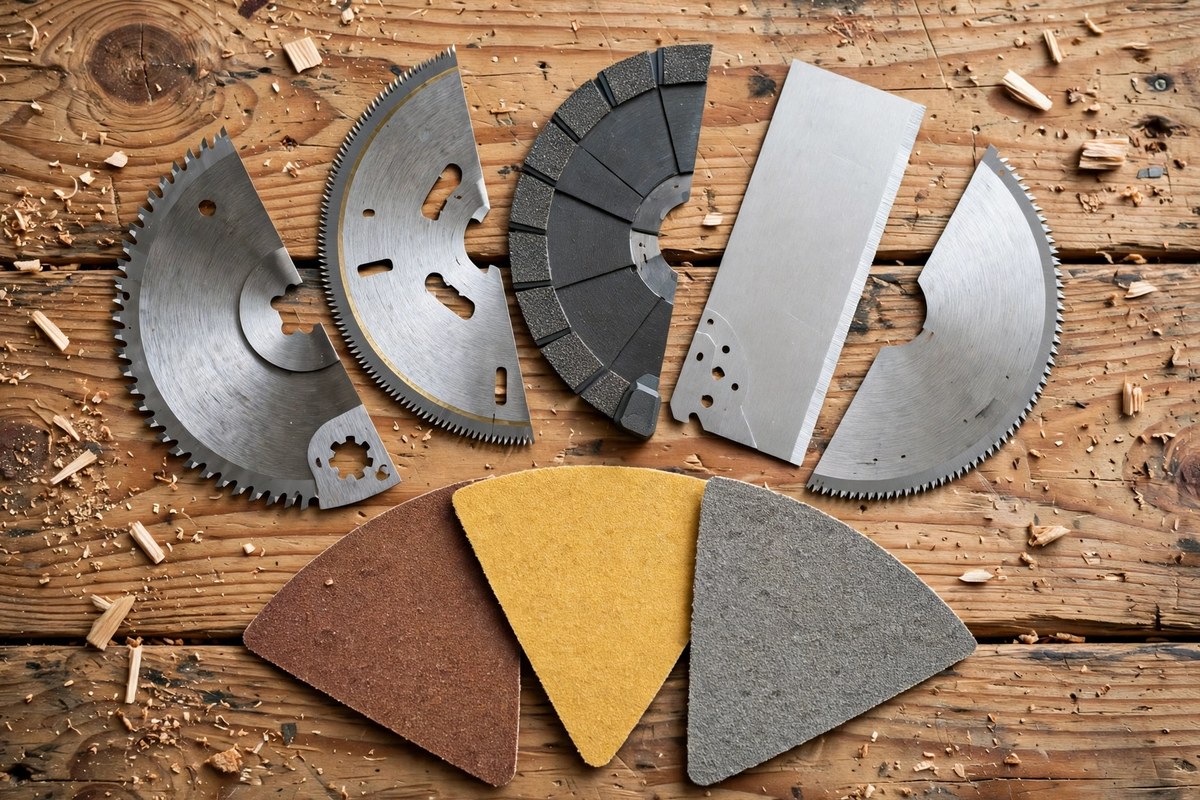
The tool itself is simple. The blades are the whole game. A starter set of wood blades, bimetal blades, a scraper and a sanding pad typically costs $25–$40 and covers most of these eleven jobs. Add a carbide grout blade ($15–$25) and a diamond tile blade ($20–$30) only when you need them — they’re job-specific and wear out fast on the wrong material.
Buy blades in multi-packs from a reputable third-party brand rather than single branded blades: the price per blade drops by half or more, and for a tool that eats blades, that difference adds up fast. Worth it if you buy the universal-fit blades that match your tool’s mount — check the fitting before you order, because a few older models use a proprietary mount.
Worth It or Skip It?
The oscillating multi-tool earns its place in a beginner’s kit not because it does one job brilliantly, but because it rescues eleven jobs that would otherwise need a specialty tool, a rental, or a workaround. It’s the tool you reach for when the “right” tool can’t fit. If you’re building your first kit, it belongs right after the drill, the circular saw, the sander, the jigsaw and the multi-tool’s own cousins — the five tools we ranked in our beginner power tool guide. Buy a mid-range corded model first, spend the savings on blades, and keep it where you can actually reach it. The drawer is where good tools go to be forgotten — and this one is too useful for that.